


P Chuba Ozukum urges unity among Naga groups during the 76th Naga Plebiscite Day event in Kohima.
Chuba Ozukum calls on youth to uphold Naga leaders’ vision
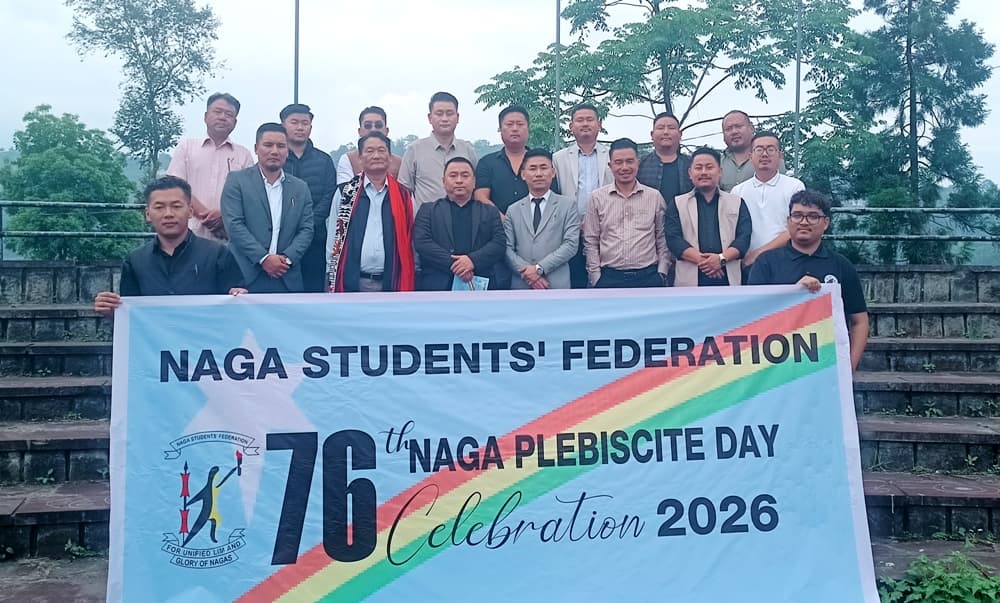
KOHIMA — Former NSF president P Chuba Ozukum on Saturday called on the younger generation to uphold the vision and legacy of Naga leaders while stressing the need for unity among Naga groups.
Addressing the 76th Naga Plebiscite Day celebration organised by the Naga Students’ Federation at its conference hall in Kohima, Ozukum said the occasion was being observed on behalf of millions of Naga students and citizens across all Naga areas.
Extending greetings to Nagas around the world, he said the Naga Plebiscite conducted on May 16, 1951, under the leadership of AZ Phizo and his colleagues reflected the aspirations of the Naga people for sovereignty.
He asserted that Nagas were neither Indians nor Myanmarese and traced the political history of the Nagas to the arrival of the British in the Naga homeland in 1832.
He said Naga villages functioned independently as village republics with their own systems of governance, customs and traditions before colonial occupation.
According to Ozukum, the period between British occupation and India’s independence in 1947 was marked by repeated conflicts as the British attempted to dominate Naga villages, while Naga forefathers strongly resisted colonial rule.
Also read: FNTA, Naga talks in focus as Rio-led delegation meets Amit Shah
He referred to the 1879 conflict as the final war between the Nagas and the British.
He claimed that both sides later realised the futility of war and signed what he described as the “Gentleman Agreement” in 1880 to restore peace.
Ozukum further said Naga leaders later submitted a memorandum to the Simon Commission in 1929, seeking to be left alone after the departure of the British.
He alleged that after the British withdrawal, India inherited colonial authority and began suppressing the Nagas, resulting in killings and atrocities against Naga civilians.
Highlighting the significance of the 1951 plebiscite, Ozukum said it was organised to communicate to the world, particularly India and Britain, that the Nagas wished to live separately as an independent nation.
Recalling the difficulties faced during the plebiscite campaign, he said Naga leaders had to travel on foot from village to village without proper transportation facilities, carrying their own belongings while mobilising support.
Quoting author George Orwell, he said, “In a time of deceit, telling the truth is a revolutionary act,” and remarked that Naga leaders had spoken the truth through the 1951 plebiscite.
He also cited former US President Abraham Lincoln, saying, “No man is good enough to govern another man without the other’s consent,” and described the plebiscite as an assertion of the Naga people’s refusal to accept Indian rule without consent.
The former student leader maintained that the plebiscite was not the effort of a few leaders of the Naga National Council alone, but a collective exercise involving hundreds of Naga villages, making it historically and politically significant for all Naga groups and factions.
He said that despite divisions among different Naga political groups today, the plebiscite continued to hold importance, adding that Naga political negotiators still claimed that 99.9 per cent of Nagas voted in favour of sovereignty.
Expressing concern over growing divisions among Naga groups and even within the NSF, Ozukum questioned whether the present generation was capable of fulfilling the aspirations of the forefathers.
Calling for unity, he urged all Naga groups to work together and appealed to negotiators from different factions to remain committed to the Naga political cause.
Delivering the presidential address, NSF president Mteisuding said it had been 76 years since the Naga people voted for sovereignty.
He described the Naga Plebiscite as a symbol of hope and a reminder of the stand taken by Naga forefathers for the rights and freedom of the Naga people.
He said the gathering was not merely a commemorative programme but an occasion to reflect on the Naga political journey. He claimed that the Nagas had declared independence on August 14, 1947, and that the 1951 plebiscite reflected overwhelming support for a sovereign Naga nation.
Alleging continued suppression of Naga rights by the Government of India, the NSF president said it remained one of the harsh realities faced by the Naga people.
Paying tribute to those who sacrificed their lives for the Naga cause, Mteisuding said the occasion was also meant to honour their dedication and commitment towards the Naga nation.
The programme was chaired by NSF general secretary Kenilo Kent.