


NPP seeks constitutional review of the Wildlife Act’s applicability in Nagaland, citing Article 371A and customary laws
KOHIMA — The National People’s Party (NPP) has approached the Governor of Nagaland seeking a constitutional examination of the applicability of the Wild Life (Protection) Act, 1972, and its subsequent amendments in the state.
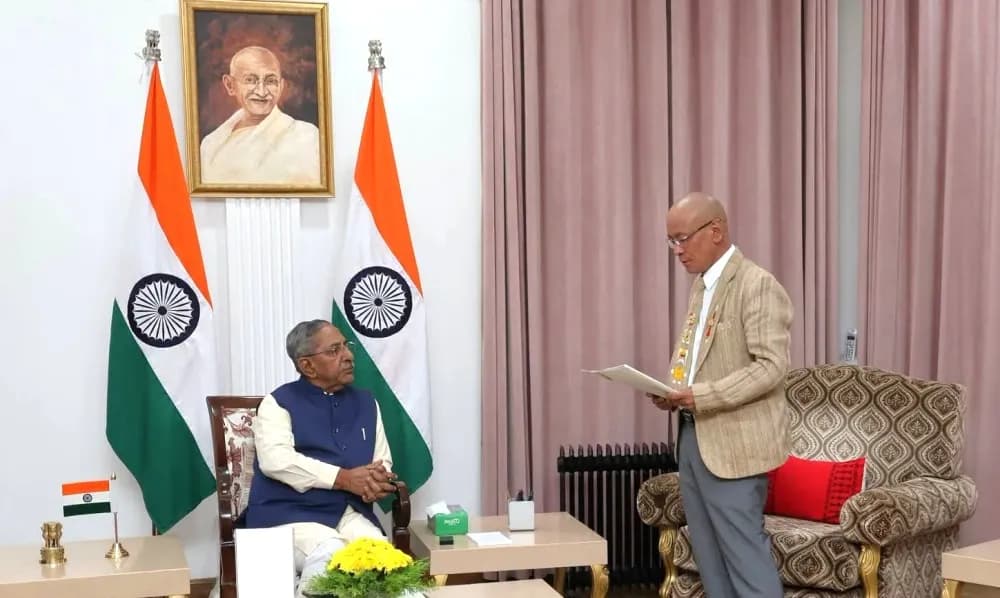
In a representation submitted to Governor Nand Kishore Yadav, NPP National Vice President Vevoyi Wideo urged the state government to examine the legal position, particularly in relation to Naga customary practices, customary law and the ownership and transfer of land and its resources. Wideo met the Governor at Lok Bhavan, Kohima, on Tuesday.
The NPP pointed out that the Nagaland Legislative Assembly had adopted the Act through a resolution on September 18, 1981. However, it said the terms and legal effect of the resolution, along with the relevant Gazette notification, required verification from official records.
The party noted that the principal Act had subsequently undergone amendments in 1991, 2002, 2006 and 2022, introducing changes to regulatory provisions, Schedules, institutional arrangements and penalties. It sought a reasoned examination of whether these amendments were applicable in Nagaland under the original Assembly resolution or whether any further resolution or legislative clarification was necessary.
Referring to Article 371A(1)(a) of the Constitution, the NPP said no Act of Parliament concerning specified matters shall apply to Nagaland unless the state Legislative Assembly so decides by a resolution. These matters include the religious or social practices of the Nagas, Naga customary law and procedure, and ownership and transfer of land and its resources.
Also read: Frontier Nagaland Territorial Authority Act gazetted, awaits commencement notification
The party observed that hunting and the relationship of Naga communities with their natural environment had, in various local contexts, formed part of customary practices, community traditions and established systems of village-level regulation. It said the extent to which particular practices were protected under Article 371A required consideration in the light of relevant customary laws, facts and judicial precedents.
The representation also called for examination of the original 1981 resolution, the statutory provisions in force at the time, the legislative basis of subsequent amendments and the constitutional position following the Constitution (Forty-second Amendment) Act, 1976.
Clarifying that it did not seek to question the importance of wildlife conservation or the objectives of wildlife-protection legislation, the NPP said its concern was to ensure that the applicable legal framework was examined and implemented in a manner consistent with the constitutional protections guaranteed to Nagaland.
The party urged the Governor to refer the representation to the state government for examination and bring the matter to the attention of competent authorities, including the Speaker of the Nagaland Legislative Assembly, for consideration within their respective constitutional and procedural powers. It also sought verification and furnishing of official records relating to the 1981 resolution and the Gazette notification, along with any subsequent resolutions concerning the Act or its amendments.
The NPP said the absence of authoritative clarification had created uncertainty among enforcement authorities and local communities, particularly in matters involving customary practices and wildlife-related enforcement, leading to avoidable disputes and tensions.