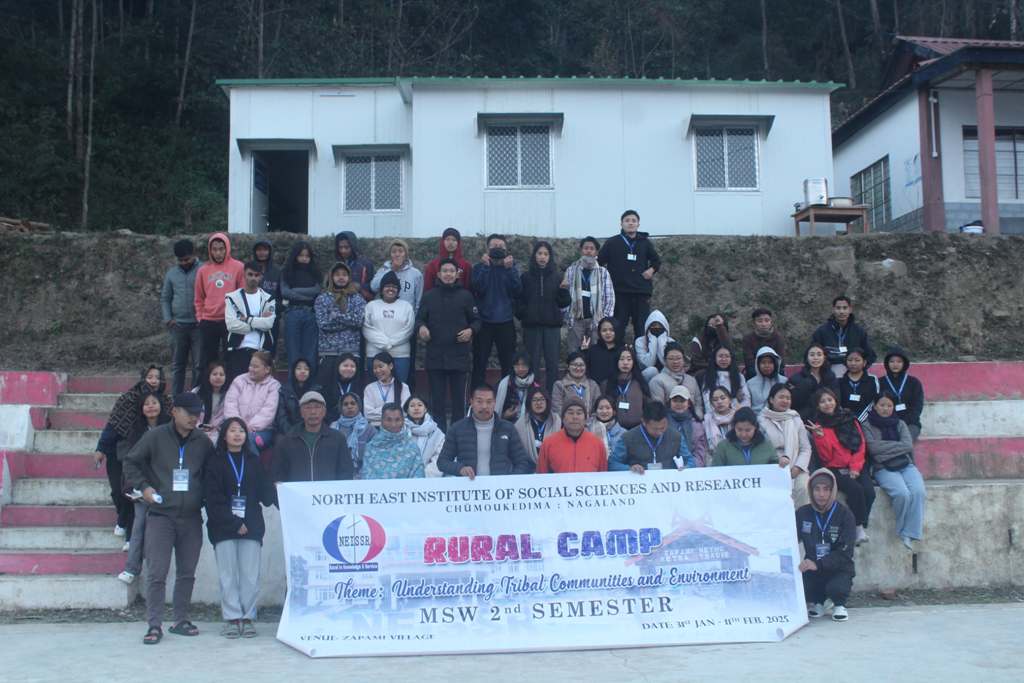
Students of North East Institute of Social Sciences and
Research pose for a photograph during the rural camp in Zapami village.
- DIMAPUR — Students
of North East Institute of Social Sciences and Research (NEISSR), both from the
Bachelor of Social Work (BSW) and Master of Social Work (MSW), have embarked on
a 10-day rural camp as part of their academic curriculum from January 31 to
February 11.
- The rural camp, an integral experiential learning component,
is being held in Zapami village for MSW 2nd semester students and Tsupfume
village for BSW 4th semester students in Phek district.
- An update from the institute stated that the primary
objective of the camp was to provide students with firsthand experience of
rural life while enabling them to apply their theoretical knowledge in
real-life settings.
- It state that through the immersive experience, students
would engage with the local communities and undertake various activities aimed
at community development and social awareness.
- During their stay, students would conduct a range of
activities including participatory rural appraisal (PRA) exercises, awareness
programmes on various social issues such as health, education, sanitation and
gender equality, cleanliness drives, home visits, capacity-building sessions,
livelihood assessments and other community engagement initiatives.
- The activities would not only help students understand the
socio-economic dynamics of rural life but also equip them with practical skills
essential for social work practice.
- It added that the rural camp would serve as a platform for
students to interact with local stakeholders including village councils,
community-based organisations, self-help groups and school authorities, to gain
deeper insights into indigenous practices and traditions. Besides, the students
would also document their observations and experiences, which would serve as
valuable research material for future community interventions. Apart from
community service, students would participate in cultural exchanges to
understand the rich heritage and traditions of the local communities.


