


Niutoli Tuccu shares insights on pursuing a career in rehabilitation psychology and mental health in India.
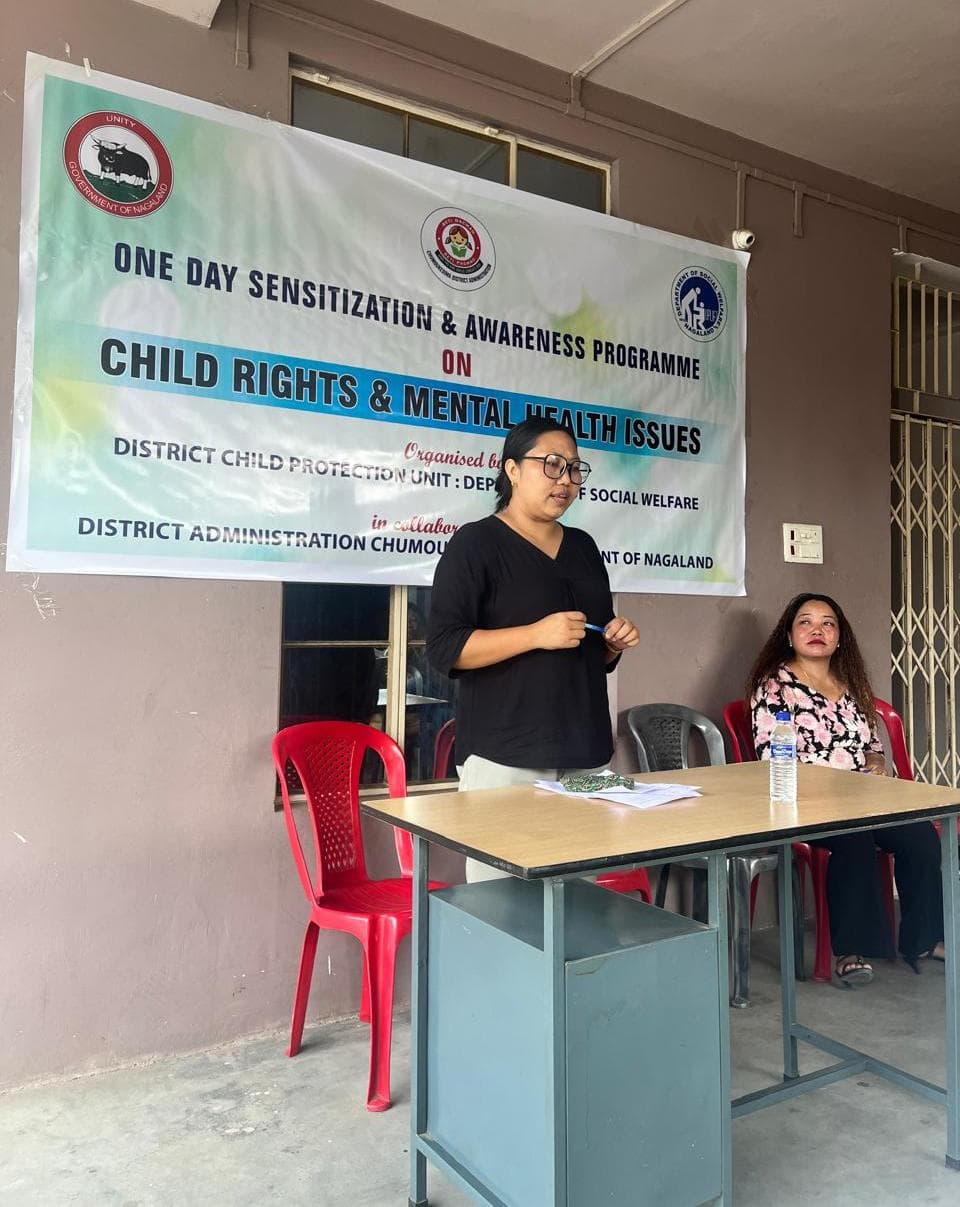
DIMAPUR — Drawn to listening and understanding people, Niutoli Tuccu did not initially plan to enter the field of psychology. After completing her double bachelor's degrees, she noticed that she had scored the highest marks in counselling among all her subjects. Around the same time, people in her life began to share something she had not fully understood before. They told her that after talking to her, they felt lighter, calmer, and more hopeful. What she thought were simple conversations were, in fact, helping them heal.
That realisation changed her direction. She chose to study psychology not just as a subject but also as a purpose. She went on to complete her MA in Counselling and Psychotherapy and a PG diploma in Rehabilitation Psychology under the Rehabilitation Council of India.
She is currently a PhD Research Scholar in Psychology at The Assam Royal Global University and also serves as a Guest Faculty at North East Christian University, sharing her knowledge and experience with students. Along with her academic work, she holds the role of General Secretary in the All Nagaland Counsellor Association.
Also read: Choosing Science Stream After HSLC: An Overview
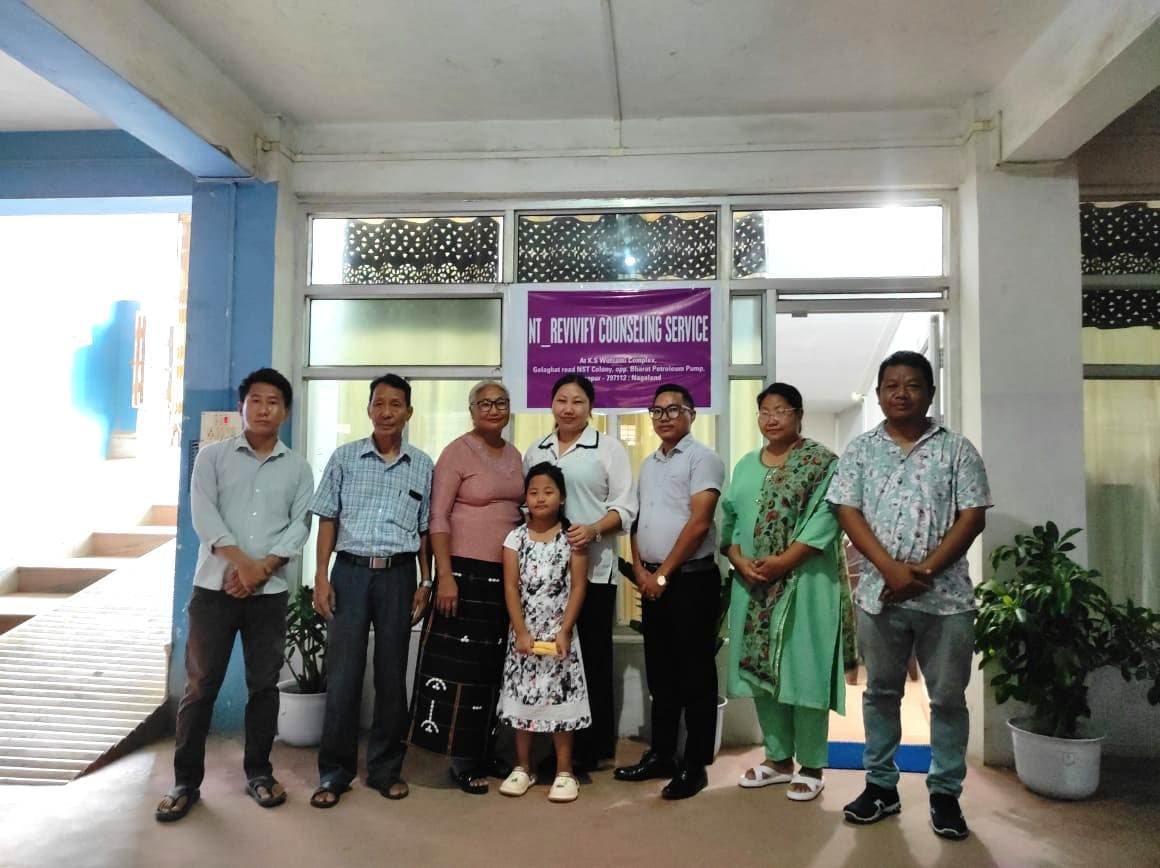
A licensed rehabilitation psychologist registered with the Rehabilitation Council of India, Tuccu is also the proprietor of NT Revivify Counselling Service, where she provides both in-person and online counselling. Over the years, she has worked with individuals facing emotional struggles, relationship issues, and serious mental health conditions such as severe depression, personality disorders, psychosis and substance dependence. Starting her own counselling service was an important step in her journey, allowing her to reach and support more people. Today, she has provided psychotherapy to over 1,500 clients from different backgrounds and life experiences, including national and international clients from Canada, Britain, and the United States.
Her affiliations include the Rehabilitation Council of India, the Young Psychologist of India, the Counsellor Council of India, and the American Psychological Association. Her academic background includes a Bachelor of Arts from Pranabananda Women's College, Dimapur; a Bachelor of Divinity from Trinity Theological College, Dimapur; an MA in Counselling and Psychotherapy from TMA Institute of Counselling, Kottayam; a PG Diploma in Rehabilitation Psychology from Pandit Ravishankar Shukla University, Raipur; and a PG Diploma in Computer Applications from Hi Tech Institute of IT and Multimedia, Dimapur. She has also completed certifications in Forensic Psychology, Criminal Psychology, Clinical Psychology, and Child Counseling.
What began as listening without knowing has now become a lifelong commitment. She believes that sometimes, being heard is the first step toward healing, and she stands with those who are ready to take that step.
In this interview with Eastern Mirror, Tuccu shares insights on how one can pursue a career in psychology and more.
For students who are hearing this for the first time, how would you explain rehabilitation psychology in simple words?
Rehabilitation psychology is a branch of psychology that focuses on helping people with disabilities and mental illnesses live a better and more independent life. It is not related to substance use/drug dependence. The work mainly involves supporting individuals with physical, developmental, neurological or mental conditions so they can adjust emotionally, socially, and in daily life.
What kind of people do rehabilitation psychologists typically work with?
Rehabilitation psychologists work with individuals who have special needs. This includes people with mental illnesses, intellectual disabilities, autism, learning disabilities, brain and other developmental or physical conditions.
What are the main areas or specialisations within rehabilitation psychology?
Rehabilitation psychologists are trained to assess and support individuals across 21 types of disabilities recognised under the Rights of Persons with Disabilities Act, 2016, namely blindness, low vision, leprosy-cured persons, hearing impairment (deaf and hard of hearing), locomotor disability, dwarfism, intellectual disability, mental illness, autism spectrum disorder, cerebral palsy, muscular dystrophy, chronic neurological conditions, specific learning disabilities, multiple sclerosis, speech and language disability, thalassaemia, haemophilia, sickle cell disease, multiple disabilities (more than one disability together), acid attack survivors, and Parkinson’s disease.
What subjects should students focus on in school if they are interested in this career?
Students should focus on psychology, as it builds a basic understanding of human behaviour, which is important for this field.
What is the step-by-step educational path to become a rehabilitation psychologist in India?
First, complete a Bachelor’s degree in Psychology, followed by a Master’s degree in Psychology. After that, you can pursue either a one-year Postgraduate Diploma in Rehabilitation Psychology or a two-year MPhil in Rehabilitation Psychology. Both cover similar subjects, but an MPhil includes more detailed training and supervised clinical work.
What is the role of RCI certification in this profession?
Registration with the Rehabilitation Council of India is compulsory. Without this licence, a person is not legally allowed to assess, diagnose, or provide therapy for individuals with disabilities. Lack of awareness often leads people to approach unqualified individuals, which can result in wrong diagnoses.
Are there specific colleges or courses you would recommend for students?
Students should choose institutions approved by the Rehabilitation Council of India, such as the National Institute for Empowerment of Persons with Visual Disabilities (NIEPVD), Dehradun, Uttarakhand; the National Institute for the Empowerment of Persons with Intellectual Disabilities (NIEPID), Secunderabad; Pandit Ravishankar Shukla University, Raipur, Chhattisgarh; B.M. Institute of Mental Health, Ahmedabad, Gujarat; State Institute for Rehabilitation Training & Research (SIRTAR), Rohtak, Haryana;
and MJRP College of Education, Mahatma Jyoti Rao Phoole University, Jaipur, Rajasthan.
What personal qualities like empathy and patience are most important in this field?
Empathy is the most important quality in this field. Without it, it is difficult to understand and support clients. Patience, good listening skills, and emotional balance are also very important.
What are some challenges in this profession, and how do you deal with them?
One challenge is lack of awareness among families, which can delay proper intervention. Another challenge is emotional strain due to the nature of the work. These can be managed by maintaining professional boundaries, continuous learning through reading the latest books on mental health or seminars and webinars, and focusing on gradual progress in each case.
What career options are available after completing studies in rehabilitation psychology?
You can work as a rehabilitation psychologist in hospitals, rehabilitation centres, special schools, or private practice. You will be trained to assess, diagnose, and support individuals with different types of disabilities using appropriate coping methods.
What is the demand for rehabilitation psychologists in India and globally?
The demand is increasing in India due to growing awareness about disability and mental health. There is still a shortage of trained professionals. Globally, there is also a steady need for rehabilitation psychologists in healthcare, education, and community services.
How do you see this profession evolving in the next 10 to 15 years?
This field is expected to grow with better awareness, early identification of disabilities, and more inclusive practices in schools and workplaces. This will increase the need for trained professionals.
What advice would you give students who are considering this career?
Choose this field only if you are genuinely interested in working with people who need long-term support. Proper training, patience, and ethical practice are very important.
Are there any common myths or misconceptions about psychology that you would like to clarify?
A common misconception is that psychologists can read minds. This is not true. Understanding a client requires detailed case history, assessment, observation, and use of standardised tools. Without proper evaluation, no diagnosis can be made. Another misconception is that anyone can give therapy, which is incorrect. Proper intensive training and a licence are mandatory.
RAPID INSIGHTS
A place you would love to travel to?
Santorini, Greece
Pen and paper or digital notes?
Pen and paper
A quote you live by?
If God is pleased, then stop worrying about who isn't