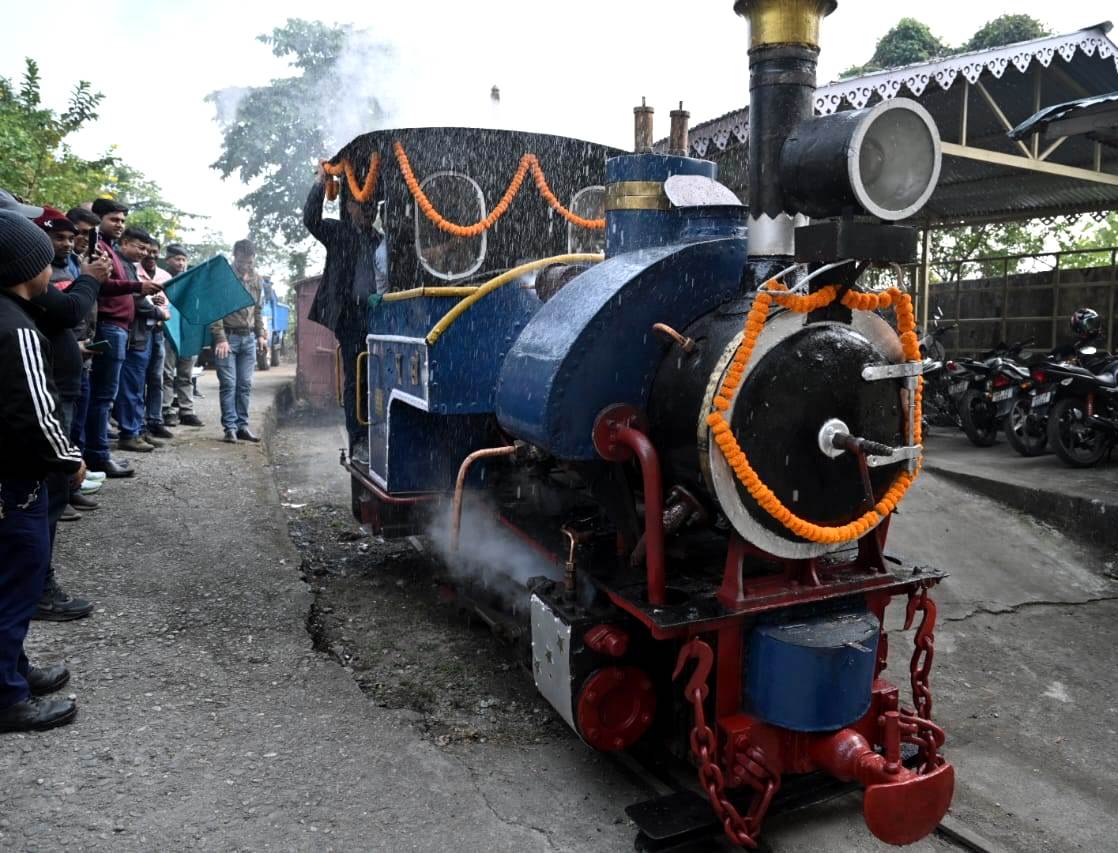
DIMAPUR — The Darjeeling Himalayan Railway
(DHR), a UNESCO World Heritage site under the Northeast Frontier Railway (NFR),
continues to captivate visitors from around the world throughout the year.
In a significant move to promote and preserve this heritage
marvel, the NFR restored the century-old vintage steam engine, known as ‘Baby
Sivok’ and added it to the many attractions of the DHR, the NFR stated in an
update.
The restoration effort was unveiled on December 7 during the
Ghum Winter Festival, where the steam engine was officially flagged off by
Chetan Kumar Shrivastava, General Manager of NFR.
The ‘Baby Sivok’ is now displayed at Ghum, offering tourists
a tangible link to the railway’s rich legacy.
The steam engine ‘Baby Sivok’ started more than a hundred
years ago as a contractor’s locomotive engine from Orenstein and Koppel in
Germany. It is believed to have been instrumental in the construction of the
Teesta Valley and Kishanganj branches of the DHR, earning its name from Sivok
station on the Teesta Valley line.
After decades of service, the engine retired in the 1970s
and was displayed in Siliguri during the late 1990s. Since 2000, it had been an
outdoor exhibit at Ghum station, where it gradually fell into disrepair.
Recognising its historical value, the steam engine was
transported to the Tindharia workshop, where it underwent meticulous
restoration by the skilled in-house staff of NFR, bringing it back to life
while preserving its original charm, the update informed.
It went on to state that the restoration of the ‘Baby Sivok’
steam engine represents a milestone in the conservation of DHR’s heritage.
“This effort not only preserves a tangible piece of history
but also serves as a focal point to celebrate the engineering marvels of the
past. Its display at Ghum enriches the tourist experience, providing an
opportunity to appreciate the unique heritage of the Darjeeling Himalayan
Railway,” it stated.