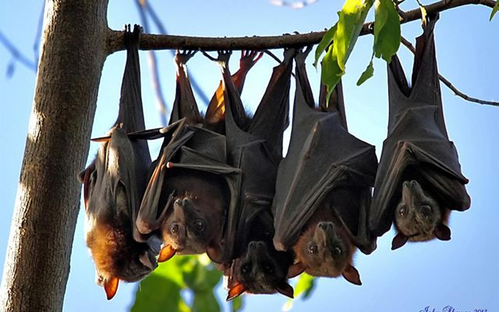
NEW DELHI — The
newly discovered bat coronavirus -- HKU5-CoV-2 -- can spread to humans like
Covid-19, said experts on Saturday, raising fresh health concerns.
HKU5-CoV-2 was identified by a team of Chinese virologists
led by Shi Zhengli, a renowned scientist at the Wuhan Institute of Virology in
China. She is also known as "Batwoman" for her extensive research on
coronaviruses, particularly the SARS-CoV-2 virus -- responsible for the deadly
pandemic that claimed millions of lives.
The discovery raises concerns about the possibility of
another zoonotic spillover. HKU5-CoV-2 belongs to the merbecovirus subgenus,
which includes the MERS-CoV virus that caused the Middle East Respiratory
Syndrome outbreak.
Zhengli’s team had, a few years ago, discovered the HKU
lineage of coronaviruses in bats from Hong Kong, but it lacked the ability to
infect human cells.
On the other hand, "HKU5-CoV-2 is able to bind to human
ACE-2 receptors and infect lab cell models of human lungs and intestines. It is
also capable of binding to ACE-2 receptors in other mammals, which means it
could theoretically spread from animals to man and vice versa,” said Rajeev
Jayadevan, Chairman of the Kerala State IMA Research Cell, told IANS.
The expert noted that Wuhan researchers have not provided a
comparison between HKU5-CoV-2 and SARS-CoV-2 in their ability to infect human
cells.
However, Gautam Menon, Dean, Research, at Ashoka University
said that the HKU5-CoV-2 does not have pandemic potential. “From what we know
as of now, this is unlikely to be significant. HKU5-CoV-2 has interesting
similarities to Covid-19 and to some other coronaviruses known to infect
humans, but that isn't enough to infer that it will spread between humans in a
way that could cause a pandemic,” Menon told IANS.
He further noted that wide exposure to SARS-CoV-2 virus may
provide immunity against the new bat coronavirus. “The fact that most people on
the planet have been exposed to Covid-19 by now should also protect against
viruses, such as HKU5-CoV-2,” Menon said, while stressing the need to continue
research in this area to prepare for any contingency.
Jayadevan that while research on viruses that naturally live
in bats is important, studying these viruses in laboratories also carries
inherent risks.
“If proper biosecurity measures are not followed, there is a
potential for accidental spillover to humans. To mitigate these risks, many
labs studying high-risk pathogens operate under stringent Biosafety Level 4
(BSL-4) protocols,” he said.
He emphasised the need to decrease interactions between bats
and humans. “Viruses are known to recombine with each other, creating new
versions with greater abilities. This study is a reminder that viruses living
naturally in other animals remain a threat for future pandemics in man, and
reducing bat-human interactions is one way to lower the risk of spillovers,”
Jayadevan said.