


Researchers discover Chonala albistricta, a new butterfly species in Arunachal Pradesh's Lower Dibang Valley district.
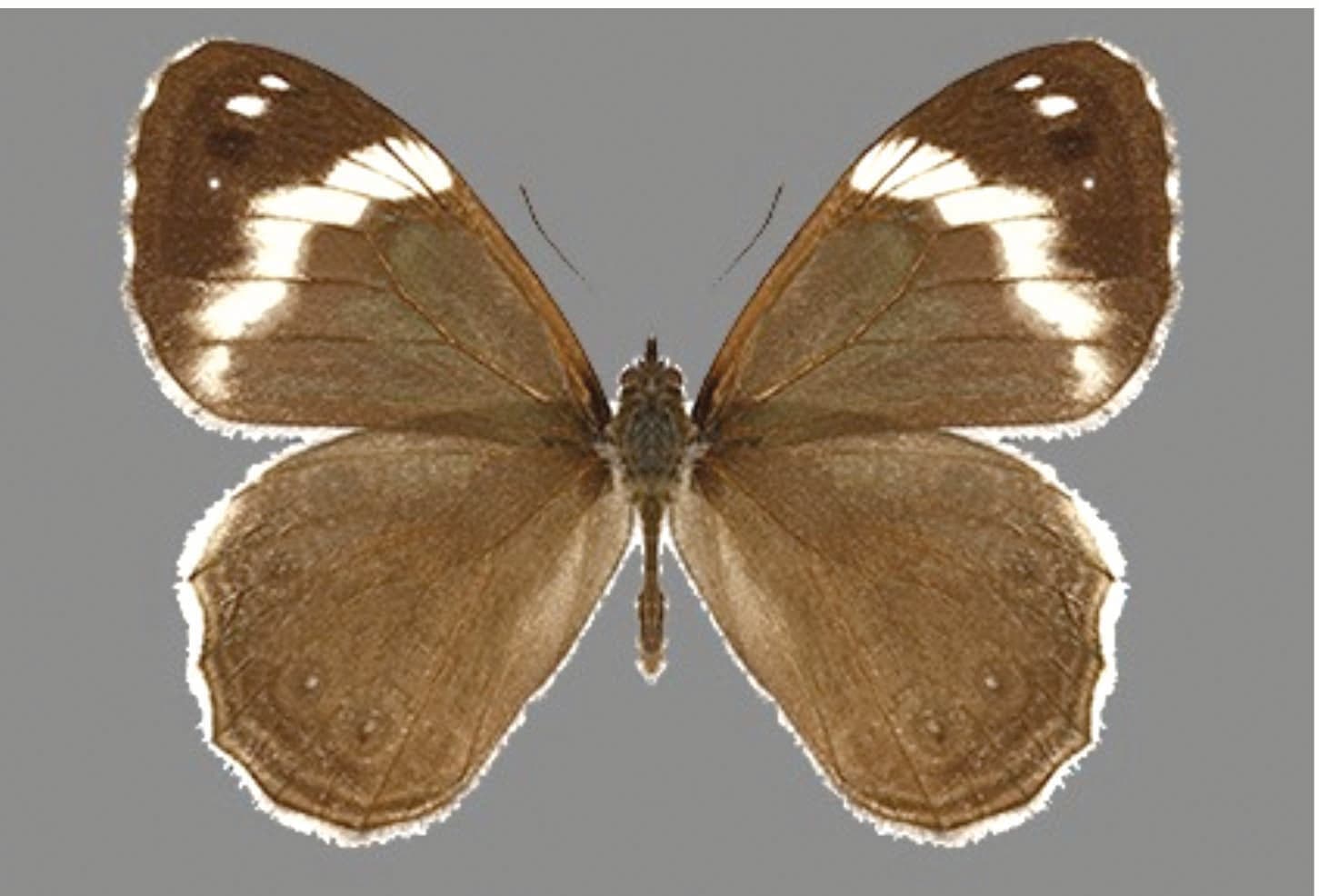
IMPHAL— Researchers have discovered a butterfly species previously unknown to science in Arunachal Pradesh, adding a new species to the world's butterfly fauna and highlighting the largely unexplored biodiversity of the Eastern Himalaya.
The new species, named Chonala albistricta or Narrow-banded Wall, was discovered at Mayodia Pass in Lower Dibang Valley district and formally described in the international journal Zootaxa on June 10.
The discovery was made by a three-member research team led by Dr. Krushnamegh Kunte of the National Centre for Biological Sciences (NCBS), Bengaluru. The team also included Fahim Khan and Ujwala Pawar.
According to Khan, the newly described butterfly is the tenth known species in the genus Chonala worldwide and only the second species from the genus recorded in India.
The species has been named after the distinctly narrow, unevenly bent white band on its forewing.
Researchers said the discovery process began in August last year. Pawar played a key role in specimen curation and dissection, helping establish the distinct identity of the species.
The newly described butterfly belongs to the genus Chonala, a small group of mountain butterflies found in high-elevation regions of the Himalayas and neighbouring parts of Asia.
Although Chonala albistricta closely resembles Chonala masoni, commonly known as the Chumbi Wall, researchers said detailed scientific examination revealed consistent differences in wing patterns, morphology and male genital structures, confirming it as a distinct species.
Scientists noted that butterflies belonging to this group are rare and highly localised, often occurring in isolated mountain ranges where populations evolve separately over long periods.
“This high altitude butterfly species is notoriously difficult to study as they occur in small populations, fly for only a brief period each year (June to August), and inhabit remote mountain passes that are often challenging to access,” Khan said.
He added that the species breeds only once a year.
According to the researchers, isolated mountain habitats function like natural islands, allowing butterfly populations to diverge over time and evolve into separate species.
The team said the discovery underscores the biological richness of the Eastern Himalaya and suggests that additional undiscovered butterfly species may still exist in remote Himalayan landscapes across Northeast India and neighbouring regions of Asia.