


NBCC flags money power, vote-buying and clan pressure as major hurdles to clean elections, urging sustained civic education in Nagaland.
KOHIMA — The normalisation of money power, vote-buying, proxy voting and family, clan and community pressure are among the major challenges to clean elections in Nagaland, according to the Nagaland Baptist Church Council (NBCC).
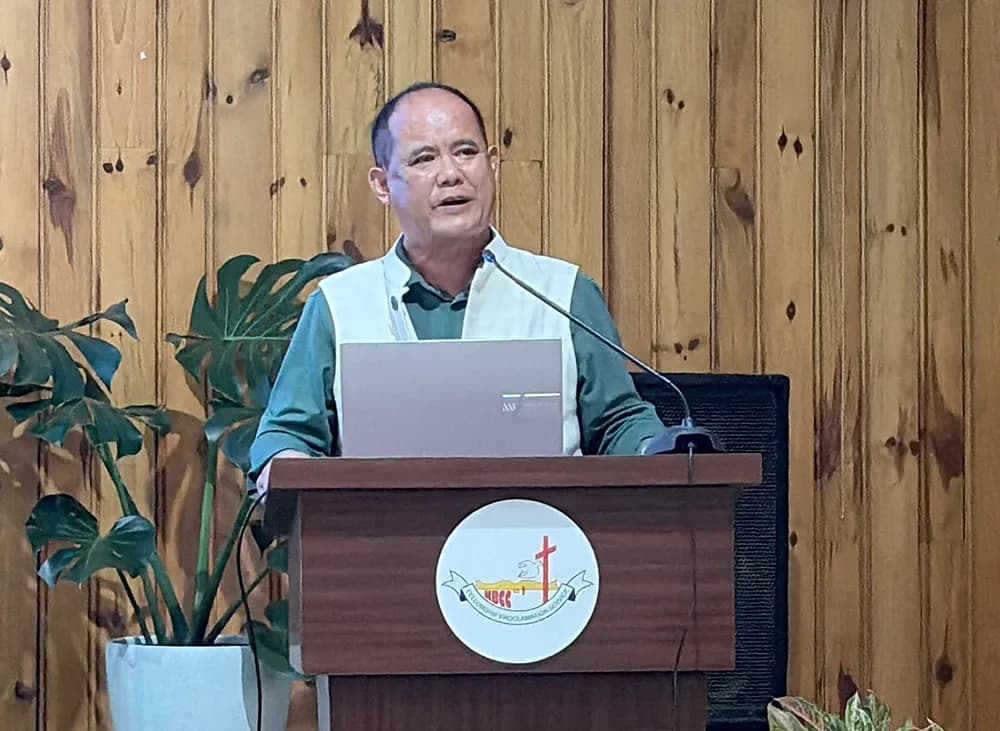
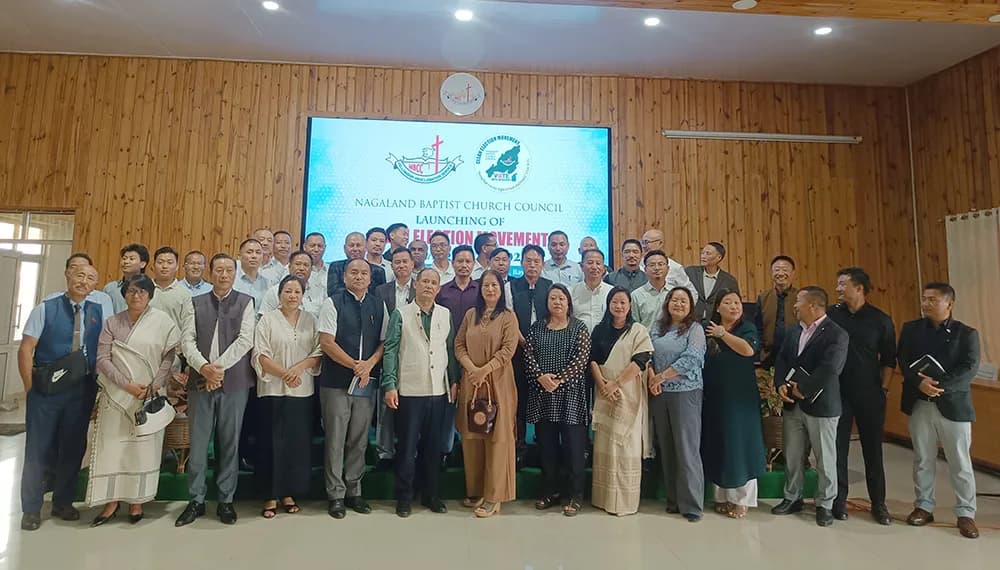
Villo Naleo, secretary of the Social Concern Department of NBCC, highlighted these concerns during the launch of Clean Election Movement (CEM) by NBCC General Secretary Rev. Mar Pongener at the NBCC office in Kohima on Friday.
Giving an overview of the movement, Naleo said the CEM, which began in 1975, seeks to promote ethical, responsible, transparent and democratic participation while challenging practices that undermine the electoral process.
He said the movement remains necessary as money and muscle power distort elections, electoral malpractice undermines democracy, and elections determine the future of society.
Among the challenges identified by the CEM are the normalisation of money power, economic inequality between voters and candidates, proxy voting and electoral manipulation, family, clan and community pressure, village consensus arrangements that may restrict individual choice, political patronage and intimidation, weak enforcement of electoral ethics and the gap between Christian values and political practices.
Naleo said the electoral experience of Nagaland also had to be understood within its social context, where clan, village, family and community relationships can influence political behaviour.
The challenge, he said, was to develop an electoral culture that respects Naga social realities while upholding democratic freedom, individual conscience, equality and the secret ballot.
He stressed that the Church has an important role to play because of its extensive network of congregations and communities across the state. However, he said, it should not become an extension of any political party.
Instead, the Church should educate citizens, promote ethical voting and freedom of conscience, encourage peace and non-violence during elections, and mobilise communities to reject electoral malpractice, he said.
Naleo also called for the CEM to move beyond election-season campaigns and become a continuous programme of civic, moral and political education.
During 2025-26, he said, seven CEM discussions had been conducted in colleges, higher secondary schools, fellowships and churches, reaching approximately 3,000 students and young people.
He shared that surveys had also indicated that a significant proportion of respondents believed the CEM was having a positive impact in reducing negative electoral practices.
Naleo said civil society organisations would also have to be part of the effort, as clean elections could not be achieved by churches alone. “The CEM should move beyond election-season campaigns and become a continuous programme of civic, moral and political education,” he said.
Mission impossible?
Affirming the movement, Rev. Mar Pongener said the NBCC had for years been calling for clean, ethical and responsible elections and urging people to reject electoral malpractice. He said the common remark that “clean election will never be possible in Nagaland” was disturbing, but reflected the frustration many people had experienced over the years.
At the same time, Pongener said there were signs of progress, including greater public awareness and continued efforts by churches and civil society organisations to challenge electoral corruption. “We must therefore recognise both realities: the persistence of the problem and the presence of progress,” he said.
Pongener said the problem was not simply the election process but also changing attitudes towards values, leadership, money, power and responsibility.
“When voters expect money, gifts, personal benefits, or other immediate advantages in exchange for their votes, elections become transactions rather than exercises in choosing responsible leadership,” he said.
He added that when candidates believed large financial expenditure was necessary to secure victory, elections became increasingly expensive and competitive.
The NBCC, he said, was reaffirming its commitment to working towards clean, free, fair, ethical and responsible elections in Nagaland.
The programme also featured a testimony by Ghunato Assumi, associate pastor of Sumi Baptist Church, Zunheboto.