


Faculty members from IIT Gandhinagar publish a new book ‘Nagas: The Knowledge Practitioners’ documenting the ancient sciences and traditions of Naga communities.
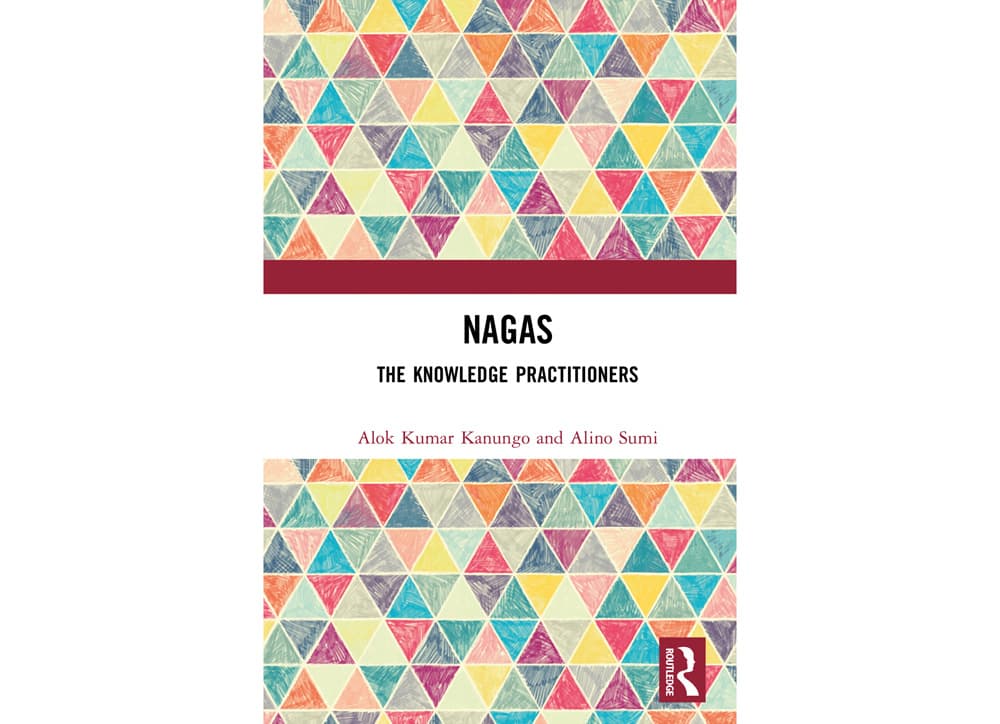
DIMAPUR — Dr. Alok Kumar Kanungo, Associate Research Professor (Archaeology) at the Indian Institute of Technology (IIT) Gandhinagar, along with Dr. Alino Sumi, a former postdoctoral fellow at the institute and an Indigenous scholar from Nagaland, has authored a new book titled "Nagas: The Knowledge Practitioners", published by Routledge.
The book explores the Nagas not only as custodians of tradition but also as active knowledge practitioners, documenting their ecological understanding, craftsmanship, social organisation, and cultural expression.
According to an update, this book is an outcome of the Ministry of Higher Education’s flagship research scheme, Scheme for Promotion of Academic and Research Collaboration (SPARC).
It looks closely at the nature-based belief systems and subsistence practices of Naga communities, many of which were once widely shared but are now preserved in select villages. Through detailed case studies, the book highlights ancient sciences and traditional methods which are still practised, offering insight into the worldview of the Nagas.
The volume includes a foreword by noted ethnographer Peter van Ham and concludes with a reflective couplet by the celebrated poet Mirza Ghalib, linking classical literary wisdom with the ongoing vitality of indigenous knowledge traditions.
It said that drawing on decades of scholarly engagement and lived experience, the book is an important resource for researchers in archaeology, anthropology, and indigenous studies.
"The primary concern in writing this book is to clear longstanding misconceptions about one of India’s most studied yet often stereotyped communities, the Nagas of the Naga Hills, and to explore them as knowledge practitioners rather than mere subjects of anthropological curiosity, including discussions around historically documented practices such as headhunting," said Dr. Alok.