


Nagaland’s Sepaktakraw quartet heads to the Asian Games as Rio urges Olympic ambitions and highlights the State’s sporting progress
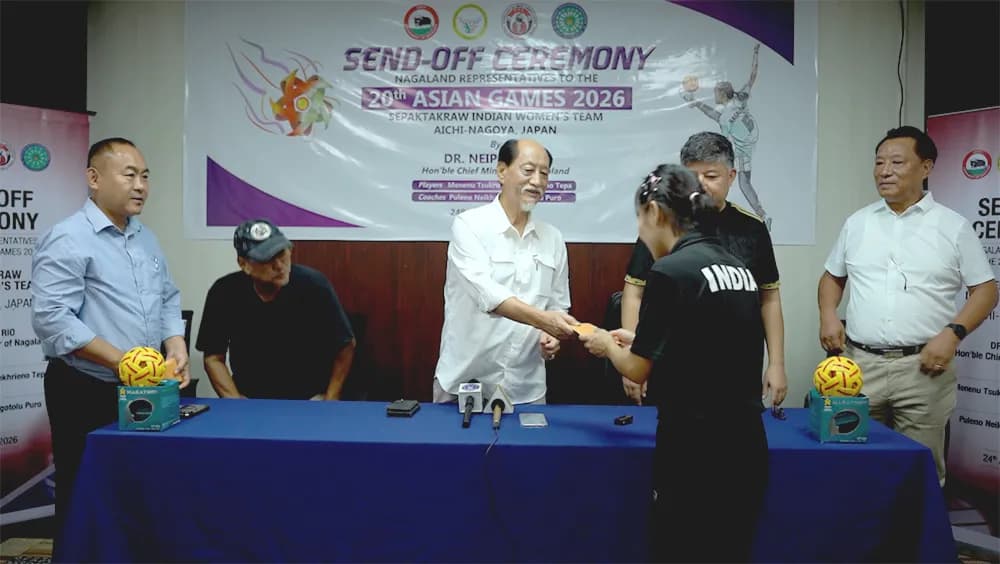
DIMAPUR — Nagaland will extend its Sepaktakraw representation at the Asian Games to a fifth consecutive edition, with two players and two coaches selected for India’s women’s team at the Aichi-Nagoya Games.
Menenu Tsukru, Syiekhrieno Tepa, Puleno Neikha and Pungotolu Puro will represent India at the 20th Asian Games, scheduled from September 19 to October 4 in Japan. Their selection continues Nagaland’s run of Sepaktakraw representation at the continental sporting event since 2010.
The quartet was given a send-off by Chief Minister Neiphiu Rio at the Nagaland Cricket Association office in Sovima, Chümoukedima, on Monday. Advisor to the Chief Minister Abu Metha, Advisor for Urban Development and Municipal Affairs Zhaleo Rio, officials of the Department of Youth Resources and Sports, and representatives of Nagaland Sepaktakraw Association attended the programme.
Congratulating the players and coaches, Rio said their selection reflected the talent and hard work of Nagaland’s sportspersons and was a matter of pride for the state.
Also read: Nagaland Sepaktakraw players, coaches selected for Asian Games
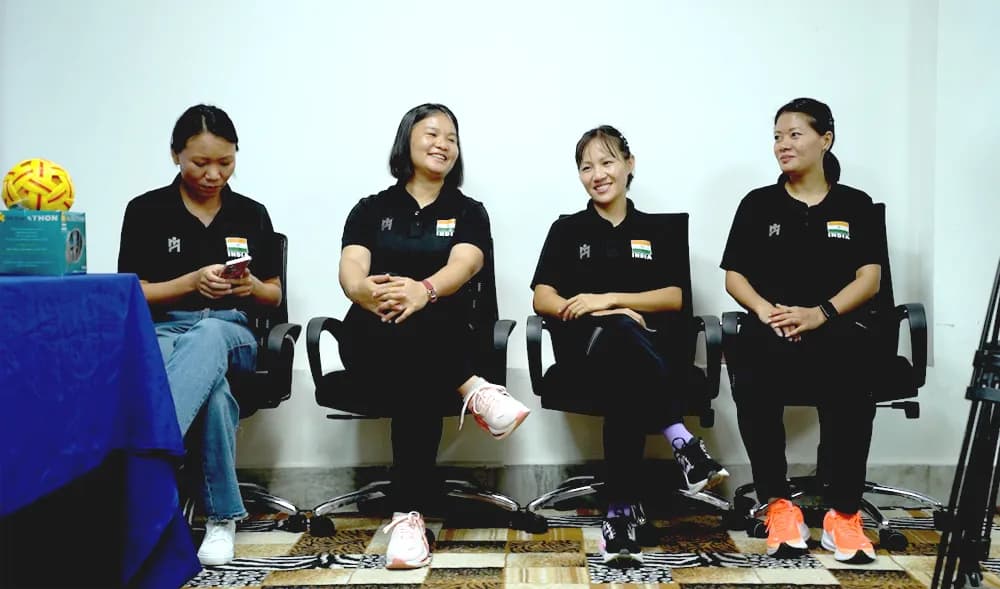
He stressed discipline, dedication and determination— hat he described as the “3D magic”—as essential for athletes seeking to excel at the highest level.
He added that the four could aspire to the Olympics if they continued to perform at the national and international levels.
Reflecting on Nagaland’s sporting journey, Rio said the state had produced talented athletes despite inadequate infrastructure, facilities and trained coaches. He referred to Nagaland’s Olympians and Paralympic achievements, while noting that the state still had considerable scope to develop its sporting potential.
Rio recalled that Nagaland was not affiliated with the Indian Olympic Association when it attained statehood in 1963 and was consequently unable to participate in the National Games. The state secured affiliation only about four decades later, enabling its athletes to participate in national competitions.
WATCH MORE:
He also said years of conflict and insurgency had affected the development of sports and deprived young athletes of opportunities, with some talented sportspersons previously having to represent other states.
“Today, they can play for their own state and represent India. That is why these opportunities are important,” he said.
The chief minister maintained that sports should no longer be viewed merely as a pastime or entertainment but as a sector with potential for employment and professional growth. He cited that around 14 to 15 Sepaktakraw players had secured jobs in central or state government services.
He added that the state government was working to strengthen sports infrastructure and promote grassroots competitions, citing initiatives including the Nagaland Baby League and Nagaland Women’s Futsal League.
Rio also said the achievements of athletes at national and international levels could inspire younger generations to take sports seriously, and assured continued government support for young people with sporting potential.
Abu Metha said Sepaktakraw had received sustained attention from the state government and had consistently brought laurels to Nagaland through medals at Northeast and national-level competitions and representation at international events.
Recalling India’s success at an international Sepaktakraw event, Metha said the Sepaktakraw Federation of India had presented the winning trophy to Nagaland in recognition of the significant contribution of players from the state to the Indian team. The trophy was handed over to Rio and is displayed at the State Olympic office, he added.
Coach Puleno Neikha said the contingent would leave on August 24 for a month-long training programme as part of preparations for the Asian Games.
She shared that nine players had been selected for the Indian women’s Sepaktakraw team following a selection process that began about four years ago.
Around 30 senior-category players were initially shortlisted and underwent three phases of selection before the final nine were chosen.
Neikha said the team would give its best during the training programme and at the Asian Games, adding that the players hoped to make both the Naga people and India proud.