KOHIMA — Nagaland
University researchers are collaborating with the local communities to study
and conserve indigenous fish species in the state’s Dikhu River, officials said
on Tuesday.
A varsity official said that this research integrates
traditional ecological knowledge from local villagers to better understand fish
diversity, fish species assessment, indigenous fishing techniques, and
community-based fishing practices, an approach that is uncommon in scientific
studies in the region.
The Dikhu River, which flows through the Mokokchung and
Longleng districts of Nagaland, is one of the most important tributaries of the
Brahmaputra River and is home to many freshwater species crucial for local
biodiversity and the economy.
The study underscored an urgent need for focused
conservation efforts in the river systems of Nagaland, the official said,
adding that these systems support a unique and rich biodiversity but are
threatened by increasing human encroachment and unsustainable practices.
It showed that the Dikhu River is not only vital for local
communities but also plays an important role in global conservation efforts, he
pointed out.
The research team from the Zoology Department, Nagaland
University (Lumami Campus) and ICAR-National Bureau of Fish Genetic Resources,
Lucknow, aimed to explore and document the ichthyofaunal diversity of the Dikhu
River.
The team focused on the lack of comprehensive data on fish
species in the river and the pressing threats these species face due to anthropogenic
pressures such as habitat destruction, overfishing, and destructive fishing
techniques.
The study, funded by ICAR-National Bureau of Fish Genetic
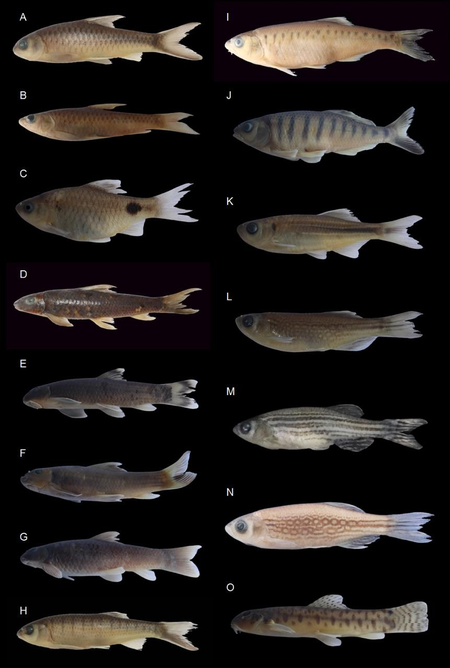
Resources recorded 28 fish species across 6 orders, 13 families, and 3
subfamilies, with Cypriniformes being the most dominant order (67.9 per cent).
The research was led by Dr Pranay Punj Pankaj, Associate
Professor, Department of Zoology, Nagaland University (Lumami Campus) and
Metevinu Kechu, Research Scholar, Nagaland University and their findings were
published in the reputed journals.
Elaborating on the need for such research, Dr Pankaj said:
"The study is significant because the Dikhu River and its fish species
have received limited attention in scientific literature. Thus, this study
makes a valuable contribution to the body of knowledge on the freshwater
ecosystems of northeastern India."
The findings are vital for conservation strategies aimed at
preserving freshwater biodiversity in northeastern India, a biodiversity
hotspot. Documenting threatened fish species and their population trends will
support targeted conservation efforts, he said.
Dr Pankaj said that they need collaborative efforts
involving local communities, conservationists and government authorities to
ensure the sustainability of river ecosystems. There is also a need for
stricter regulations on destructive fishing methods, habitat protection and the
promotion of traditional, sustainable fishing techniques as part of an
integrated conservation strategy.
The research highlights that many of these species face
threats from over-exploitation, habitat degradation, and pollution due to human
activities, and underscores the urgency of implementing stricter conservation
measures to safeguard these vital aquatic resources, he said.
The researchers also focus on providing solutions to improve
fish conservation, including promoting sustainable fishing practices, habitat
restoration, and leveraging traditional ecological knowledge from local
communities.
Additionally, the study aimed to identify and document these
fish species' conservation status and population trends, focusing on threatened
species in the region.
Unlike many studies, this research uses seasonal variation
in fish diversity and relative abundance to provide a temporal understanding of
how fish populations fluctuate throughout the year. The research identified
seasonal patterns in fish abundance, with the post-monsoon season supporting
the highest fish diversity and abundance.
The same research team also documented the first-ever record
of Garrabirostris, a freshwater fish species previously found in Arunachal
Pradesh, Assam, and Bhutan and now recorded in the Doyang and Dikhu rivers.
This discovery further enriches Nagaland's ichthyofauna and highlights the
ecological significance of these river systems in maintaining biodiversity.