


Nagaland University researchers propose a Digital Rehabilitation Law to integrate AI and telemedicine into India’s addiction recovery system.
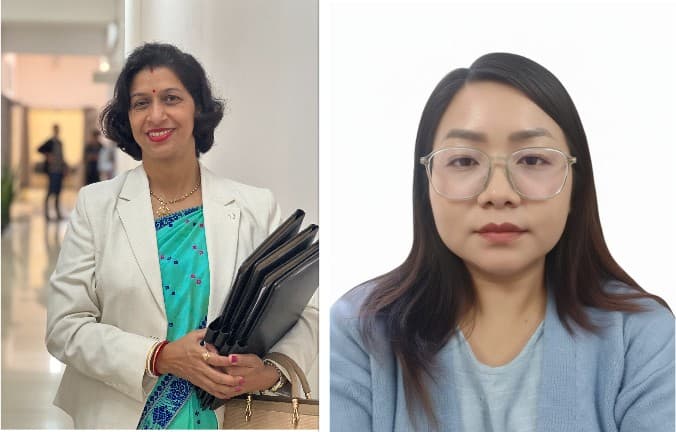
DIMAPUR — Researchers from the Department of Law at Nagaland University have proposed a ‘Digital Rehabilitation Law’—a future-orientated legal framework that integrates Artificial Intelligence (AI), telemedicine and mobile health technologies into India’s drug addiction recovery system.
According to a press release, the study offers one of the earliest doctrinal analyses of how India’s legal environment can accommodate technology-driven rehabilitation models.
It examines India’s growing drug dependency crisis and argues that traditional rehabilitation systems have remained inaccessible, understaffed and stigmatised for far too long. The researchers highlight an urgent need to strengthen rehabilitation as a central pillar of national public health and drug policy.
Also read: Nagaland Health & Family Welfare department signs MoU with HLL Lifecare
The research was undertaken by Dr. Rumi Dhar and Tania Anya from the Department of Law. The findings were published in KDU Law Journal, a peer-reviewed academic journal published by the Faculty of Law, General Sir John Kotelawala Defence University, Sri Lanka.
Highlighting the need for academic institutions of excellence to develop modern solutions for social issues, Jagadish K Patnaik, vice chancellor of Nagaland University, said, “This work reflects Nagaland University’s commitment to socially relevant research that upholds patient rights, expands access to care, and supports evidence-based policymaking.”
The study evaluates the compatibility of existing statutes, including the Digital Personal Data Protection Act (2023), Telemedicine Practice Guidelines (2020) and Narcotic Drugs and Psychotropic Substances Act (1985), with emerging digital rehabilitation tools. According to the university, it identifies gaps related to privacy, informed consent, algorithmic transparency, and accountability, especially as AI-driven relapse prediction models and virtual counselling platforms become more prevalent.
Elaborating on the study, Dr. Dhar, assistant professor, Department of Law, said, “This study is both unique and urgently relevant. Our proposed legislative model of a ‘Digital Rehabilitation Law’ will harmonise India’s current legal provisions to support safe, ethical and tech-enabled addiction treatment.”
Further, Anya, research scholar, Department of Law, said, “Our key recommendations include establishing a National Digital Rehabilitation Regulatory Authority, amending the NDPS Act to formally recognise digital rehabilitation pathways, launching pilot programmes for AI- and telemedicine-based interventions and implementing nationwide training to improve digital literacy among healthcare providers and patients.”
The researchers emphasise that the study is doctrinal, offering legal and policy insights rather than clinical findings, and advocate for a collaborative, stigma-reducing approach involving lawmakers, technologists, and medical professionals.
The study highlighted the potential of mobile health tools to strengthen rehabilitation outcomes through everyday, user-friendly technologies. Examples such as Australia’s Daybreak app—shown to cut alcohol consumption by half—and peer-support platforms like Sober Grid prove that app-based interventions can improve motivation, community connection, and long-term recovery adherence.
NU hosts students from ICAR-IARI
Meanwhile, a group of 20 students from ICAR-IARI, Umiam, Meghalaya, accompanied by two teachers, engaged in an educational tour to the School of Agricultural Sciences (SAS), Nagaland University, Medziphema Campus, on December 16.
During the visit, the students explored the college library; the Education Museum on the campus; the Insect Museum in the Department of Entomology, where they learned about the diverse world of insects; and the Disease Museum in the Department of Plant Pathology, providing them an insight into plant diseases.
The students also visited the All India Coordinated Research Project on honeybees and pollinators, giving them first-hand experience about the scientific methods of rearing honeybees and the role of different pollinators in agriculture.
The field trip ended with an interaction session with Dipak Sinha, pro vice-chancellor of Medziphema Campus. The visit was coordinated by Dr. Waluniba, assistant professor, Department of Entomology, and Dr. Lowrence Kithan, scientist on Kharif Pulses, SAS, NU, Medziphema Campus.