


Nagaland to adopt austerity and boost revenue amid fiscal strain, Rio flags declining central funds and rising expenditure pressures.
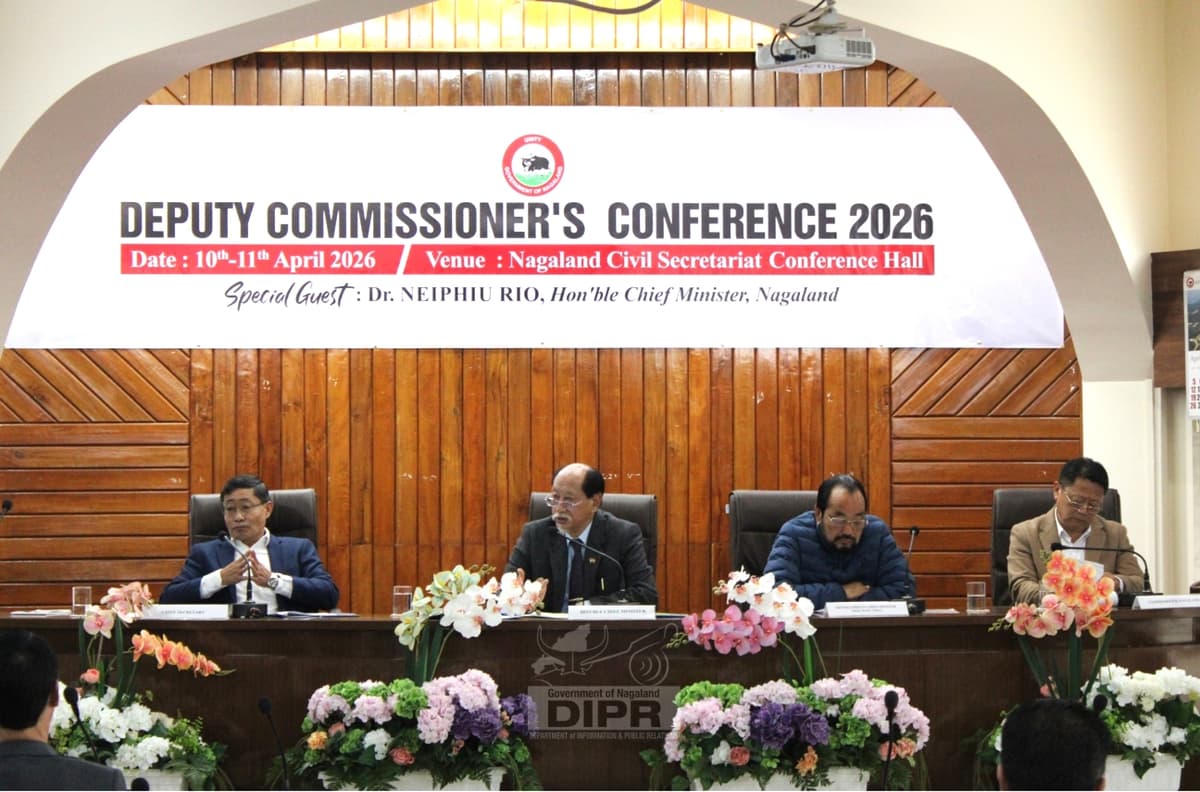
DIMAPUR — Nagaland government will undertake revenue augmentation and austerity measures to ensure fiscal stability and long-term sustainability, Chief Minister Neiphiu Rio said on Friday, citing growing financial pressure on the state.
Addressing the Deputy Commissioners’ Conference 2026 at the Civil Secretariat in Kohima, Rio said the state is facing a decline in its share of central taxes and will not receive Revenue Deficit Grants for the 2026–31 period.
He said Nagaland continues to rely heavily on central transfers, which constitute a major portion of its revenue, while existing receipts remain insufficient to meet routine expenditure such as salaries, pensions and other obligations. Warning of rising deficits and a potential debt burden, he said corrective measures have become necessary.
Highlighting the importance of data integrity, Rio stressed that the upcoming Census is critical for governance and planning. He noted that Census 2027 will be India’s first fully digital exercise, to be conducted in two phases in Nagaland — houselisting from July 1 to 30, 2026, and population enumeration in early 2027.
Also read: Ceasefire extended with two Naga groups for another year
He expressed concern over past discrepancies, citing abnormal population trends that have affected sectors such as education, including imbalances in teacher deployment and a low pupil-teacher ratio. Calling for accountability, he urged deputy commissioners, as principal census officers, to ensure accuracy and transparency.
Rio said the role of DCs has evolved beyond traditional functions such as law and order, elections and revenue administration to include implementation of centrally sponsored schemes, disaster management, grievance redressal and inter-departmental coordination. He stressed the need to balance regulatory responsibilities with development-oriented functions in a governance system that is increasingly citizen-centric and technology-driven.
RIIN, tribal institutions
On the Register of Indigenous Inhabitants of Nagaland (RIIN), the chief minister said fresh notifications issued in September 2024 lay down clear criteria for the issuance of Indigenous Inhabitant Certificates (IIC), aimed at safeguarding the rights and privileges of indigenous inhabitants while ensuring transparency.
He said village councils have been entrusted with verifying indigeneity through village verification committees, which are responsible for validating applicants’ ancestry and linkage to recognised villages in the state. Applicants are required to provide detailed ancestral information, including paternal lineage up to the great grandfather along with village identification, while disclosures are also mandatory in cases of adoption.
He said applications, after verification and attestation by the village verification committee, are submitted to the area administrative officer for scrutiny before being forwarded to the deputy commissioner with recommendations within a stipulated timeframe.
Rio stressed that deputy commissioners must mandatorily examine all applications at their level and issue IICs only after thorough verification and clear satisfaction, adding that additional checks should be carried out wherever necessary to ensure authenticity.
He underscored that tribal councils and village councils remain integral to the state’s governance framework, assisting in dispute resolution, maintaining harmony and preserving customary practices. He urged DCs to work closely with these institutions to ensure informed and inclusive decision-making, particularly in the implementation of RIIN.
Skilling, jobs and health concerns
On employment, Rio said the Nagaland Skill and Entrepreneurship Development Mission has evolved into a demand-driven system aligned with sectors such as construction, hospitality, transport and IT-enabled services. As of February 2026, over 73,000 applicants are registered, while more than 450 youth have enrolled under the Nagaland Japan Connect 2026 initiative, with 65 candidates receiving recruitment intent.
He said skilling initiatives are increasingly linked to placements through job fairs and partnerships, with convergence between departments, training institutions and financial agencies being strengthened under programmes such as the Chief Minister’s Micro Finance Initiative.
In the health sector, Rio said 83 medical officers and junior specialists appointed during the Covid-19 period are currently serving, but expressed concern over low response to recruitment drives. Of 1,553 registered doctors under the Nagaland Medical Council, only 193 had applied during the Covid recruitment, indicating a gap in participation.
Other issues and deliberations
The chief minister also touched on issues relating to non-Naga tribes, the Inner Line Permit (ILP), the Bengal Eastern Frontier Regulation (BEFR) and the proposed Frontier Nagaland Territorial Authority (FNTA).
Chief Secretary Sentiyanger Imchen, in his opening remarks, said the conference was convened as an extended two-day programme in view of the upcoming Census, to deliberate on governance and development issues.
He noted that DCs now play a key role in implementing centrally sponsored schemes and state initiatives, while also serving as chairpersons of major programmes such as the Chief Minister’s Micro Finance Initiative and the Nagaland Skill and Entrepreneurship Development Mission.
He said additional deputy commissioners, who function as chief executive officers of urban local bodies, have also been included, particularly to address issues such as solid waste management.
Imchen added that the conference aims to strengthen coordination between district administrations and departments, improve service delivery and incorporate field-level inputs into policy decisions.
The second day will focus on RIIN, ILP, border affairs and Census 2027, along with a session on “Viksit Nagaland for Viksit Bharat 2047.”
The conference also featured discussions on matters including the National Green Tribunal case (OA 606/2018), Solid Waste Management Rules 2026, amendments to customary court provisions under the Rules for Administration of Justice and Police in Nagaland (Fifth Amendment) Act, 2025, skilling initiatives, land acquisition issues under the Right to Fair Compensation and Transparency in Land Acquisition, Rehabilitation and Resettlement Act (RFCTLARR) along with the National Highways Act, 1956 and infrastructure development.
Deputy Chief Minister Yanthungo Patton, Administrative Heads of Departments, DCs, ADCs and other officials attended the inaugural programme.