


Jacob Zhimomi launched the Seva Setu Abhiyan for the Pradhan Mantri Surya Ghar: Muft Bijli Yojana in Chümoukedima on Wednesday.
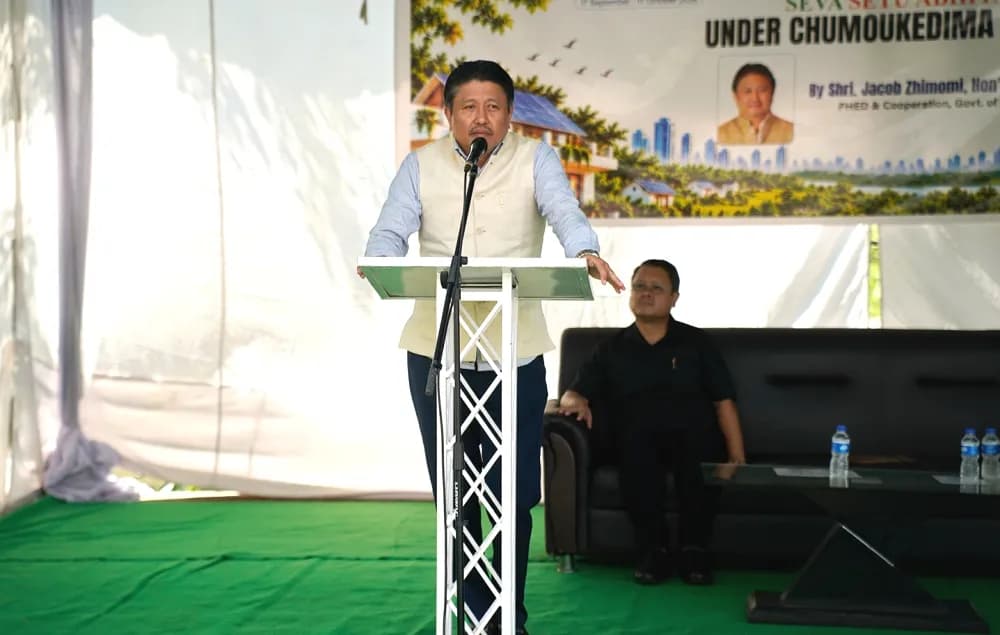
DIMAPUR/MOKOKCHUNG/WOKHA — Minister for Public Health Engineering Department and Cooperation Jacob Zhimomi launched the Seva Setu Abhiyan for the Pradhan Mantri Surya Ghar: Muft Bijli Yojana at the deputy commissioner’s office in Chümoukedima on Wednesday, as awareness programmes and facilitation camps under the scheme were conducted across multiple districts in Nagaland.
The nationwide scheme, initiated to promote residential rooftop solar installations, provides financial subsidies from both the central and state governments covering between 70 and 80 per cent of installation costs.
Eligible consumers can receive a central subsidy of up to INR 85,800 and a state subsidy of up to INR 50,000, amounting to a total grant of up to INR 1,35,800 credited directly to their bank accounts through Direct Benefit Transfer. The scheme is restricted to domestic use and will remain available until March 31, 2027.
Across the state, 26 empaneled vendors are carrying out installations with free maintenance for up to five years. Surplus power fed back into the grid can earn consumers approximately INR 2 per unit, while bank loans of up to INR 2 lakh are accessible for applicants aged 18 to 65 years with repayment tenures of up to 10 years.
Also read: Nagaland rolls out subsidised rice scheme for uncovered households
Chümoukedima: Speaking at the launch in Chümoukedima, Zhimomi stated that electricity has become an essential requirement, but power bills have become a financial burden on families. He noted that the state's energy demand exceeds 200 megawatts (MW) and has risen substantially since statehood due to urbanisation and the extensive use of electrical appliances such as air conditioners, refrigerators, freezers, and televisions.
He explained that because internal generation does not meet demand, the state government purchases power from other states with hard cash but recovers only around 40 per cent in revenue, causing the sector to run at a deficit. Zhimomi noted that the initial target of 10,000 households is being implemented in the first phase, which will not cover all 1,487 villages in the state, and urged eligible beneficiaries to avail the opportunity.
Highlighting governance reforms, the minister said funds are now delivered directly to beneficiaries through Direct Benefit Transfer, eliminating middlemen. "Earlier, there used to be many middlemen. Middlemen would take up government work, fail to execute it properly and create all kinds of issues – we all know about it. Today's system of governance is about coming into close proximity with the people, direct interaction, and direct transfer," he said.
He also cautioned vendors executing the project to deliver quality work. "I do not know who the vendors are, but I request them, you must do quality work. We will not pry into your accounts and calculations, but you must demonstrate good quality work – this is what I want to convey to the vendors," he said, warning that citizens would question compromised installations.
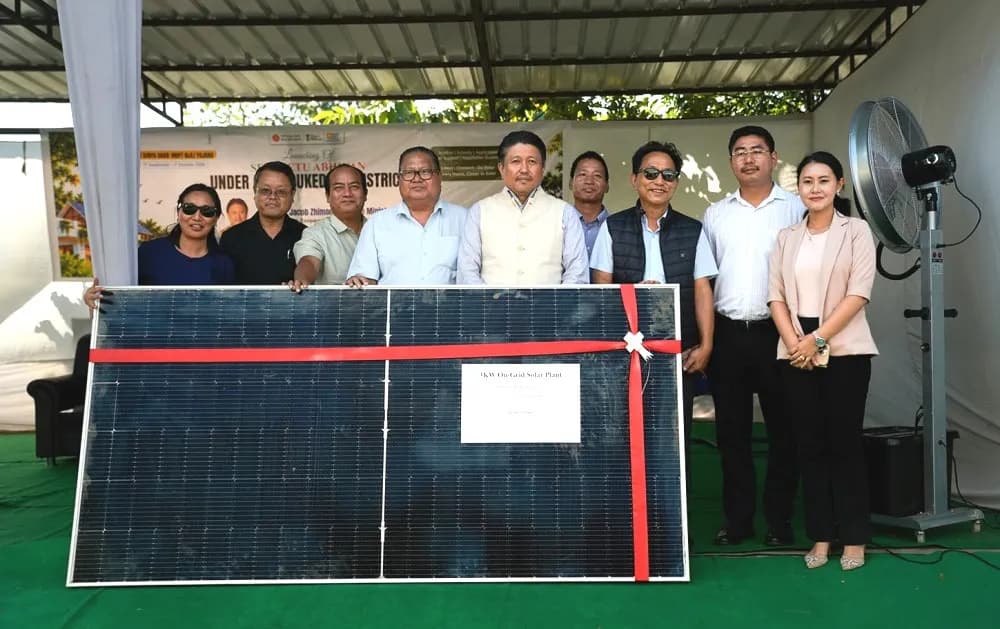
Zhimomi called for making Chümoukedima, Dimapur, and Niuland model districts in implementing the scheme and appealed to residents of the three districts to live peacefully together. During the event, the legislator donated a solar panel system gifted to him by the department to the Sovima Village Council for its community hall, stating that others facing hardship needed it more.
Executive Engineer of the Electrical Division Chümoukedima Albert Ezung stated that the Government of Nagaland provides the highest rooftop solar subsidy among Indian states under the Nagaland Solar Mission. However, he expressed concern that out of the 10,000 households earmarked for the state, only around 800 consumers had availed the scheme so far, compared to Assam, where around three lakh systems have been installed against an initial target of one lakh.
Ezung projected that the state's power demand would rise from 200 MW to 300 MW by 2030. "We are projecting that by 2030, our power requirement will be around 300 MW that is we have projected. That is our requirement," he said.
He pointed out that purchasing an additional 100 MW by 2030 would cost around INR 450 crore annually at current rates, while setting up hydel generation takes at least 10 years and faces land issues. He warned that power tariffs could reach INR 15 per unit within the next five years if demand keeps rising and urged consumers to attain self-reliance through rooftop solar.
He also shared that Sovima village recorded the highest installed solar capacity in the district, making it eligible for an INR 1 crore central grant under the Model Solar Village competition. Additionally, under the Chief Minister's Community Solar Partnership initiative, Chümoukedima district has been allotted 24 villages, with 14 to 15 community halls already fitted with solar units.
Kohima: In Kohima, the Department of Power organised a three-day camp from October 14 to the 16th at the Secretariat Junction to assist households with on-the-spot registrations and technical guidance.
During the launch, Principal Secretary for Power Dr. KD Vizo urged citizens to make use of the scheme to lower power purchase costs and highlighted the choice between on-grid, off-grid, and hybrid solar systems.
Chief Engineer (D&R) Lobosang Jamir noted that the drive seeks to reduce dependence on grid power and urged residents to take advantage of the combined state and central financial assistance.
Dimapur: In Dimapur, Deputy Commissioner Dr. Tinojongshi Chang inaugurated a three-day camp at the DC Office Complex in Purana Bazar.
Delivering the introductory speech, Executive Engineer of the Electrical Division Lhuvoyi pointed out that against a national target of one crore households, nearly 40 per cent had been achieved, whereas Nagaland had reached only about 5 to 6 per cent of its 10,000 household target, covering approximately 500 households so far.
Mokokchung: In Mokokchung, Sub-Divisional Officer (Civil) Ajay Moktan launched the camp at the DC office.
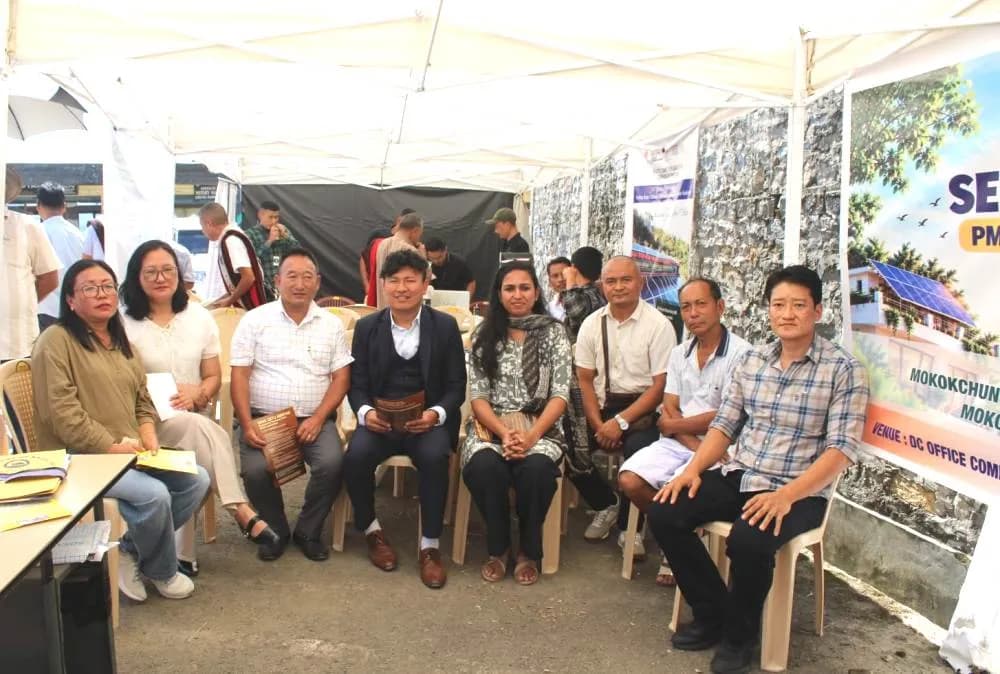
The Executive Engineer of the Mokokchung Electrical Division, Chutsusie Thowachu, stated that growing power demands have strained traditional thermal and hydro sources. He announced that empaneled vendors, including M/S Smart Tech and Native Enterprises, would be stationed at the DC Office Complex from October 14 to 16 between 10:00 am and 2:00 pm.
During the event, beneficiary Asung Jamir reported that his monthly power bill dropped from INR 1,700 to INR 230 after installation, while another beneficiary shared that solar power had reduced her household reliance on LPG and firewood.
Wokha: In Wokha, Deputy Commissioner K Mhathung Tsanglao launched the camp at the DC conference hall.
Executive Engineer Chenosing Kemp delivered the keynote address detailing rooftop solar features, while Tsanglao spoke on the need for responsible energy consumption, referencing his experience with smart metering.
Chaired by Junior Engineer N Chichamo Humtsoe, the event was attended by town council members and colony chairpersons, alongside representatives from Nexgen Solution.
Longleng: In Longleng, an awareness programme was organised by the Electrical Department at the DPDB Hall.
According to a DIPR report, SDO (Electrical) Moichung Shambu Phom chaired the programme, while Executive Engineer Temjensangba CTN briefed attendees on solar energy generation and grid dynamics.
Empanelled vendor Shilunaro Jamir of M/S Shan Enterprises explained the application and installation workflow, and SBI representative C Mhaden Yanthan outlined the online portal claim mechanisms and credit parameters.