


Nagaland records a rise in job seekers in 2025, while self-employment registrations surge sharply, highlighting shifting employment trends and low placement rates.
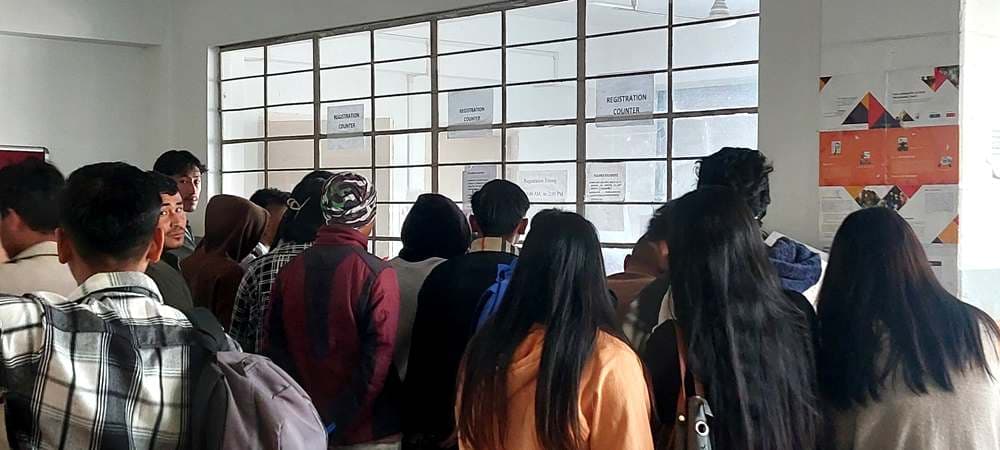
KOHIMA — The number of job seekers registered with Employment Exchanges in Nagaland recorded a modest increase in 2025, even as the state witnessed a sharp surge in self-employment registrations, according to the Annual Administrative Report 2025–26 of the Directorate of Employment, Skill Development & Entrepreneurship.
A total of 72,871 applicants were listed in the Live Register as of December 31, 2025, up from 70,558 in 2024—an increase of 2,313 job seekers.
Of the total, 54,177 were male and 18,694 female, compared to 50,413 males and 20,145 females in 2024, indicating a rise in male registrations but a decline in female participation.
The educational profile showed varied trends. The ‘Below Matric’ category accounted for 20,000 applicants (18,103 males and 1,897 females).
Matriculates numbered 13,636 (11,608 males and 2,028 females), while 10,829 were Pre-University applicants (7,890 males and 2,939 females).
Also read: Nagaland has 35,088 EPFO subscribers — Labour department
Graduates declined to 19,359 (11,716 males and 7,643 females) from 20,599 in 2024. In contrast, postgraduate applicants increased to 6,496, including 3,055 males and 3,441 females.
Among technically qualified candidates, 2,016 held technical degrees (1,427 males and 589 females), up from 1,879 in 2024. Diploma holders rose slightly to 535 (378 males and 157 females) from 525 the previous year.
Sharp surge
A major highlight of the report was the sharp rise in self-employment registrations, which jumped to 23,091 in 2025 (17,360 males and 5,731 females), compared to just 1,374 in 2024.
Dimapur recorded the highest number at 8,292, followed by Kohima/Peren (6,072), Tuensang/Kiphire (2,547), Mon (2,447), Mokokchung/Longleng (1,368), Wokha (977), Zunheboto (714), and Phek (674).
In 2024, Kohima/Peren led with 485 registrations, followed by Dimapur (302) and Phek (294), among others.
Despite the surge in registrations, only two placements were recorded in 2025—both from Phek district—marking a steep decline from 142 placements in 2024.
The number of differently-abled applicants in the Live Register stood at 1,005 (697 males and 308 females). Of these, 834 were in the Below Matric/Illiterate category, 86 matriculates, 33 Pre-University, and 52 graduates and above.
Category-wise, 83 applicants were blind, 160 deaf and dumb, 751 had orthopaedic disabilities, while eight each were recorded under respiratory disorders and negative leprosy.
In the organised sector, 97,022 persons were employed across establishments. The state government accounted for 81,506 employees, followed by central government establishments with 4,292.
Central quasi-government establishments employed 2,594 persons, state quasi-government 1,281, and local bodies 629.
Under Act establishments, 4,669 persons were employed, while Non-Act establishments accounted for 2,051 employees.
The private sector employed 6,728 persons, including 2,946 males and 3,774 females.
The figures indicate a steady rise in job seekers and a significant shift toward self-employment in Nagaland, while also highlighting concerns over low placement rates and limited private sector absorption.