


Dressed in traditional Chakhesang attire, Sangeet Natak Akademi Awardee 2024 (Folk and tribal music) Guru Veswuzo Phesao was accorded a traditional welcome at Dimapur Airport on Friday by the Chakhesang community headed by the Western Chakhesang Hoho.
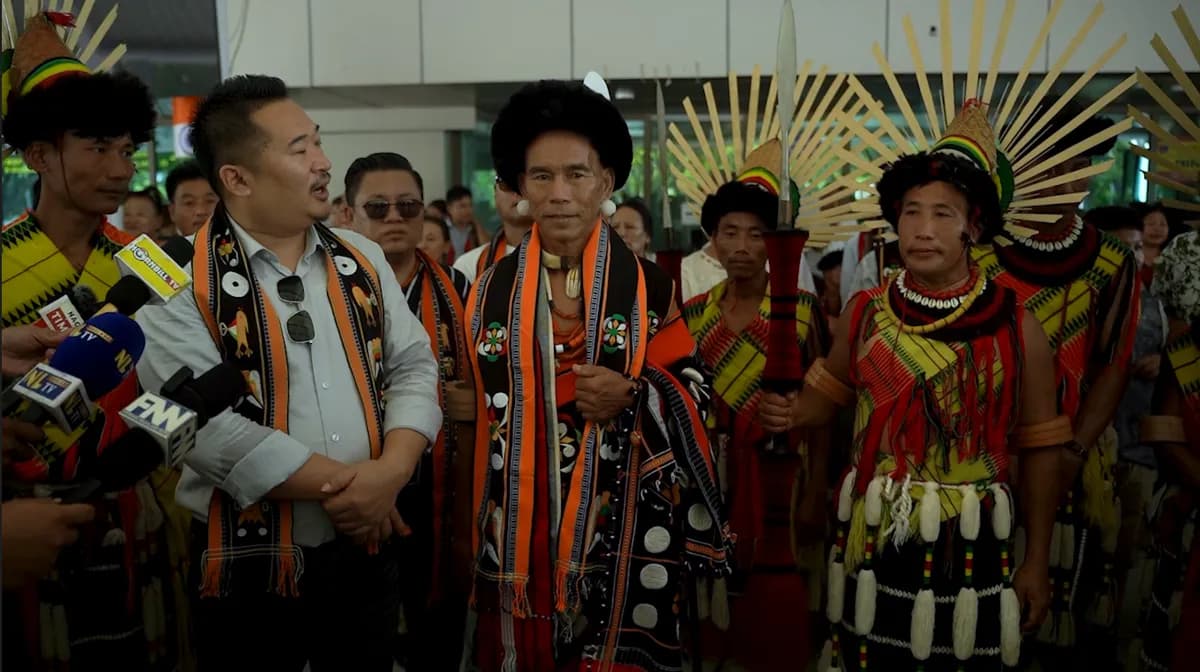
DIMAPUR — Dressed in traditional Chakhesang attire, Sangeet Natak Akademi Awardee 2024 (Folk and tribal music) Guru Veswuzo Phesao was accorded a traditional welcome at Dimapur Airport on Friday by the Chakhesang community headed by the Western Chakhesang Hoho.
The awards was presented by President Droupadi Murmuon to a total of 115 artistes -- out of which 10 were from Northeast-- at a special ceremony in New Delhi on Aug. 13, recognising artistes across music, dance, drama, folk and tribal arts, puppetry, mask-making, instrument-making and allied theatre forms.
Speaking to media persons at the airport, Phesao said in humility, that words were not enough to express his gratitude for being chosen for the prestigious award.
For Phesao, the award is less about personal credit and more about a reminder to the next generation as he conveyed “don’t let the songs die. Learn by singing, sing with elders and never let the night end in silence”.
Asked about the challenges young people face in carrying forward folk music today, he recounted his childhood in his village, singing so many traditional and folk songs with the village elders, as he recalled “I was born in a non-Christian family. My father did not know how to read or write. But two to three times a week he would take us to the fields. In the evening, we would sit with the village elders and sing”.

"We are five brothers. Even after the elders slept, we kept singing. We could not go to sleep without singing”.
It was those night sessions, he said, taught him hundreds of traditional songs by heart. That foundation took him across India and to Singapore, Bhutan and even to perform at the India-Pakistan border.
He continued, “My father had no formal education but he was full of passion for our culture. Because of what he taught us, we were able to go everywhere and represent our people”.
Phesao, however, voiced concern that many Naga youth today are drifting away from their roots as he pointed out that “nowadays our young people are losing their own culture”.
“We must preserve it with all our hearts”, he urged while asserting that if we hold on to our heritage like other communities we too can succeed and make the world recognise us.
He also extended his thanks to the Director of Art and Culture, Nagaland; the Director of NEZCC; the Director of Sangeet Natak Akademi, Guwahati; and the Director of Sangeet Natak Akademi, Delhi for their support in helping him receive the honor.
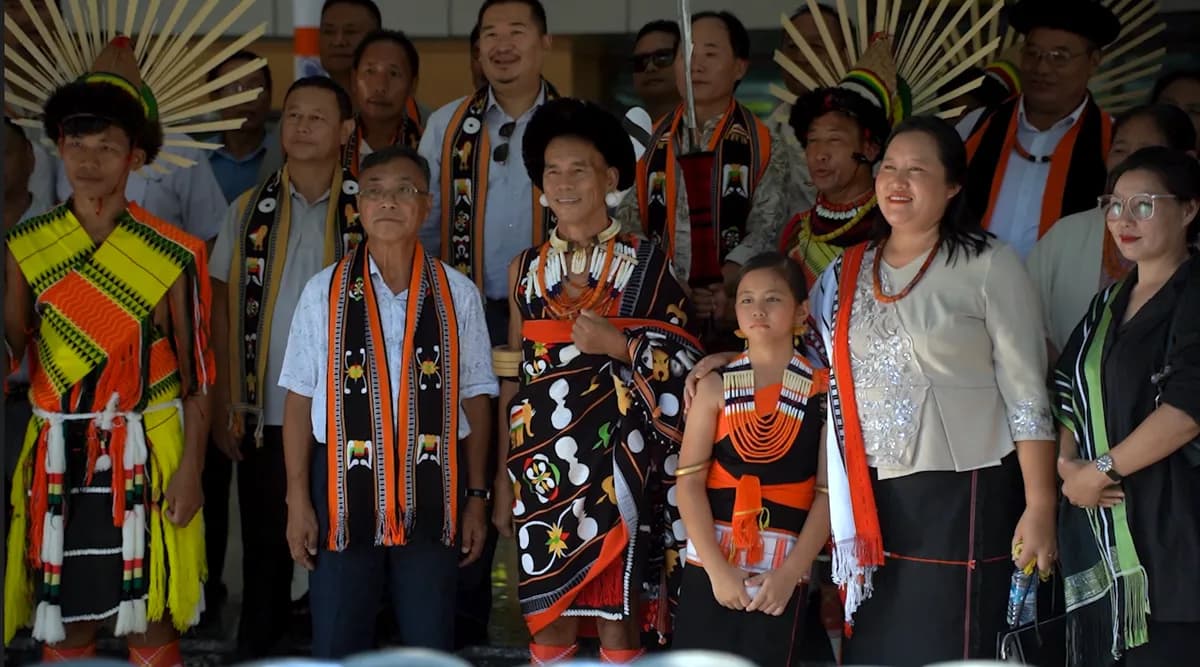
During the reception programme held at the awardee’s residence in Chümoukedima, president of Western Chakhesang Hoho Yetshülhi Ngatsi remarked the recognition as an episode “never even imagined” and a first for the Nagas and an achievement which has uplifted our identity.
"If it weren't for you, our culture and our folk songs would not be known by so many people. Today, because of you, our name is respected and for that, we thank you and congratulate you. You have given your time and your heart to uplift the Chakhesang people. Even after your retirement, you have not stopped working. You continue to train the villagers and the Chakhesang people”, he remarked and added “while this award is a personal achievement for you, the folk songs and culture belong to our entire community”.
North East Zone Cultural Centre (NEZCC) Director Alobo Naga told the gathering that Phesao received the title of 'Guru' from the Ministry of Culture under the NEZCC in 2020-2025. This recognition, he said was for his lifetime contribution to teaching, preserving and promoting our art and culture.
While pointing out that today’s generation does not know much about our culture, he remarked“our parents’ generation might be the last to know the authentic traditions. If we don’t preserve this, the future generations will be lost. Our history is an oral tradition. If we don't preserve it now, in 50 years, people won't even know the origin of the Nagas”.
“Our millennial, Gen Z and the younger generations don't know Naga folk songs or how to dance. We must work together to preserve this”, he urged.