


Dimapur, Oct. 21 (EMN): Several districts across Nagaland observed the Global Iodine Deficiency Disorder Prevention Day on October 21 by organising awareness programme on the importance of iodised salt and other activities on the theme “Understanding the importance of iodine for the body.”
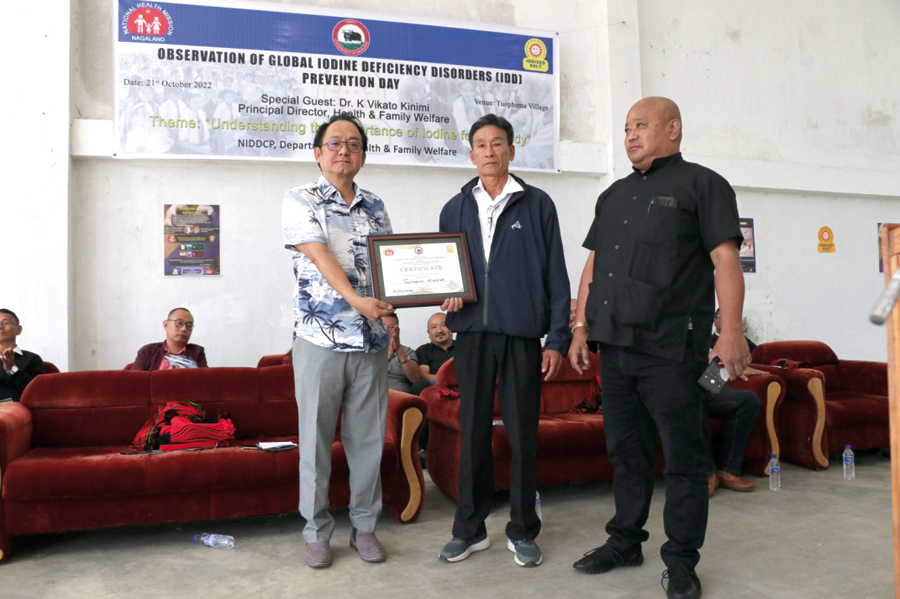
Kohima: The department of Health and Family Welfare observed Global Iodine Deficiency Disorders Prevention Day in Tuophema village, wherein the principal director of Health and Family Welfare and special guest, Dr. K Vikato Kinimi, certified Tuophema village as “Non-iodised salt-free village.”
The programme was chaired by Dr. Kika Longkumer, joint director of Health and Family Welfare, while an invocation was said by Rev. Dr. Gelhou Kets, pastor of Tuophema Baptist Church, and the welcome address was delivered by Dziesengulie Seyie, vice chairman of Tuophema Village Council.
Dr. Tiasunep Pongener, joint director of Health and Family Welfare, has highlighted on iodised salt and its importance.
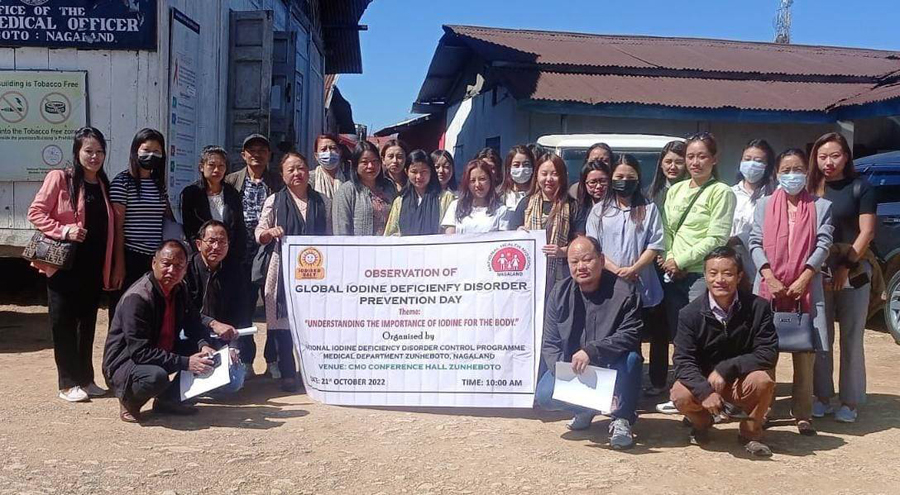
Zunheboto: Zunheboto District Health Society (DHS) observed Global Iodine Deficiency Disorder Prevention Day in the conference hall of the chief medical officer (CMO).
Delivering the keynote address, Dr. N Mhonchan Kithan, DPO (NCD), informed that the day is observed to create awareness on the critical function of iodine, which is responsible for maintaining normal growth and development of both brain and body, an update from the CMO’s office stated.
He informed that daily intake of 150 microgram of iodine in diet could prevent iodine deficiency disorders. He stated that sale of non-iodised salt for human consumption is a punishable offence and added that the department would take stern measures to enforce the law.
He further stated that traders must label non-iodised salt for animals and farms and not for human consumption.
In his short speech, the deputy CMO of Zunheboto, Dr. K Akaho Sema, highlighted about the consequence of iodine deficiency in diet that are exceedingly grievous which included mental retardation, stunted growth, lowering of IQ level, poor school performance, speech and hearing defect, difficulty in standing and walking, abortion, birth of dead babies and goiter.
He stated that the only effective control and preventive measure to combat the ailments are sustained supply, proper storage and consumption of good quality iodised salt.
Demonstration on salt analysis with STK was shown during the programme.
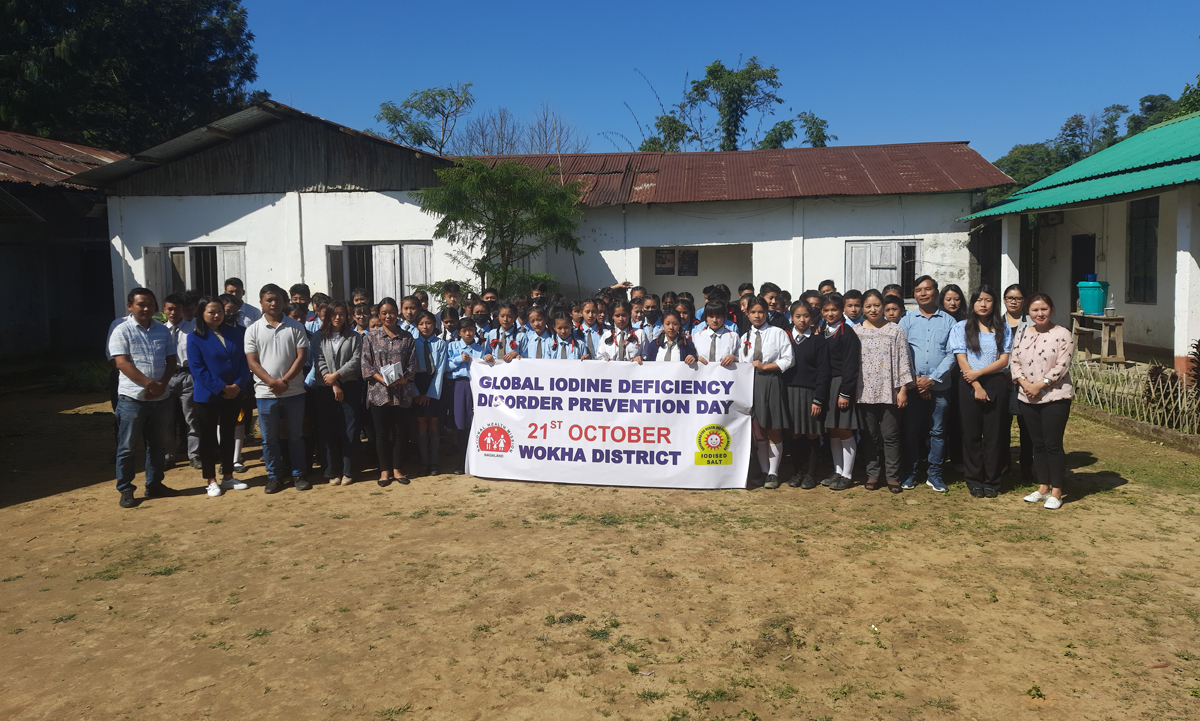
Wokha: Wokha district observed Global Iodine Deficiency Disorder Prevention Day at Government High School in Wokha village.
Addressing the students, Dr. Aseno Rhetso, NCD district programme officer, explained that iodine is a micro-nutrient found in water and soil and its deficiency leads to goitre, growth retardation, deafness, dwarfism, causes abortion and stillbirth.
Pointing out that soil and water in Nagaland lack iodine, Dr. Aseno advised to have regular intake of iodine in their diet. She also advised the students to check for the iodised salt logo on salt packets before purchasing them.
“Prevention of iodine deficiency is easy if we have 150 microgram of iodine in our daily diet,” she stressed.
The students were later given a demonstration of salt analysis by block ASHA coordinators.
Painting and essay writing competitions were also organised and prizes awarded to the winners.
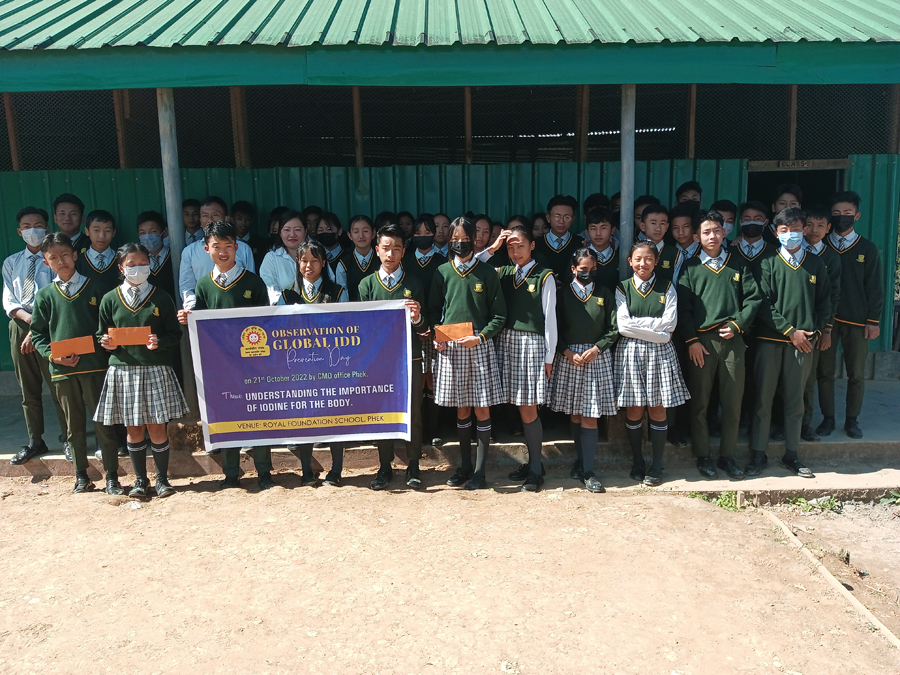
Phek: Phek observed Global Iodine Deficiency Disorders Prevention Day at Royal Foundation School in Phek town with Dr. Shevo Hiese, DVBO Phek, as the resource person.
In his speech, Dr. Hiese sensitised the students and teachers on the importance of using iodised salt and its benefits. He also encouraged the participants to consumed only iodised salt in order to prevent goitre, mental retardation, growth retardation, low IQ, deafness etc.
During the programme, demonstration on salt was conducted by Azenuo Mere, district community mobiliser (DCM), Phek, using local made salt, Everyday salt and Tata salt.
Slogan competition was also organised where a total of 58 students participated. The first prize was won by Tewekhro-u Tsuha, while the second and third prizes were won by Khruvelu Rhakho and Shemuyo Lohe respectively.