Says central leaders want to solve Naga issue under Rio’s
leadership
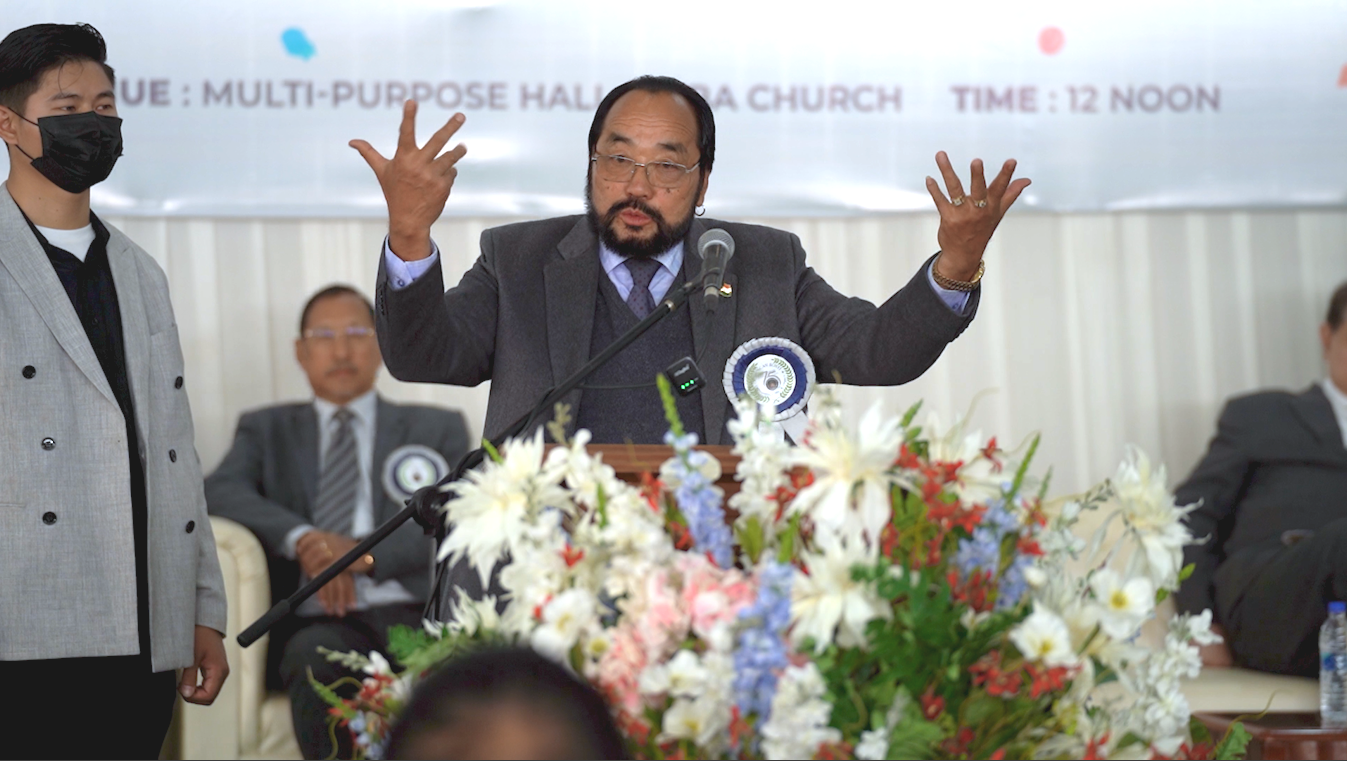
Y Patton speaking during the platinum anniversary
celebration of Duncan Bosti in Dimapur. (EM Images)
DIMAPUR — Deputy Chief Minister Yanthungo Patton on Saturday said that some Naga political groups (NPGs) do not want a
solution to the Indo-Naga issue and prefer to continue exploiting and taxing
the public.
He made the statement while speaking as a special guest
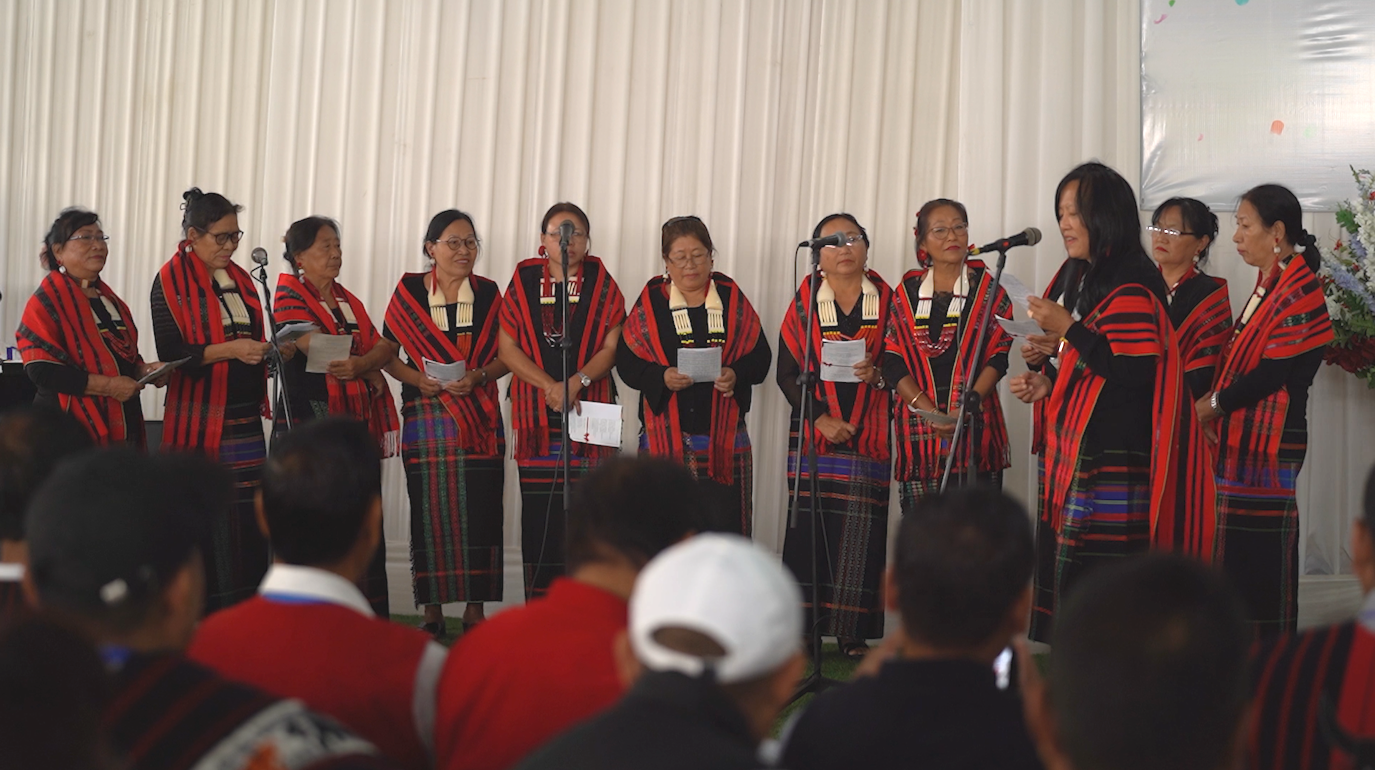
during the platinum anniversary celebration of Duncan Bosti in Dimapur. The
event was held on the theme ‘75 years of community, unity and legacy’ at the
multipurpose hall of Dimapur Ao Baptist Arogo.
(EM Images)
Patton, who holds the Home and Border Affairs portfolios as
well, said that there are 28 NPGs in Nagaland currently, out of which only five
have a ceasefire agreement with the Centre.
According to him, the Centre has made it amply clear that
there can only be one nation, one flag, and one constitution. He said that the
government of India has proposed allowing the Nagas to have their own cultural
flag and constitution, which would be incorporated within the framework of the
Indian Constitution, as well as a Naga passport.
‘However, some factions do not want a solution because if there
is one, they would have nowhere to go,’ he said, adding that they prefer to
continue exploiting and taxing the public in order to live comfortable lives.
At the same time, he said, there are some genuine NPGs
striving for Naga sovereignty.
Also view:
He also noted that the coming together of eight to nine
political parties to form an opposition-less government under the leadership of
Neiphiu Rio is unprecedented, reflecting a unified commitment towards finding a
solution.
He therefore appealed to all 28 underground factions to come
together and unite. With 28 factions collecting taxes, he questioned how the
people can survive.
The deputy chief minister appealed to the Naga public to
raise their voices collectively, advocating for a single tax system. He
emphasised that if the factions genuinely wish to resolve the Naga issue, they
must unite as one.
He mentioned that central leaders regard Chief Minister
Neiphiu Rio as a respected and influential leader.
According to him, the central leaders have often conveyed
that if the Naga political issue is to be resolved, it should be under Rio's
leadership. “The Centre has consistently maintained that the Nagas must unite
in order to reach a solution,” he added.
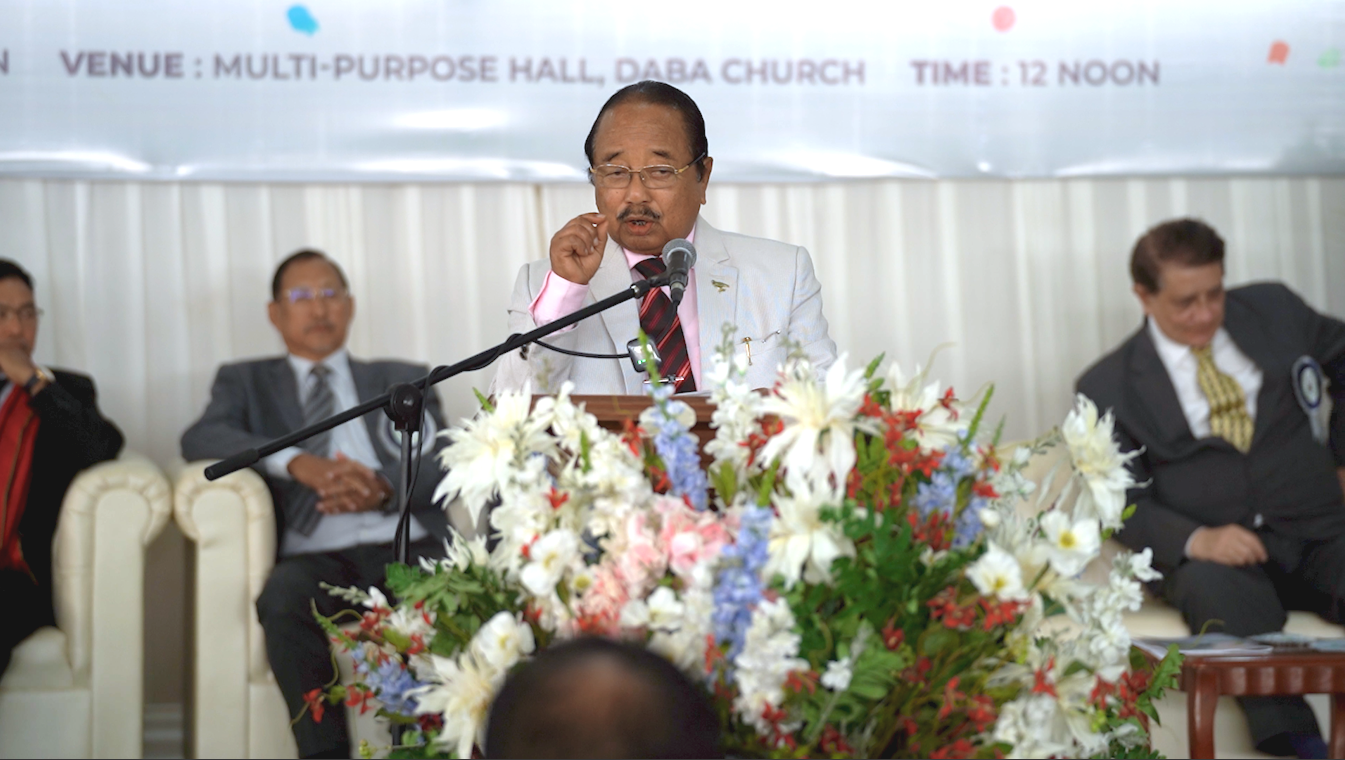
Advisor for IPR and Water Conservation, Imkong L Imchen,
speaking as the guest of honour, stated that while Naga society aspires to keep
pace with the rest of the world, their own ‘greed and unrealistic thinking’
have caused them to suffer for the past 60 to 70 years.
Imkong L Imchen speaking during the platinum anniversary
celebration of Duncan Bosti in Dimapur. (EM Images)
Imchen expressed that the Naga people exhibit a
double-standard attitude, pointing out that they enjoy the benefits of
participation and union with India under statehood while simultaneously
advocating for Naga independence, “which is self-contradictory.”
On one hand, the legislator pointed out, the people of
Nagaland celebrate statehood and participate in electoral processes “with
unmatched enthusiasm,” often boasting of the highest voter turnout.
On the other hand, he said, some “cling to the romanticised
notion of Naga independence, creating a fantasy that distracts from pragmatic
development.”
In the name of independence, many exploit the situation for
personal gain, undermining genuine progress, he said.
Imchen mentioned that in the Naga political talks with the
government of India, “there is a refusal to acknowledge reality,” and added
that “they refuse to recognise their weaknesses and tend to talk about grand
things that they are unable to achieve.”
Both Patton and Imchen are BJP legislators.
During the event, the grandson of SJ Duncan, the late
administrator after whom the locality has been named, also gave a brief speech.
A retired professor of chemistry, Dr. RH Duncan Lyngdoh
shared that his grandfather SJ Duncan was the son of William Alexander Duncan,
who had died in 1897 after falling from a horse in Dibrugarh, Assam.
At the time of his father's death, SJ Duncan was only three
to four months old. Following the incident, SJ Duncan's grandmother attempted
to take him and his mother back to Scotland; however, his mother resisted this
move, choosing to remain in Shillong, Meghalaya.
As a result, SJ Duncan grew up in Shillong and embraced a
Khasi identity, as his mother was also of half-Khasi descent.
Lyngdoh mentioned that SJ Duncan completed his education at
the Scottish Church College in Kolkata. He then joined the Assam Civil Service
in 1942 and was subsequently posted as Sub-Divisional Officer (SDO) in Chandel,
Tamenglong, Ukhrul, and Imphal in Manipur.
After independence, he was appointed as the Deputy Commissioner
of Naga Hills in 1949, and shortly after taking up the position, he worked
towards the establishment of Duncan Bosti.



 (EM Images)
 Imkong L Imchen speaking during the platinum anniversary
celebration of Duncan Bosti in Dimapur. (EM Images)
Imkong L Imchen speaking during the platinum anniversary
celebration of Duncan Bosti in Dimapur. (EM Images)