


Prime Minister Narendra Modi on Saturday announced plans to modernise the civil defence volunteer force, saying a system developed in response to conventional wars fought in past was no longer adequate when attacks could target refineries, banks, data centres and other critical infrastructure inside the country.
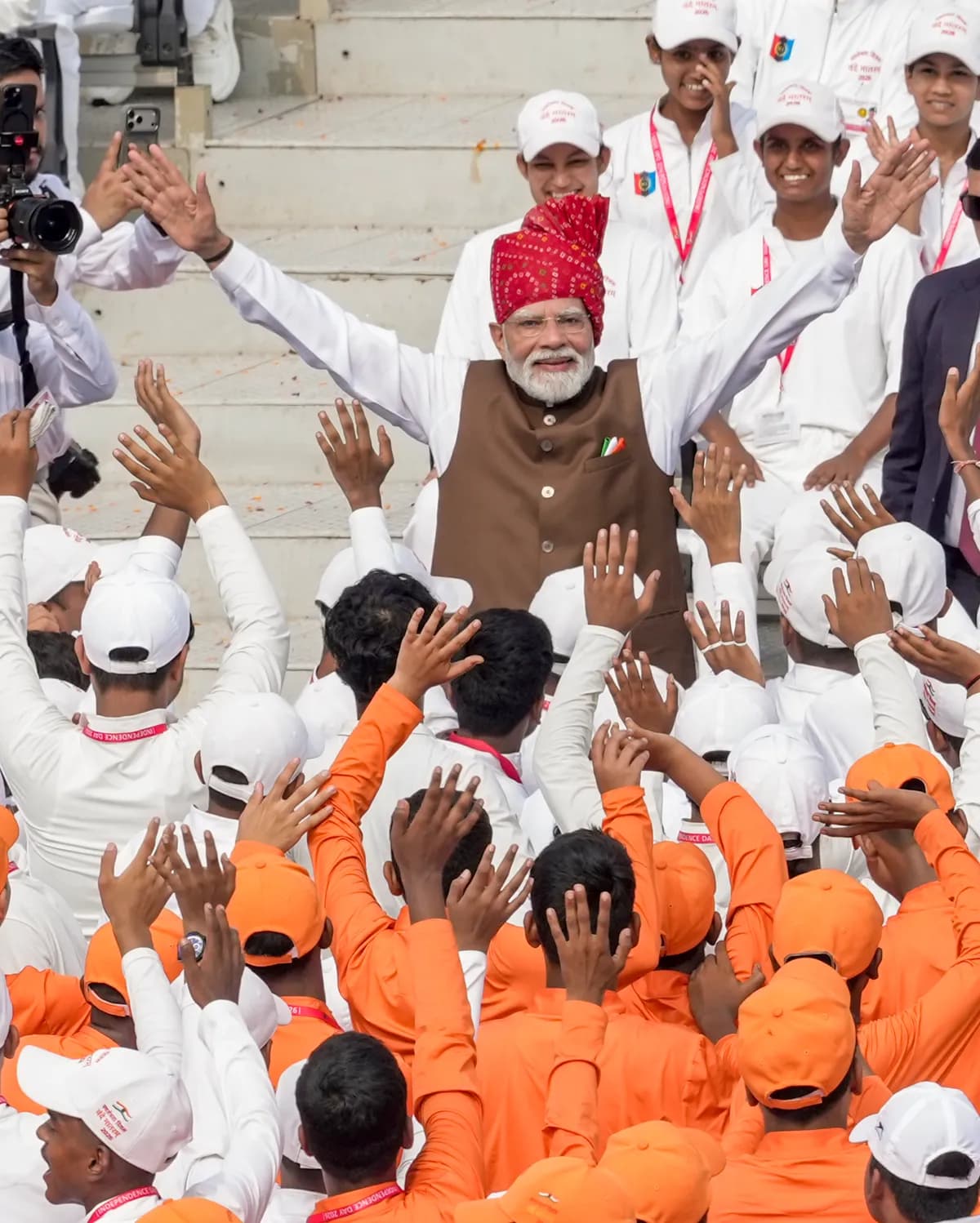
NEW DELHI — Prime Minister Narendra Modi on Saturday announced plans to modernise the civil defence volunteer force, saying a system developed in response to conventional wars fought in past was no longer adequate when attacks could target refineries, banks, data centres and other critical infrastructure inside the country.
Addressing the nation from the ramparts of the Red Fort on the 80th Independence Day, Modi said the changing nature of warfare required India to strengthen not only its armed forces but also civilian preparedness against new-age threats.
"Today, the nature of warfare is changing. There is no longer any guarantee that a war will only be fought along border frontiers," Modi said.
He emphasised that threats could emerge far from the battlefield and target refineries, the banking system, data centres, factories and other critical infrastructure.
"In these changing times, we have to increase the capability of our armed forces, but at the same time we must also prepare our citizens," the prime minister said.
Modi noted that the country's existing civil defence system, built around the requirements of wars fought in an earlier era, had become outdated and would be prepared to meet contemporary challenges.
"Today, from the ramparts of the Red Fort, I announce that in the coming days, we will establish a vibrant network of civil defence. We will familiarise them with modern systems," he said.
The government, he said, would examine measures needed to protect citizens during modern-day crises and create a "massive, modern civil defence volunteer force" capable of responding to contemporary threats.
The Civil Defence Rules, 1968, reflect many of the concerns of conventional warfare from that period. They provided for measures such as control of lights and sounds, protection against hostile aircraft, evacuation, fire prevention, rescue services and training of the public for civil defence.
The system was put through a major test in May last year when the government conducted 'Operation Abhyaas', a nationwide civil defence exercise against the backdrop of heightened tensions following the Pahalgam terror attack.
According to the Home Ministry, the May 7, 2025 exercise covered 400 districts, including 244 categorised civil defence districts. The exercise included activation of air-raid early-warning links with the Indian Air Force, blackout measures, evacuation drills and measures to protect vital installations.
The prime minister linked the proposed civil defence overhaul to the government's broader push to strengthen India's defence capabilities.
He referred to "Mission Sudarshan Chakra", announced by him from the Red Fort last year as an initiative aimed at strengthening protection of strategic and civilian infrastructure, and said work on it was progressing rapidly.
"Developing a secure India is our collective responsibility. Whether the challenge arises from within our borders or from beyond them, India is fully prepared for every situation," Prime Minister Modi said.