Gayatri and
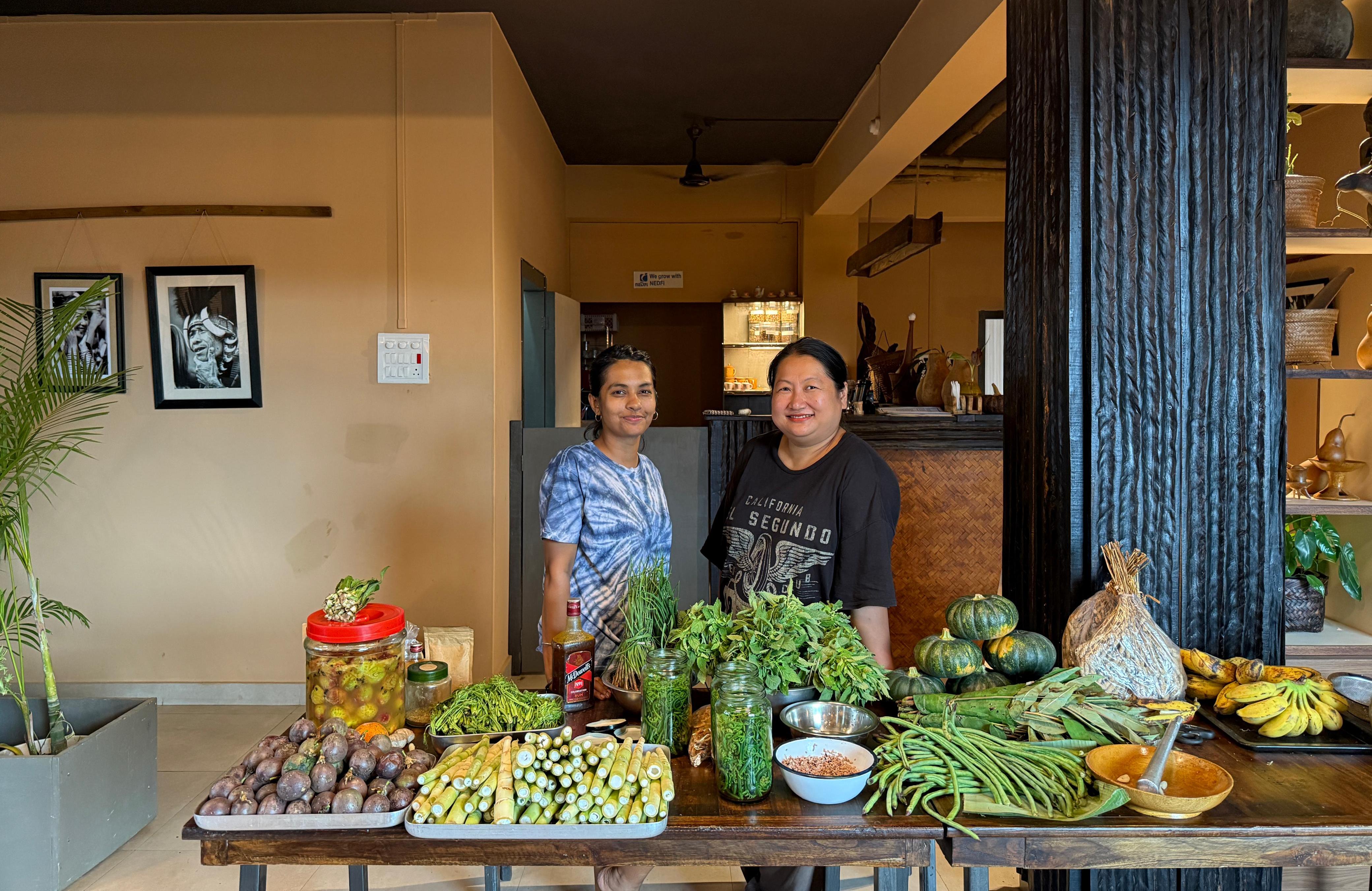
Aketoli prepping for the pop-up at Ethnic Table in Dimapur.
DIMAPUR — At Ethnic Table in Dimapur, the air smells
faintly of herbs and fermenting fruits. The kitchen is busy but quiet. In just
a few days from May 9 to the 11th, Chef Aketoli Zhimomi and Chef Gayatri Desai
will host Cultures in Transit — a 9-course tasting menu that explores links
between Nagaland and Northern Thailand through food traditions, techniques and
personal histories.
But right
now, they’re still writing the story — not on paper, but through conversation,
prep lists, and multiple trips to the local markets.
“This is
the first time I’ve done something like this at home,” says Aketoli, gesturing
toward the neatly labelled mise-en-place.
“And it’s
special — because it’s not just my story anymore.”
The idea
for cultures in transit started over long-distance messages — two chefs trading
notes on fermentation and food memories, ever since they crossed paths in 2017.
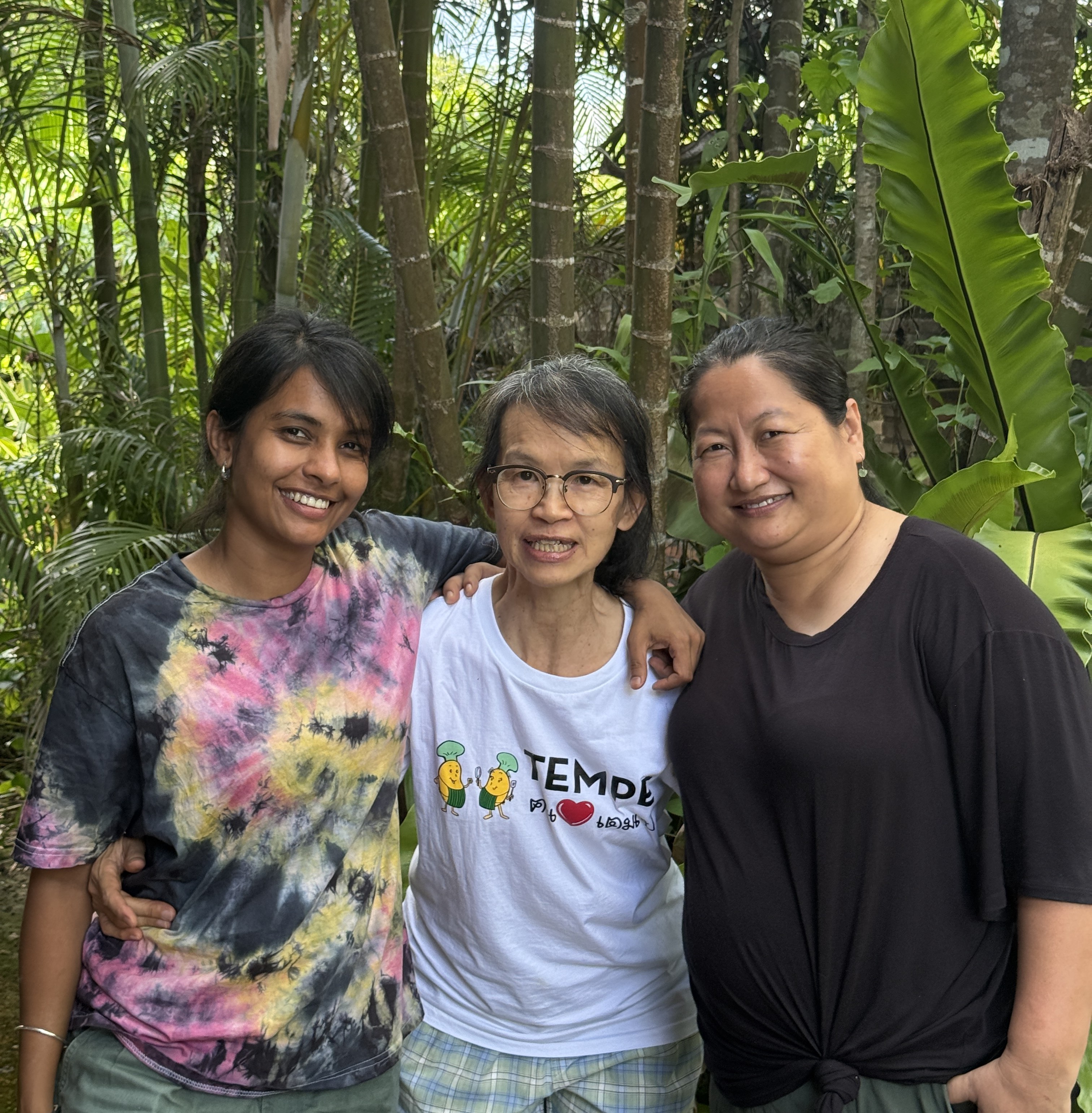
But it took real shape earlier in April, when the two travelled together across
highland villages in Northern Thailand, meeting communities whose foodways felt
uncannily familiar.
“We’ve
known each other since 2017,” says Aketoli.
“Gayatri
has travelled extensively — in Nagaland, in Vietnam and Thailand. In our
conversations, we kept finding similarities — the way people ferment, the
ingredients they use, the flavour profiles. We got really curious.”
That
curiosity soon turned into a plan.
“We decided
we had to go to these places — see the fermentation practices, understand how
people are using their ingredients. And that’s how we came up with the name
Cultures in Transit. Gayatri’s from a whole different culture — based in Pune
but originally from Gujarat— and I’m here in Nagaland. We’re travelling,
discovering, and learning together.”
In the
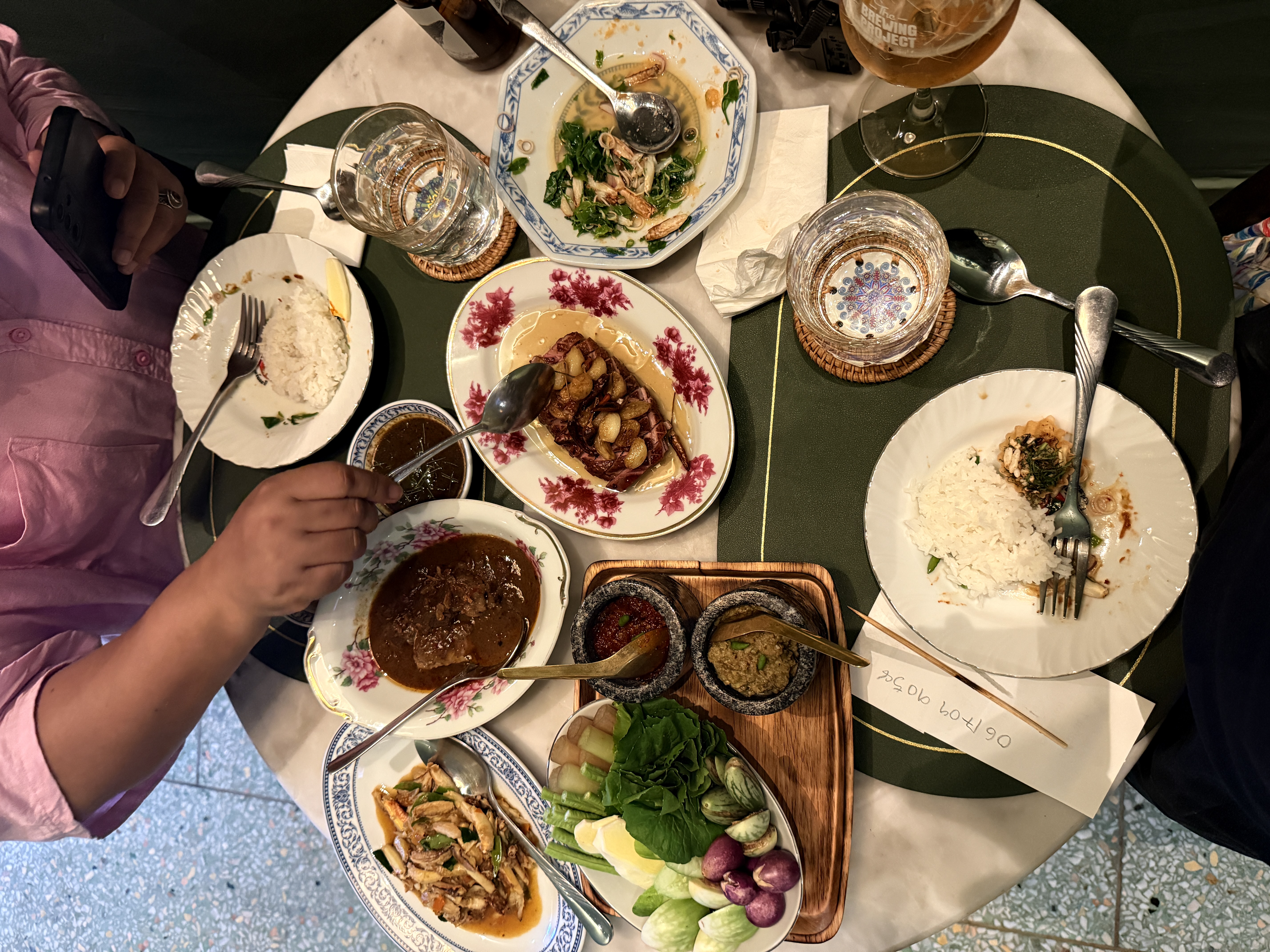
village of Ban Pa Lan in Thailand’s Phrao district, they saw locals making thua
nao, a fermented soybean product similar to the Naga axone.
“It’s not as
strong as our version here,” Aketoli explains, “but it’s very similar. They
flatten it like a papad, dry it, and then roast it. They eat it with nam phrik
— a type of dipping sauce — or pair it with herbs or infuse it into broths.
That was really exciting for us to see.”
They also
found shared ingredients and techniques around fermented fish, bamboo shoots,
and wild herbs. “Their pickled chive roots, the use of greens — it was like
walking through a market in Nagaland but with a twist,” says Aketoli.
Respect
over reinvention
As chefs
working with regional and indigenous foodways, both Gayatri and Aketoli are
deeply aware of the risks of over-simplification. Naga cuisine, in particular,
is often misrepresented or flattened into a single flavour profile in wider
culinary circles.
That’s why
Cultures in Transit is as much about how they’re telling the story as it is
about what they’re serving.
There is no
fixed script, says Gayatri. “This is the first time I’ve travelled with Aketoli
for a food trip — not just to cook, but to explore together, ask questions, and
come back with a shared understanding.”
That push,
they both say, is central to their approach. Instead of replicating dishes,
they’re building new interpretations that honour the essence of each place.
Aketoli
says it isn’t about showcasing ‘authenticity’ in the touristy sense, but more
about responsibility — to the people who taught us, to the land, to the type of
cooking that may not always fit into restaurant formats.
That’s part
of why they’re hosting the pop-up in Dimapur first. “It had to start here,”
says Aketoli.
A menu in
motion
Though the
final menu remains under wraps, the chefs hint at what’s coming. Each dish is
grounded in a very particular reference point — a shared memory, an observed technique,
a single ingredient reimagined across two contexts.
“We don’t
have a straight answer for how we’re building the menu,” Gayatri admits. “We’re
going with the flow. We’ve been hitting the markets every morning, remembering
things we ate, talking about it all constantly.”
A lot of
the work, she says, comes from trying to interpret familiar ingredients in
unfamiliar ways.
“Like the
fermented crab paste with black sesame that is used in Nagaland — we saw the
paste in Thailand too, but without the black sesame. So we’re asking, ‘What
happens if we build from here?’”
Aketoli,
who knows the Dimapur markets inside-out, plays a crucial role in this process.
“Where to
get good beef, the wild greens, the organic peaches, the herbs — her knowledge
of the markets is shaping the whole menu,” Gayatri says.
“We even
found a young bamboo shoot that neither of us had ever seen before. That’s what
this is — it’s exploration, it’s pushing boundaries.”
Some of the
confirmed dishes include smoked beef larb, inspired by the Isan-style chopped
meat salad, built with heaps of herbs and toasted rice powder.
“We’re
using smoked meat because it’s so essential here,” says Aketoli.
Another is
the fermented pork sausage, a rendition of the juicy rice-filled sausages found
in Thai markets, but here steamed in banana leaves.
There is
also a finger food course involving red ants, a nod to the chefs’ surprise at
discovering them in tacos and stews in Udon Thani.
“We’re
still figuring out the format,” they admitted saying, “But it’s definitely on
the menu.”
“Guests can
expect an evening filled with familiarity and unfamiliarity at the same time.
There will be a lot of puns and culinary déjà vu of sorts,” Gayatri says about
the menu.
What unites
the courses isn’t novelty, but intent. Every dish has a reason for being there
— a story, a memory, a shared reference. And while the plating might feel
refined, the foundations are humble: foraged greens, backyard fermentations,
stories from grandmothers and local markets.
What comes
after
Following
the Dimapur event, Cultures in Transit will travel to Pune for a six-day run at
Gayatri’s fermentary and restaurant, Ground Up. But both chefs are clear — this
isn’t a pop-up built for social media buzz or trend-chasing. It’s a longer
journey.
“No, I
don’t think this can be a one-time collaboration,” Gayatri says.
“When we
first started cooking, we knew we’d do it again. This is going to evolve.”
Asked what
success means in this context, she pauses: “Success for me is being able to
step away from my own kitchen — to travel, to learn, to be inspired by a friend
and chef who I am inspired by. That’s a privilege. And in terms of this pop-up?
If we can cook with the incredible ingredients around us and make something
that reflects this trip — that’s success.”
“And of
course, we want the guests to come curious — to learn something, to taste
something they’ve never tasted before,” Aketoli adds.
“Because
life is boring. Switch on the curiosity,” says Gayatri.
For those
interested, Cultures in Transit — a 9-course collaborative menu by Chef Aketoli
& Chef Gayatri — will be held from May 9 to the 11th at Ethnic Table,
Dimapur. With limited seating per night, reservations are mandatory and can be
made via the restaurant’s Instagram (@ethnictablerestaurant) or WhatsApp at
9856435533.