


Nagaland launches a 100-day campaign targeting one lakh people to combat child marriage and prevent child trafficking.
Campaign aims to reach one lakh people across the state from November 27 to March 8, 2027
DIMAPUR — The Department of Social Welfare has launched a state-wide 100-day campaign to combat child marriage and prevent child trafficking, targeting one lakh people across Nagaland.
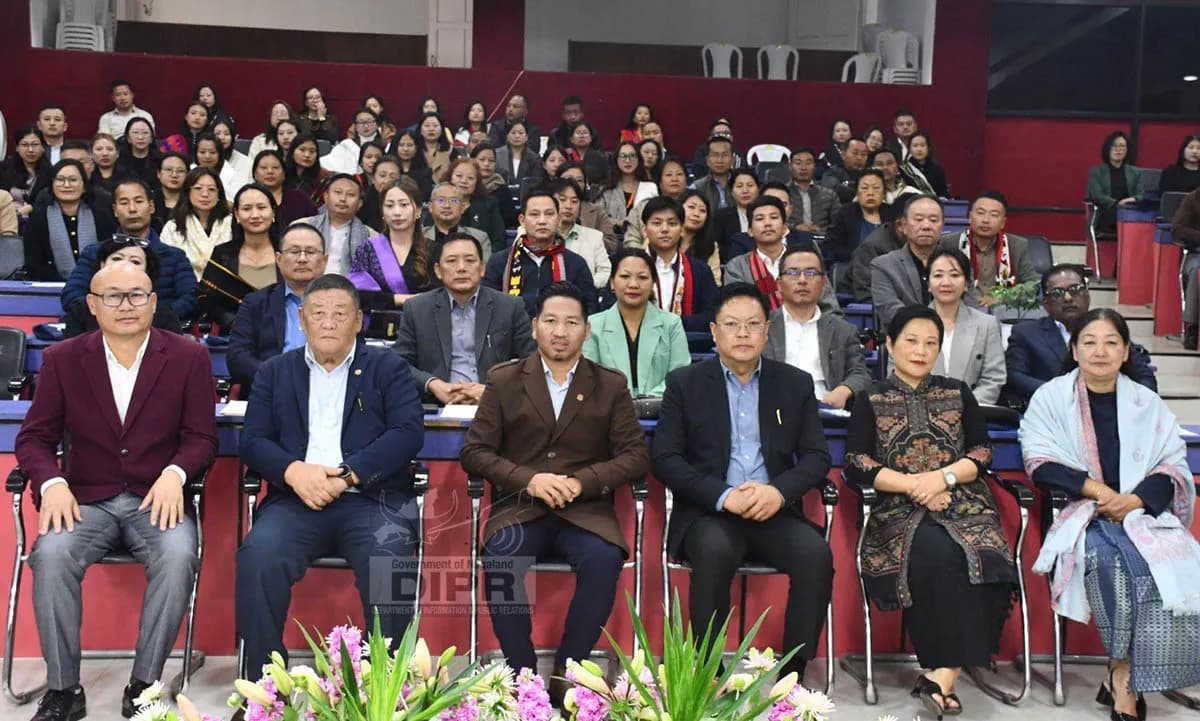
The campaign, running from November 27 to March 8, 2027, was announced during the state-level observance of the International Day for the Elimination of Child, Early and Forced Marriage at the Capital Convention Centre, Kohima, on Friday.
According to a DIPR report, the programme was organised by Mission Vatsalya and Mission Shakti under the Department of Social Welfare, in collaboration with Prodigals’ Home and Just Rights for Children, with the objective of raising awareness and strengthening collective efforts towards the prevention and elimination of child marriage.
Addressing the gathering as special guest, Advisor, Social Welfare, Wangpang Konyak, said child marriage remained a serious concern, with far-reaching consequences for children's education, health, dignity and overall development, particularly that of girls.
He also expressed concern over teenage pregnancies, especially in rural areas, and stressed the need to address the issue alongside efforts to prevent child marriage.
Emphasising that the observance of international days dedicated to women's rights, the elimination of violence against women and child protection should go beyond symbolism, Wangpang said such occasions reflected a collective responsibility and commitment towards building a just, equal and peaceful society.
Highlighting the importance of grassroots interventions, he underscored the crucial role of Child Marriage Prohibition Officers (CMPOs) in implementing the campaign's objectives.
In Nagaland, these responsibilities have been entrusted to Child Development Project Officers (CDPOs), Central Administrators of One Stop Centres, District Hubs for Empowerment of Women under Mission Shakti, and Child Protection Officers under Mission Vatsalya.
He urged the concerned officials to strengthen coordination and ensure timely interventions, effective referrals and coordinated responses.
He also stressed that eliminating child marriage could not be the responsibility of the government alone, calling for the active involvement of churches, faith-based organisations, community and tribal leaders, educational institutions, civil society organisations and NGOs.
Appealing to the gathering to view the issue from a personal and humanitarian perspective, Wangpang said every girl deserved the same protection, dignity, love and opportunities that one would wish for one's own daughter or sister.
He urged society not to remain silent in the face of violence, discrimination or forced marriage.
Delivering the keynote address, Secretary, Social Welfare department, Limawabang Jamir, highlighted the significance of November 27 as the International Day for the Elimination of Child, Early and Forced Marriage, which also marks the anniversary of the launch of the Government of India's Bal Vivah Mukt Bharat campaign.
Referring to the National Family Health Survey-5 (NFHS-5) data, Jamir stated that 5.6% of women aged 20–24 years in Nagaland were married before attaining the age of 18.
The prevalence was higher in rural areas at 7.3%, compared to 2.4% in urban areas. He stressed the need for sustained community-level interventions to address child marriage and teenage pregnancy.
He highlighted various initiatives undertaken by the Department, including awareness programmes conducted by District Child Protection Units in collaboration with schools and local communities, and the designation of Child Marriage Prohibition Officers in all 17 districts of the state.
He further stated that the Beti Bachao Beti Padhao (BBBP) initiative under Mission Shakti was complementing these efforts by promoting girls' education, addressing school dropouts and challenging discriminatory social norms.
The 100-day campaign will focus on five collective commitments: community responsibility, institutional accountability, protection of children at risk, empowerment through education and opportunities, and district-level accountability through clear action plans.
It will also emphasise coordinated reporting, timely intervention, counselling, rehabilitation and continued educational support for affected children.
The programme also highlighted the way forward through the involvement of Just Rights for Children and Prodigals’ Home, stressing the importance of collective action to make Nagaland free from child marriage.
Akhonuo Pfusenuo of Bright Morning Star Children Home, Kohima, led the pledge-taking ceremony under the Bal Vivah Mukt Bharat (Child Marriage-Free India) campaign, reaffirming the collective commitment to eliminating child marriage.
A special presentation titled ‘Voice of the Children’ was presented by children from Bright Morning Star Children Home, Kohima. An awareness video on Mission Shakti was also screened.
Following the programme, a consultative meeting of stakeholders was held on the theme, “Role of Converging Departments and Stakeholders in Combating Child Marriage.”
Representatives from the departments of School Education and Health & Family Welfare, Nagaland Police, Nagaland State Legal Services Authority, NBCC and civil society organisations participated in the discussion.