


NSCPCR has flagged infrastructure, staffing and funding gaps as key challenges to strengthening child protection mechanisms in Nagaland during a review meeting with Governor Nand Kishore Yadav.
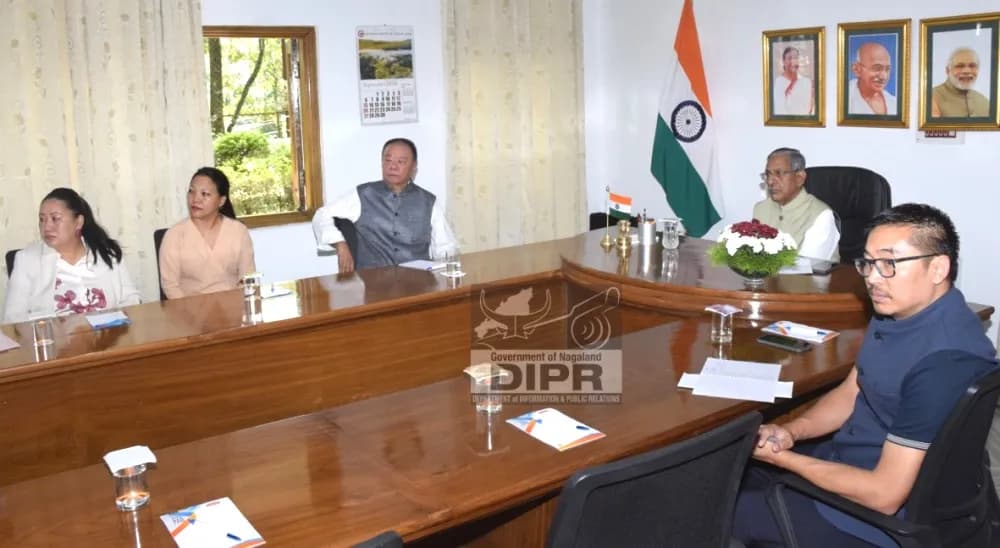
DIMAPUR — Nagaland Governor Nand Kishore Yadav on Thursday reviewed the functioning of the Nagaland State Commission for Protection of Child Rights (NSCPCR), with the Commission highlighting gaps in infrastructure, staffing and funding as key challenges to strengthening child protection mechanisms in the state.
The review meeting was held with NSCPCR officials at Lok Bhavan, Kohima.
According to a press release issued by the PRO, Lok Bhavan, the Commission outlined its ongoing efforts, challenges and future priorities for promoting and protecting the rights and welfare of children in Nagaland.
The Commission identified inadequate infrastructure and facilities for children requiring care and protection, particularly those with mental health concerns, substance abuse issues and disabilities, among its major challenges.
It also called for additional members and regular staff, as well as enhanced Grant in Aid, to effectively carry out its functions and activities.
Among its future priorities, the Commission plans to promote child-friendly rooms in courts and police stations to ensure a child-sensitive environment for children coming into contact with the law enforcement system.
Also read: Nand Kishore Yadav reviews Nagaland Staff Selection Board operations
It will also continue awareness, sensitisation and capacity-building programmes across all districts, with a focus on substance abuse prevention, child trafficking and exploitation, online and digital safety, children with disabilities and sensitisation of key stakeholders, the release stated.
During the meeting, the Commission presented an overview of its activities and initiatives undertaken from 2023 to date.
It highlighted its monitoring of the implementation of key child protection laws, including the Juvenile Justice (Care and Protection of Children) Act, 2015; Protection of Children from Sexual Offences (POCSO) Act, 2012; Right to Education Act, 2009; and Child and Adolescent Labour (Prohibition and Regulation) Act, 1986, across Nagaland.
The Commission said it had conducted regular awareness programmes involving tribal bodies, village councils, schools and district heads of departments.
It has also facilitated coordination among the Police, Judiciary, Social Welfare, Health, Education, Labour and NGOs, besides inspecting child care institutions, observation homes, special homes and schools.
It has further conducted talk shows on child rights and protection through radio and Doordarshan and initiated efforts to incorporate provisions of the JJ Act and POCSO Act into the curriculum of the Nagaland Police Training School.
The review also covered training and capacity-building initiatives, including intensive programmes for police personnel on the JJ and POCSO Acts at the state and district levels, as well as workshops with media professionals on “Child Friendly Media” and the role of the media in child protection.
The Commission also participated in the deliberation and formulation of the Tawang Declaration during a convergence programme held at Tawang, Arunachal Pradesh, contributing to a collective framework for advancing child rights and protection in the region.