[caption id="attachment_177879" align="alignnone" width="550"]
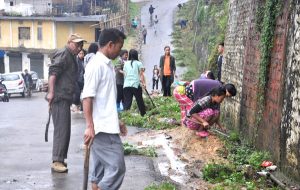 Photographs showing people participating in the state-wide social work on Saturday
[/caption]
Dimapur, April 21 (EMN): Local administrations and community groups across Nagaland took to 'cleaning' their respective locality—at least—as part of a sanitation movement during the past half-a-decade that led to the state's government calling for a state-wide cleaning push on April 21.
The event prepositioned a growing sense of incapability, or simply apathy, demonstrated by citizens in general and community stakeholders, and governing authorities to take ownership of the health of environs and public areas. The central government's sanitation movement in the form of the Swachh Bharat may not have been lost of many a citizen at least in that the people could clean their areas for a day.
[caption id="attachment_177878" align="alignnone" width="550"]
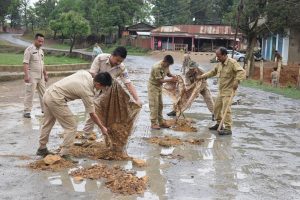
Mon town; 4th NAP camp in Thizama, Kohima; and Zunheboto town.[/caption]
In Kohima district, the capital's chief administration and municipal authorities led by the Kohima Municipal Council (KMC) took to the streets in the “mass social work" in all the wards besides villages in the district, according to the government's bulletin the department of Information and Public Relations.
[caption id="attachment_177877" align="alignnone" width="550"]
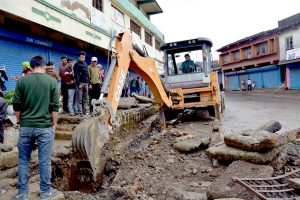 The cleanliness drive was an initiative of the Nagaland government.
[/caption]
Likewise it was in Dimapur, the commercial hub of the state and one of Nagaland's dirtier urban centres. Government departments and agencies besides citizens and community volunteers took to public areas to cleanse them of the virtually insistent eyesores and health hazards: the ubiquitous garbage piles, dark clogged drains, and more of the waste miscellany along urban roads, streets, open public centres, and not to forget the nook and cranny of each of them that has come to characterise the so-called 'most advanced town in Nagaland.'


