


NBCC and the government admit a disconnect over enforcing the Nagaland Liquor Total Prohibition Act, 1989, and agree to continue dialogue.
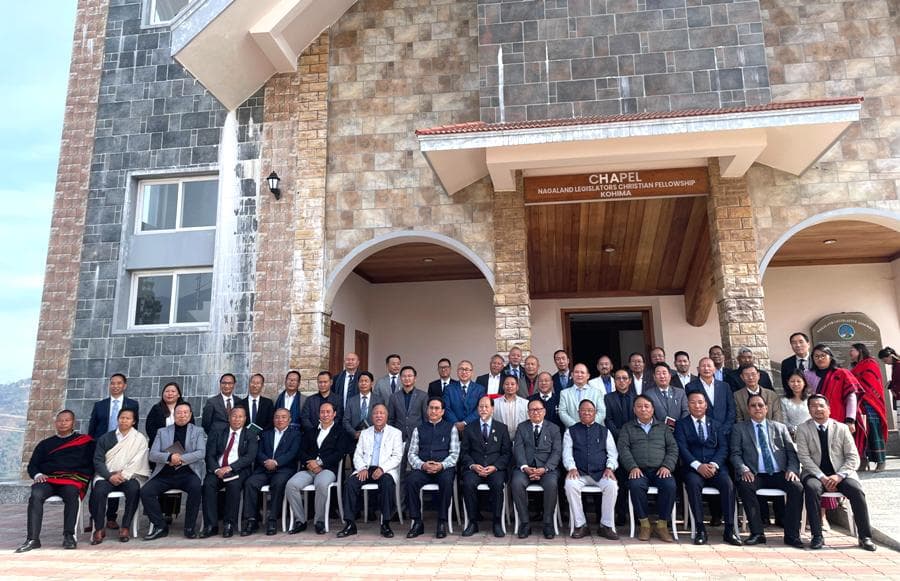
DIMAPUR — The Nagaland Baptist Church Council (NBCC) has said there is a “seeming disconnect” between the Church and the State Government over implementation of the Nagaland Liquor Total Prohibition (NLTP) Act, 1989, even as both sides agreed that stricter enforcement is needed and that dialogue should continue.
In a press release issued on Tuesday, the NBCC said these views emerged during the NBCC–NLCF joint fellowship held on February 1 at the State Chapel Hall, Kohima, which was attended by Chief Minister Neiphiu Rio, legislators, and NBCC executives.
According to the release, the NBCC said that on the one hand, the Church expects full implementation of the Act, considering the government as the sole authority responsible for keeping the law in order. On the other hand, the government has been expecting the Church to collaborate and work with it in implementing the Act.
The council pointed out that several difficulties and complications have hampered implementation, including lack of resources and manpower to combat liquor syndicates, non-cooperation from sections of the community, differing opinions, and the failure of past regulations and communitisation programmes, which it said may have affected government confidence.
NLTP Act: Dimapur Baptist bodies oppose selective lifting, seek stronger enforcement
The NBCC added that although it trusts in good faith that the government is committed to doing good for the people, the complexities involved in implementing the NLTP Act remain shrouded. It maintained that for the Church, the need to implement the Act with greater thrust is “loud and clear,” while the government appears to have been caught up in the “whirlwind of public opinions.”
Elaborating on the discussions, the NBCC said it reiterated that its stand “dwells on stricter implementation” of the NLTP Act, citing legal loopholes, as the Act allows offenders to escape with fines. It also pointed out that the State Prohibitory Council and District Prohibitory Committees were never initiated since the Act’s inception.
The council lamented the “meagre workforce” in the Excise Department, saying officials are left to fight liquor cartels with limited resources and outdated infrastructure. While acknowledging that alcoholism is both a medical and moral problem, the NBCC admitted that it had earlier treated the issue as clergy-centred and said it would now include lay leadership in tackling the matter.
Stressing that “an Act itself cannot be effective unless it is conscientiously implemented,” the NBCC questioned who is responsible for the failure of the NLTP Act, attributing years of inaction largely to a “lackadaisical attitude of the authorities” and lack of political will. It, however, noted that many youngsters are now abstaining from alcohol, aware of its ill effects.
The release said legislators raised concerns over the inflow of spurious liquor into the state and its impact on consumers’ health, as well as the scale of black-marketing and the difficulty of curbing syndicates. Some legislators also pointed to loss of revenue due to prohibition and suggested that the Act may need to be re-examined if necessary.
Chief Minister Rio is said to have asserted that the NLTP Act, 1989, is “the doing of both the government and the Church,” and that both must take equal responsibility. One participant reiterated that the Church cannot step away from its responsibility. It was also suggested that a smaller committee be formed to carry discussions forward.
According to the release, participants agreed that, regardless of whether the ban is lifted or retained, stricter implementation and stronger authorisation of legal, police and excise personnel to enforce rules and regulations are the need of the hour. It also stated that the Church should not “ransom” the government for failing to implement the Act, nor should the government shift blame to the Church. The deliberation concluded with a decision to continue dialogue and carry it forward.