


Nagaland stakeholders draft agriculture-led Viksit Bharat@2047 roadmap, prioritising climate resilience, innovation, farmer incomes and sustainable rural development
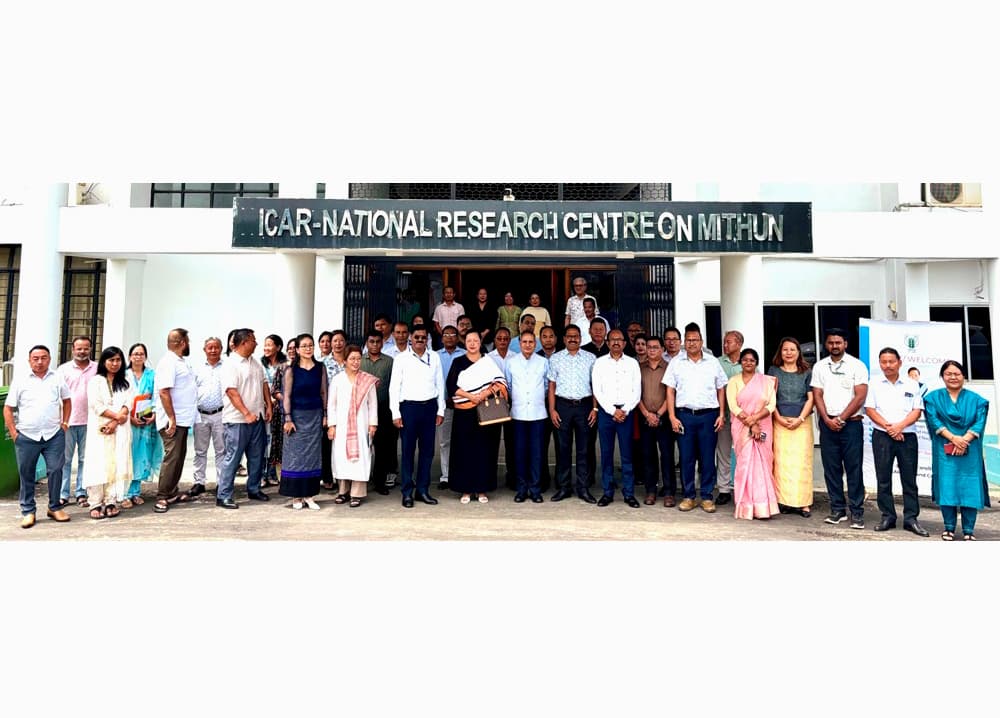
DIMAPUR — With agriculture set to form the backbone of Nagaland's roadmap towards Viksit Bharat@2047, top policymakers, scientists, academicians and senior government officials on Monday converged to hammer out a science-driven action plan focused on sustainable farming, climate resilience, innovation and improved farmer incomes.
A press release informed that the high-level stakeholders' meeting took place at the ICAR Research Complex for NEH Region, Nagaland Centre, Jharnapani, to formulate the state's Action Plan for achieving the national vision of Viksit Bharat@2047.
The meeting served as a common platform to chart a roadmap for sustainable agricultural growth, rural prosperity and inclusive development, with emphasis on scientific interventions, technology adoption and climate-smart agriculture.
Welcoming the participants, Dr. H Kalita, Head of the Regional Centre, said that collective planning and institutional collaboration are essential to transforming Nagaland's agriculture into a resilient, productive and income-generating sector. He stressed that agriculture and allied sectors would play a crucial role in ensuring food security, improving farmers' livelihoods and driving the state's economic growth.
Also read: Nagaland hits halfway mark for PM SVANidhi loans with over INR 10 crore disbursed
In his opening remarks, Dr. G Kadirvel, Director of ICAR Research Complex for NEH Region, Umiam, underscored the need for science-led, evidence-based planning and stronger convergence among research institutions, government departments and development agencies. He that said innovation, climate-smart agriculture and technology adoption would be key to realising the Viksit Bharat vision.
Delivering the keynote address, Dr. BP Bhatt, Vice-Chancellor of VCSG Uttarakhand University of Horticulture and Forestry, called for integrating indigenous crops and medicinal plants into development strategies while making agriculture more profitable and sustainable. He also underscored strengthening linkages between scientists and farmers.
Minister for Water Resources and Horticulture Salhoutuonuo Kruse reaffirmed the state government's commitment to accelerating agricultural transformation through farmer-centric policies, improved infrastructure, climate-smart technologies and stronger value chains. She asserted that the vision of Viksit Bharat could only be realised through collective efforts and active participation from all stakeholders.
An in-house brainstorming session chaired by Dr. Kadirvel identified key priorities for the state's action plan, including enhancing agricultural productivity, conserving natural resources, strengthening research-extension linkages, promoting agri-entrepreneurship and expanding the adoption of modern technologies.
In his concluding remarks, Agriculture Production Commissioner Dr. Zasekuolie Chusi called for closer coordination among government departments, research institutions and development agencies to translate the action plan into measurable outcomes that improve farmers' incomes, strengthen food security and promote sustainable agricultural growth.
The meeting was attended by directors, joint directors, senior state government officials, heads of state agricultural universities and Krishi Vigyan Kendras, scientists, chief technical officers, subject matter specialists, assistant professors, technical officers and staff from various institutions.