


Dimapur, Feb. 28 (EMN): With an aim at equipping agricultural technology management agency (Atma) functionaries with technical know how about soils in Nagaland and their management through sustainable improvement and conservation practices, State Agricultural Management and Extension Training Institute (Sameti) organised a two-day training programme on “Soil Health Management and Soil Conservation Practices” at Sameti, Medziphema on February 27 and the 28th.
An update informed that Dr. Christy BK Sangma, scientist (Soil Science), ICAR NER, Jharnapani, Nagaland; and Dr. Beremjungla, Lecturer and Incharge, Bio Control Laboratory, Medziphema, Nagaland were the resource persons of the training programme. They spoke on “acid soil management, soil conservation measures, concept of soil health management and management practices to improve soil health”.
Dr. Watimongla Jamir, incharge director of Sameti zand principal IETC, also spoke on soil maps of Nagaland in order to give the participants a better insight about the soil scenario in the state, informed the update. She stated that “soil testing and soil management are the most important factors in ensuring overall agricultural growth” and encouraged the participants to recommend crops to farmers based on soil type of the area to avoid crop failure and economic loss.
She went on to say that soil should be conserved and managed efficiently as it is the main source of bringing food on the table for mankind.
Agriculture inspector Imosanen conducted a demonstration on soil sample collection during a field trip to Agri-soil Chemistry Laboratory before discussion and interaction session began. Certificates were also given away to the participants of the training programme.
Atma Akuhaito block organises training prog.
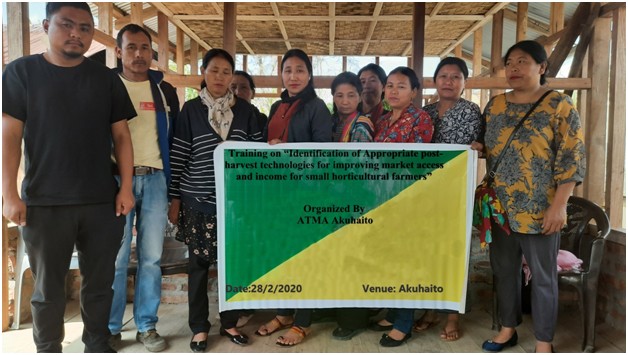
ATMA Akuhaito block organised a training and demonstration programme on “identification of appropriate post-harvest technologies for improving market access and income for small horticultural farmers” at Akuhaito village on February 28.
An update from Atma Zunheboto informed that ATM Kaiho Achumi told the trainees that “appropriate small scale post-harvest technologies can reduce fruit and vegetable crops waste, improve income by at least 30 per cent for small holder farmers and markets”. He also spoke about economically feasible post-harvest technologies that farmers can adopt.
Akangtula Jamir, DPA IFAD, carried out a demonstration on “home scale processing and preservation of fruits and vegetables” during the training programme which also included feedback, discussion and distribution of seeds.