


Nagaland appoints 6,461 officials for Census 2027 as preparations, digital initiatives and public awareness efforts continue
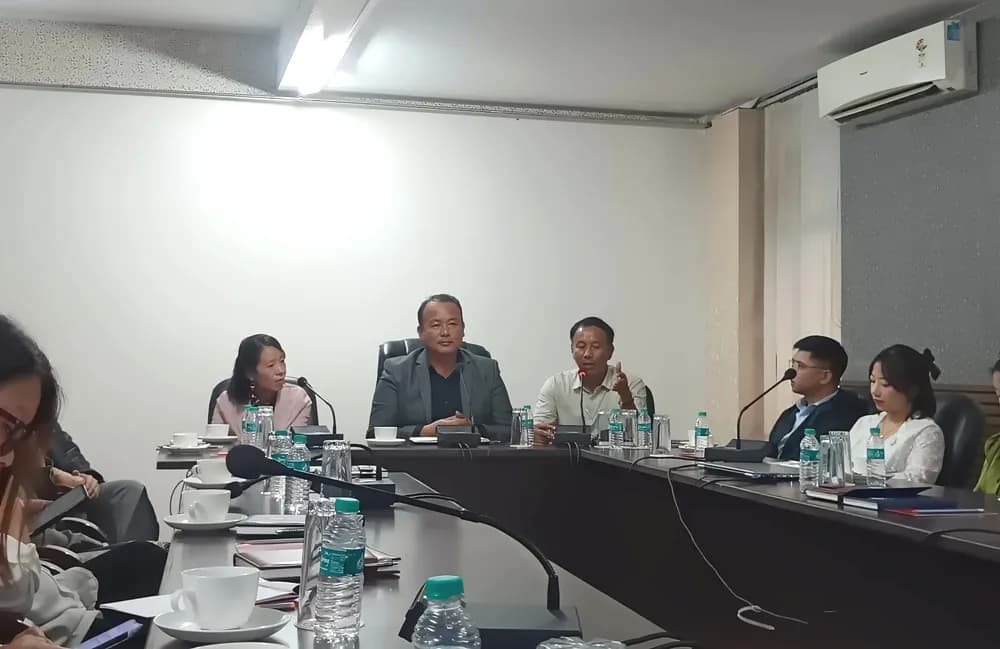
KOHIMA — The Directorate of Census Operations, Nagaland, in collaboration with the Kohima Press Club (KPC), organised a media interaction at Hotel De Oriental, Kohima, on Tuesday to brief journalists on the progress, preparations and digital initiatives for Census 2027.
Director of Census Operations Nagaland, Kenei Miachieo, outlined the census process, its phases, operational plans and digital tools being deployed to ensure accurate data collection.
He said Census 2027 would use digital platforms, including a mobile application for data collection, a self-enumeration facility for the public, a web-based portal to monitor census activities and a web mapping application for creating House Listing Blocks (HLBs).
On data security, Miachieo highlighted end-to-end protection mechanisms, security audits by reputed agencies and the designation of data centres as Critical Information Infrastructure (CII).
Also read: Census: Registrar general asks states to maintain 24x7 social media monitoring cells
Providing an update on the progress in Nagaland, he said self-enumeration under Phase I, covering the House Listing and Housing Census, was completed from June 16 to the 30th, 2026, while the house listing operation was conducted from July 1 to the 30th.
The collection of Village and Town Directory data for the District Census Handbook is underway and is scheduled for completion by October 30, 2026.
Training for Phase II, covering population enumeration, is in progress, although the dates for the exercise are yet to be notified.
Miachieo informed that 6,461 officials had been appointed as census functionaries in the state. These include 17 principal census officers, 17 district census officers, 157 charge officers, six master trainers, 130 field trainers, 1,016 supervisors and 5,118 enumerators.
He also highlighted challenges encountered during Phase I, including landslides and floods in Mon, flooding in Tuli under Mokokchung district, landslides and power and internet outages in Longleng, and internet connectivity issues in Peren.
To improve public awareness and participation, Miachieo said the department was proactively reaching out to all 1,610 village councils and 39 urban local bodies (ULBs) in Nagaland through charge officers, Extra Assistant Commissioners (EACs) and Sub-Divisional Officers (SDOs) to disseminate accurate information.
While acknowledging that some challenges remained, he expressed optimism about obtaining quality census data.
Deputy Director of Census Operations Nagaland, Imkongnungsang Longkumer, clarified that people should be enumerated at their place of usual residence so they could accurately answer the questions asked during the exercise.
He said the department was also working to ensure that census functionaries were adequately prepared to perform their duties. Longkumer added that sufficient personnel were available for data analysis and said technological measures made it less likely for duplicate enumeration across locations to go undetected.
He expressed satisfaction with the cooperation received so far and urged all communities to extend similar support during Phase II.
In her opening remarks, KPC president Vishü Rita Krocha said the Census of India was more than a statistical exercise, describing it as the foundation for planning the future of the state and the country.
Emphasising the importance of accurate and comprehensive census data for Nagaland, she said the findings would influence resource allocation, development policies and representation of communities at the grassroots level.
“An accurate census would also ensure that every community, down to the grassroots level, is properly represented and accounted for. The accuracy of this data is particularly crucial because an inaccurate count means missed opportunities and flawed planning for the next decade,” she stated.
Krocha underscored the media's role as a bridge between the government and citizens, noting that the success of Census 2027 would depend significantly on public awareness and cooperation.
She urged journalists to provide accurate information, dispel myths and apprehensions, and encourage citizens to participate truthfully in the census.