


Nagaland has just 1 MW of rooftop solar capacity, ranking among India's lowest states in solar adoption.
DIMAPUR — Nagaland has only 1 megawatt (MW) of installed rooftop solar capacity as of March 2026, placing it among the lowest-performing states in the country despite a rapid rise in rooftop solar adoption nationwide, according to an analysis by Climate Compatible Futures (CCF) based on data from the Ministry of New and Renewable Energy (MNRE).
The analysis showed that India's cumulative rooftop solar capacity reached 25.7 gigawatts (GW) by March 2026, with 2.7 GW added in the first quarter of 2026 alone, representing a 125% increase over the same period a year earlier. Residential installations accounted for 82% of the growth, largely driven by the PM Surya Ghar Muft Bijli Yojana.
However, rooftop solar adoption remains heavily concentrated in a handful of states. Gujarat leads the country with 6,882 MW of installed rooftop solar capacity, followed by Maharashtra with 5,442 MW. Rajasthan and Kerala have crossed 2,090 MW and 1,850 MW, respectively.
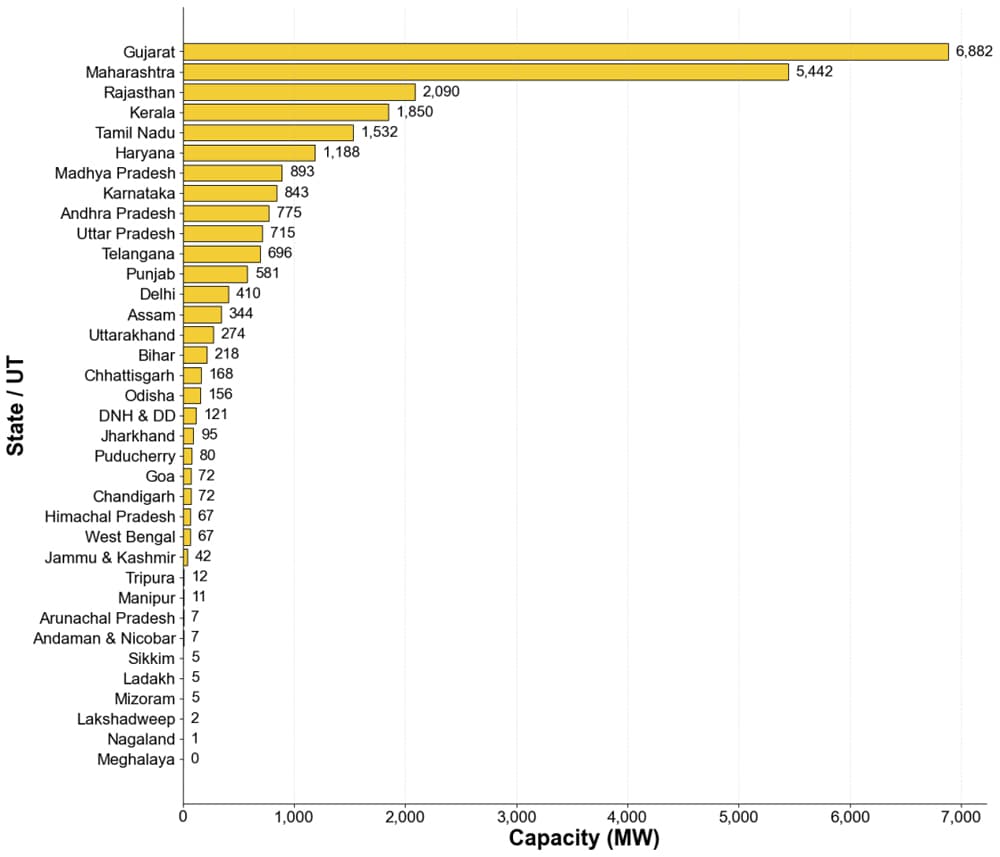
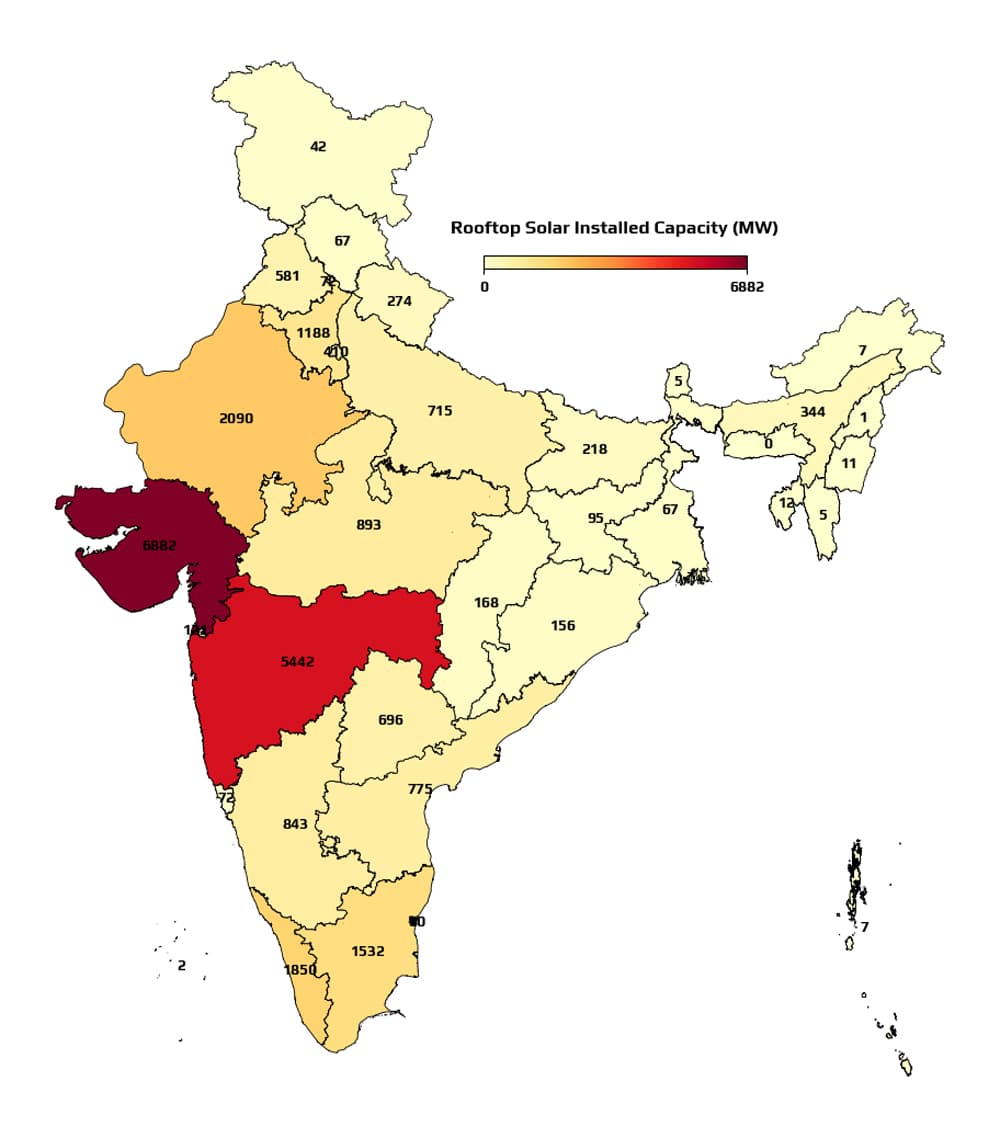
In contrast, the eight Northeastern states account for only a small share of India's rooftop solar capacity. Assam, the region's largest contributor, has 344 MW installed, while Manipur has 11 MW, Sikkim 5 MW, Nagaland 1 MW and Meghalaya 0.21 MW.
The report noted that the top 10 states account for nearly 86% of the country's total rooftop solar capacity, highlighting a widening gap between high-performing states and those that have seen limited adoption.
In the report, Dr. Manish Ram, chief executive officer of Climate Compatible Futures, said the disparity reflects differences in the development of solar ecosystems, including installer networks, financing channels and the efficiency of electricity distribution utilities in processing applications.
According to the analysis, the Northeast's slow uptake may not be primarily due to funding constraints, as states in the region qualify for higher central assistance than most parts of the country. Instead, factors such as limited utility capacity, slower approval processes, weaker financing and vendor networks, and low consumer awareness are cited as possible barriers to adoption.
The report observed that India has committed to reducing the emissions intensity of its gross domestic product by 47% and achieving 60% non-fossil installed power capacity by 2035 under its latest climate commitments. It noted that achieving those targets would require broader participation across states rather than relying on a few high-performing regions.
While rooftop solar installations have accelerated in recent years, the PM Surya Ghar Muft Bijli Yojana had achieved 9.56 GW of its 30 GW residential rooftop target by March 2026, covering about 32 lakh households against its target of one crore households, the analysis stated.