


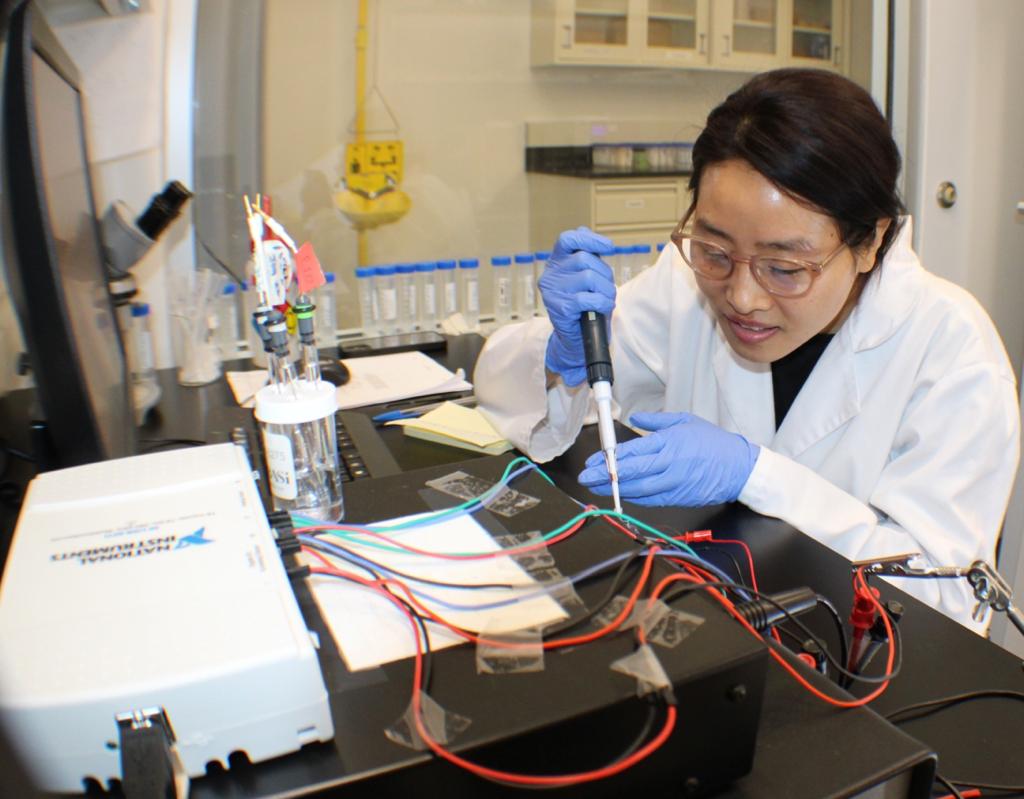
Kohima: Naga researcher Khengdauliu Chawang has developed a pH sensor built on flexible plastic-like material called polyimide to detect food freshness. The same can be prepared on lab-scale but collaborators have demonstrated successful mass production.
"Food freshness detection is one of the applications," Chawang said, during an interaction with Eastern Mirror. The sensor can also be used in quality control management like hydroponics, water quality etc, she said.
Chawang is currently pursuing a PhD in Electrical and Computer Engineering from Southern Methodist University in Texas, United States of America (USA).
She informed that the pH level is directly correlated to food freshness level. "Fresh food has a different pH level compared to spoiled (food). By continuously monitoring the pH change, we can calibrate and predict the freshness limit (meaning fit for consumption)," she said.
She apprised that the small sensor size allows integration with other electronic devices and it can operate on low power, adding that it also detects hydrogen ion concentration in any liquid.
"We use a biocompatible and inert material called iridium oxide," said Chawang, who has a master's degree in Electrical Engineering from University of Texas at Arlington, USA.
She elaborated how the flexible features in the device allow applications on conformal surfaces like electronic bandages to monitor wound healing.
[bsa_pro_ad_space id=1]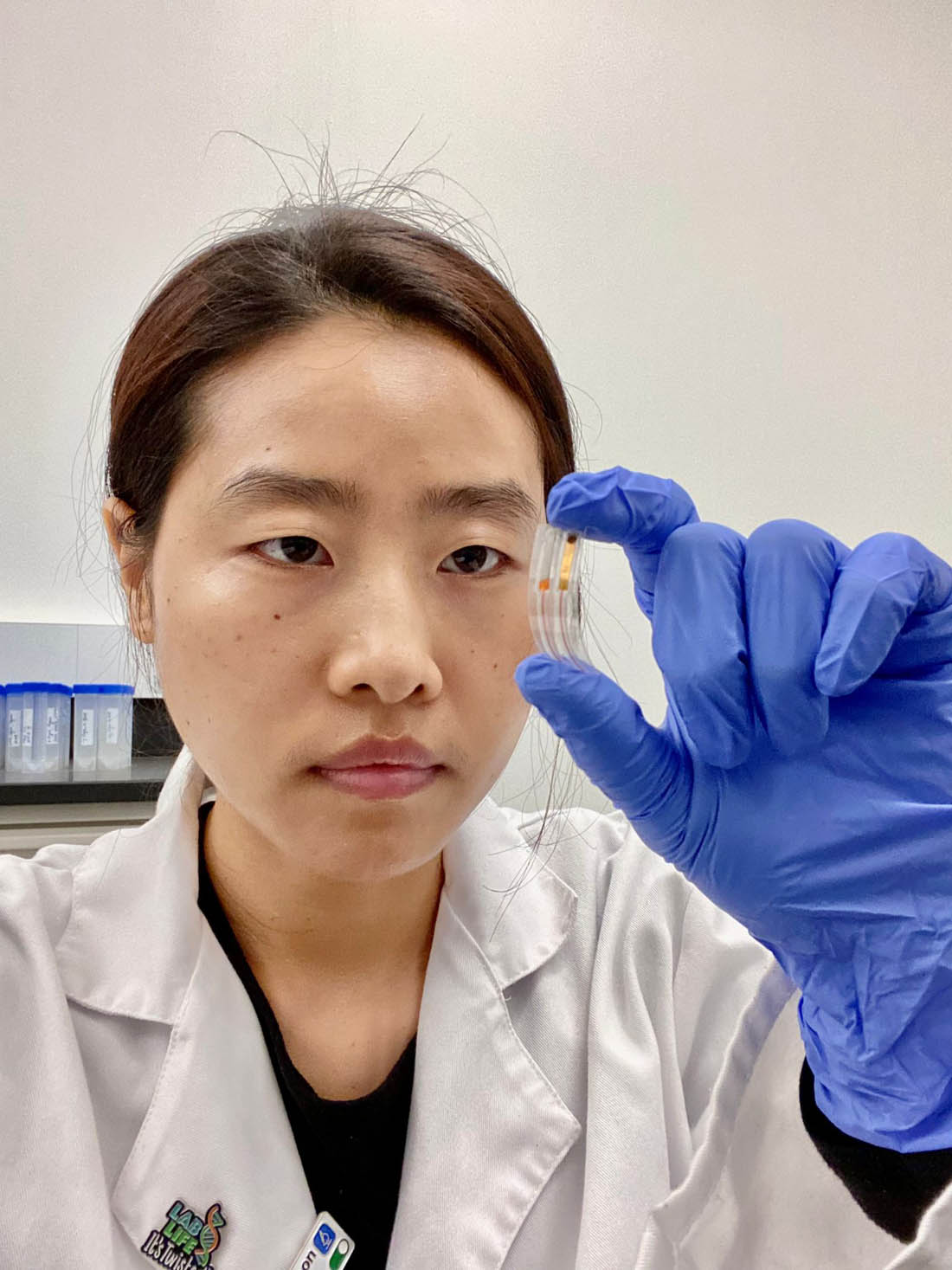
"It is easily mass reproducible at a cheap price; this makes it possible for use as a disposable sensor," said Chawang.
When asked if the sensor will be commercialised, she shared that there is a startup company in Silicon Valley that plans to commercialise the product.
However, the expected date cannot be determined currently because it is still in the first mass production stage (successful). "Other stages such as venture capitals, customer demands, FDA approval etc need to be cleared before any product is commercialised," she said.
She apprised that neither she nor Dr. Chiao (inventor of the first version) hold patent rights to the product. Therefore, she said that it would be impossible to introduce it first in Nagaland.
[bsa_pro_ad_space id=1]"Since it was created and patented in the United States, it cannot be commercialised elsewhere unless the company (who owns the product patent) allows a global patent," she disclosed.
Meanwhile, Chawang informed that the mass production phase has been successful but the estimated cost will depend on customer demand.
"High demand will increase production rate and therefore decrease the price. The only guarantee is that commercial ones are not disposable but mine is cheap enough to dispose after one-time use," she informed.
When asked if farmers and entrepreneurs from Nagaland and rural areas can benefit from the device, she said farmers can benefit a lot. "I believe they will first need a boost from local investors to make this a success," she shared, adding, “My initial business pitch was to avoid food waste using my disposable pH sensors".
She went on to inform that the application of the device is ‘actually very wide’.
“pH sensors are used for soil pH measurements to check soil fertility. They are also utilised in hydroponics to monitor water quality. It is applicable to anything as long as there is enough liquid substance. On this note, business owners have a lot to profit," she said.
Chawang's inspiration behind her device was to help the Naga community in the long run. ‘We have been taught not to waste food because poverty and hunger are real problems. Nagas or the Indian population in general is hugely dependent on agriculture,’ she said.
"We lose a lot of our crops during post harvest which is actually enough to feed the hungry," she stated.
Chawang narrated how the pH sensor integrated with RFID tags can provide freshness level and alert better storage conditions.
"Besides refrigeration and freezing, Nagas have naturally learned how to store food by drying and pickling. I think we can fuse modern technology and traditional values to prevent food waste," she said.
Meanwhile, she reminisced about the years she was pursuing her bachelor’s degree in Electronics and Communication Engineering at NIT Nagaland, Chumoukedima.
"When I joined as the 2012 batch, the campus was new and along came unexpected problems. Heartfelt gratitude to the faculties who went beyond their ways to help the confused students. Shout out to my friends (2012 batch) who taught me Hindi and my seniors with whom I am friends now," Chawang shared.
"NIT Nagaland is my alma mater and I cherish the memories," she added.