


Communities urged to lead GI applications to safeguard Naga traditional products, ensuring ownership, legal protection and economic benefits.
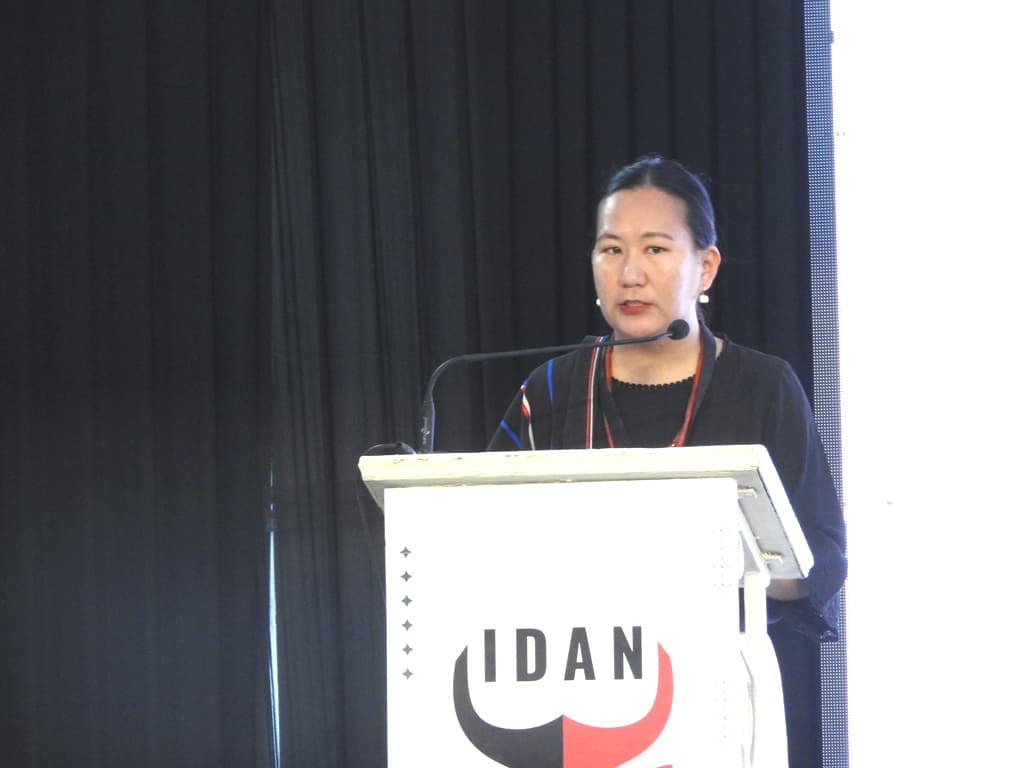
DIMAPUR — Communities should file Geographical Indication (GI) applications for their traditional products themselves rather than leaving the process to outside agencies, as this could later require them to obtain permission to produce their own cultural items, Nezelu N Kotso, Executive Director of Chakhesang Women Welfare Society (CWWS), said on Friday.
She was speaking during the second day of National IP Yatra Nagaland 2026 at the Integrated Business Hub and Innovation Centre, Dimapur, where she highlighted the importance of GI registration in preserving Nagaland’s cultural heritage and traditional products.
Kotso said Nagaland is home to numerous tribes, each with distinct dialects, customs, dances, music, folklore, food, attire and jewellery, reflecting the state’s diverse cultural identity. Protecting these traditions through GI registration, she said, is essential to ensure communities retain ownership and benefit from their heritage.
She noted that the Nagaland government has initiated documentation of tribal textiles and attires with the aim of filing GI applications. However, she said that communities themselves should ideally be the applicants.
Also read: Nand Kishore Yadav sworn in as Nagaland’s 23rd Governor
According to Kotso, when outside agencies file GI applications, communities may later have to obtain authorised user status from those agencies to produce their own traditional products. She cited the examples of tree tomato and Kholar, whose GI applications were filed through outside agencies, requiring communities to seek authorisation, while the GI registration of Naga King Chilli through the state Horticulture department represented a more community-based approach.
Kotso said GI tagging helps establish identity and legal protection for traditional products, distinguishes authentic items from imitations and ensures that economic benefits remain within the community.
She also cited instances of cultural appropriation. In 2020, CWWS filed a civil suit against designer Ritu Beri for allegedly misusing GI-registered Chakhesang shawls during a fashion show at the Surajkund Mela.
According to Kotso, the shawls were used in ways that distorted their cultural significance, including being worn as skirts and placed on the ground as carpets, which hurt community sentiments.
She said the GI registration of Chakhesang shawls enabled the community to take legal action against such misuse, demonstrating the importance of legal protection for traditional products.
CWWS obtained GI registration in 2017 for Chakhesang shawls, mufflers, stoles, belts and related items under three classes—24, 25 and 27—through the Patent Information Centre under NASTEC, department of Science and Technology.
Since the registration, she said the community has seen several benefits, including increased employment opportunities, higher production within the locality, improved quality control and greater awareness among younger generations and designers.
GI registration also enables artisans to obtain better prices for their products. For instance, a shawl that previously sold for around INR 3,000 can fetch nearly double the price when marketed with a GI logo.
However, Kotso noted several challenges, including the lack of monitoring mechanisms to detect misuse, difficulties in maintaining strict quality control and inadequate documentation. She said much of Nagaland’s cultural knowledge remains in oral form, making documentation of processes, materials and design standards difficult.