


The North East Festival of Rice: Grains of Heritage was inaugurated in Chümoukedima, highlighting rice as a pillar of culture, food security and sustainability.
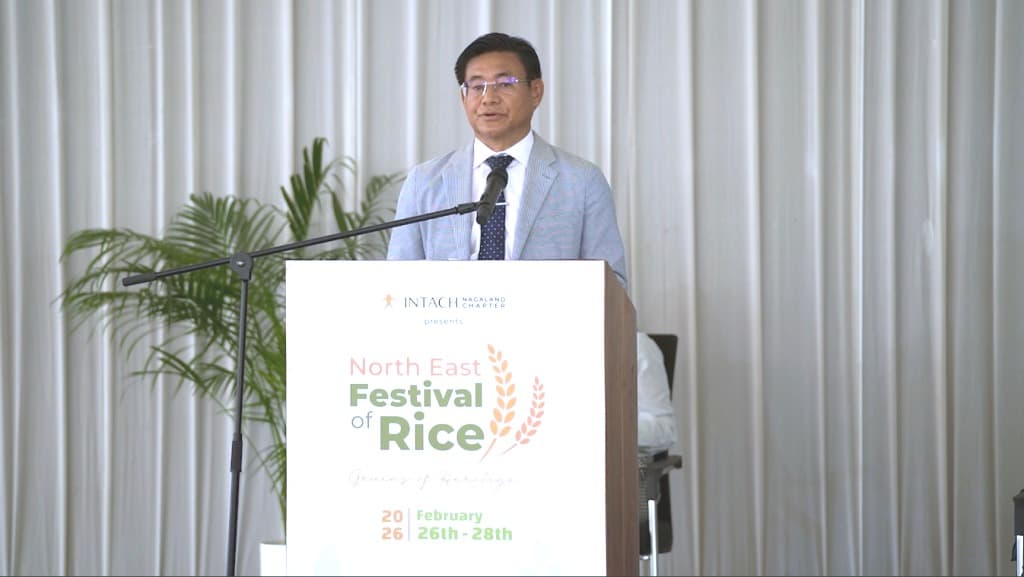
DIMAPUR — The first-ever ‘North East Festival of Rice: Grains of Heritage’ was inaugurated on Thursday at the Agri Expo in Chümoukedima, with Advisor for Agriculture Mhathung Yanthan highlighting rice as a symbol of cultural identity, food security and economic sustainability in the region.
Organised by the INTACH Nagaland Chapter, the three-day festival seeks to position rice not merely as an agricultural crop but as a living heritage that connects tradition with contemporary challenges such as climate change, sustainability and livelihoods.
Addressing the gathering, Yanthan described the festival as historic for placing rice at the centre of regional consciousness.
He pointed out that while the event focuses on a single crop, rice holds the deepest significance for the Northeast, shaping traditions, rituals, festivals and rural life.
For communities across the region, he said, rice is inseparable from identity and culture.
Also read: INTACH Nagaland Chapter announces first ‘North East Festival of Rice’
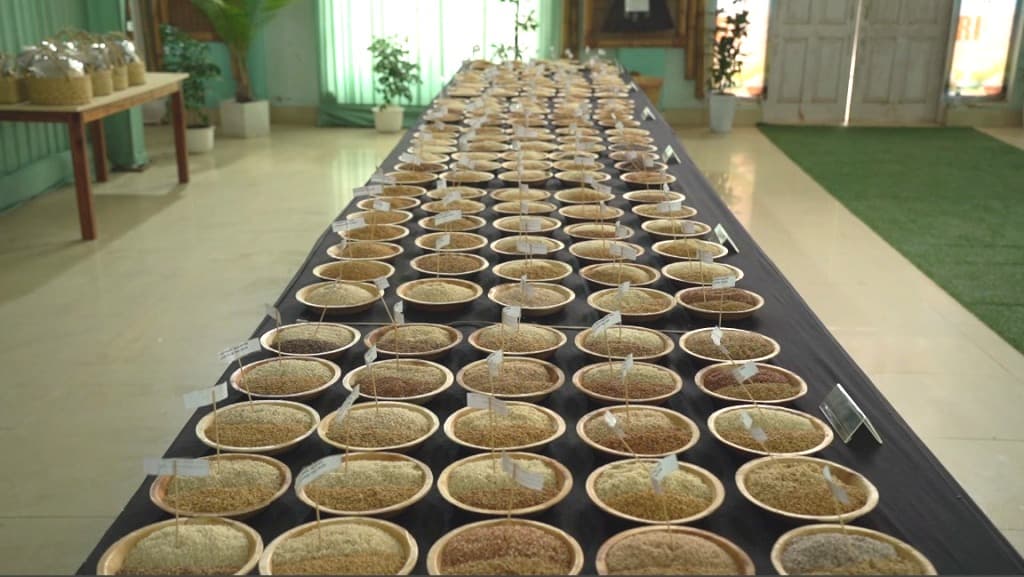
Highlighting Nagaland’s agricultural diversity, Yanthan said that the state alone has more than 200 identified indigenous rice landraces, each adapted over centuries to specific micro-climates, terrains and cultural needs.
Many of these varieties, he cautioned, are at risk of degeneration or loss due to changing farming practices, climate pressures and reduced transmission of traditional knowledge.
He described the Northeast as a globally recognised biodiversity hotspot, where farmers have long acted as custodians of seed heritage through community-based seed systems.
These traditional practices, he said, are the result of generations of careful observation, selection and stewardship, rather than accidental development.
Drawing attention to the growing impact of climate change on agriculture, Yanthan shared that food systems worldwide are under stress from erratic rainfall, floods, droughts, pest outbreaks and soil degradation.
Agriculture, he highlighted, is among the sectors most vulnerable to global warming. In this context, he said that traditional rice varieties offer valuable solutions, as many possess inherent traits such as flood tolerance, drought resistance and adaptability to low-input conditions.
However, the legislator also stressed the need for innovation and adaptation.
While conserving traditional germplasm remains important, Yanthan said that some varieties may no longer be viable under present conditions.
Citing examples, he said that certain traditional rice types take more than ten months from sowing to harvest, making them costly and risky to manage.
Such varieties, he added, need to be improved or replaced with short-duration, high-yielding and climate-resilient alternatives to meet current agricultural demands.
On sustainability, Yanthan remarked that for earlier generations, sustainability was not a policy concept but a way of life. Communities took from the land with respect and returned to it with gratitude, ensuring long-term balance.
He stressed that reclaiming this understanding is essential at a time when modern agriculture faces environmental and economic pressures.
Highlighting the livelihood dimension, the advisor said that rice cultivation supports an entire ecosystem in the Northeast, including farmers, artisans, weavers and traders. Protecting rice systems, therefore, also means safeguarding rural economies and social stability.
Yanthan urged students and young people to actively engage with agriculture, seed conservation and environmental stewardship.
He said that youth participation is crucial for nurturing future scientists, policymakers and entrepreneurs who understand the value of seeds, soil and water.
He also informed that the state has framed a new Agriculture Policy for 2024–25—pointing out that its successful implementation would depend on collaboration with scientists, researchers and institutions.
He called for a shared commitment to conserving seed heritage while supporting farmers through research-driven and policy-backed interventions.