


Nagaland churches and civil society groups renew the Clean Election Movement, targeting vote-buying and promoting ethical voting ahead of 2028 polls
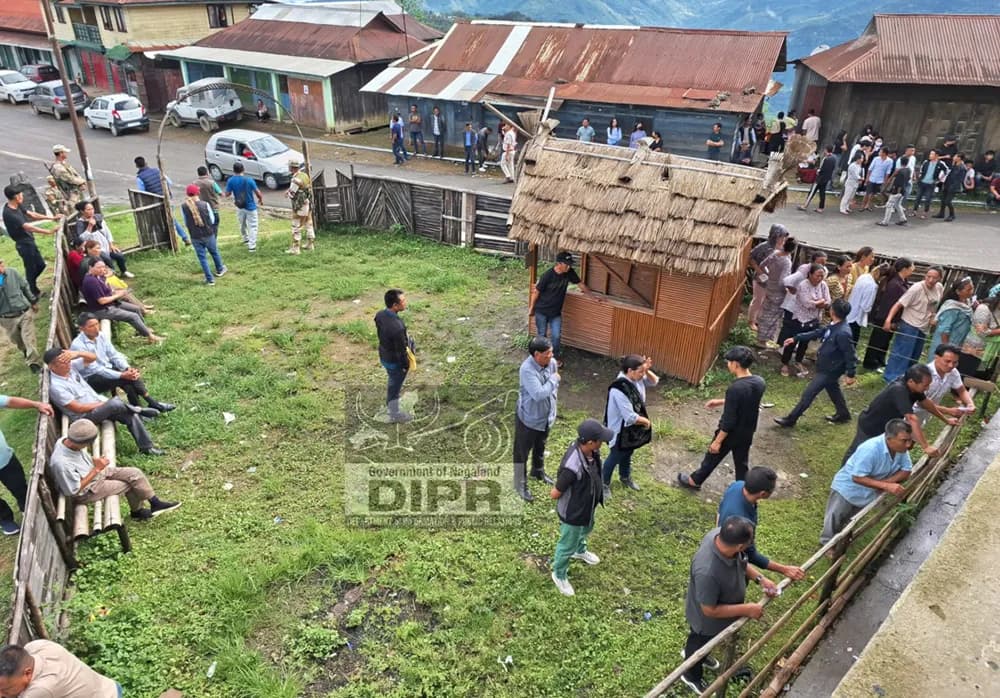
KOHIMA — With the 2028 Nagaland Assembly election in sight, church and civil society organisations have renewed efforts to promote the Clean Election Movement (CEM), an initiative spearheaded by the Nagaland Baptist Church Council (NBCC).
This year, the NBCC launched a fresh phase of the movement on August 28, followed by the Chakhesang Clean Election Movement (CCEM) on September 8.
While the movement has faced scepticism over its effectiveness, leaders involved in the campaign maintain that sustained awareness and grassroots engagement can contribute to cleaner electoral practices and better governance.
Executive Secretary of the Chakhesang Baptist Church Council (CBCC), Rev. Dr. Chekrovei Cho-o, said the movement was aimed at promoting a better society and governance and encouraging Christians to reflect those values in their daily lives.
He acknowledged that corruption could not be eliminated entirely but said initiatives such as the CEM could help reduce corrupt practices in public offices, businesses and private life.
Responding to criticism that the movement had failed to bring about significant change, Cho-o said no initiative with a good objective and strategy should be considered futile.
He stressed the importance of changing mindsets through sustained education and said the campaign needed to reach people at the grassroots, including households.
“Conscientisation is very important. The movement must get into the grassroots level and educate people at home,” he said, adding that changes in behaviour would follow changes in mindset.
Vote-buying remains challenge
According to Cho-o, electoral practices themselves could contribute to wider corruption, particularly when money becomes involved in elections.
He pointed to the difficulty of curbing vote-buying and said the use of internet banking and other digital means had made it possible to transfer money without physical cash changing hands.
He maintained that even limited progress in promoting clean elections could contribute to better governance and society.
Cho-o also stressed that the campaign should begin with individuals themselves, saying participants needed to demonstrate in their personal lives the values they advocated publicly.
CCEM chairman Rev. Dr. Kuzhopoyo Tunyi said churches should be concerned about electoral conduct because elections involved not only politics but also morality, integrity, justice and the welfare of the community.
He said church leaders had a responsibility to teach members that voting was a civic responsibility and should not be treated as a commodity.
Tunyi called for church workers to address vote-buying, vote-selling and bribery through sermons and awareness programmes.
However, he acknowledged that many people did not attend church services or seminars, prompting him to explore other ways of reaching the public.
He added that he had composed a clean-election song in Nagamese and the Chokri Chakhesang dialect as an alternative means of spreading the campaign's message.
Tunyi admitted that the campaign faced scepticism among sections of the public who believed it could not change the electoral system, but maintained that continued efforts could help bring about change.
Community involvement
The CCEM brings together the Chakhesang Public Organisation (CPO), its frontal organisations including the Chakhesang Mothers’ Association, Chakhesang Youth Front and Chakhesang Students’ Union, as well as churches under Phek district.
CPO president Vezuhu Keyho maintained that the involvement of non-religious organisations was important in promoting free, fair and peaceful elections.
He said the apex body could work with churches and other organisations to discourage the use of money and pressure during elections and address other malpractices.
Reflecting on the CPO's experience during the 2023 Assembly election, Keyho said the organisation had observed encouraging improvement in the implementation of the clean-election campaign.
He stressed the need to discourage both the selling of votes by voters and the purchasing of votes by candidates, while urging people to participate in elections without intimidation or threats.