


A community piggery project is launched in the 23rd Impur Assembly Constituency to promote sustainable income generation and rural livelihoods.
Share


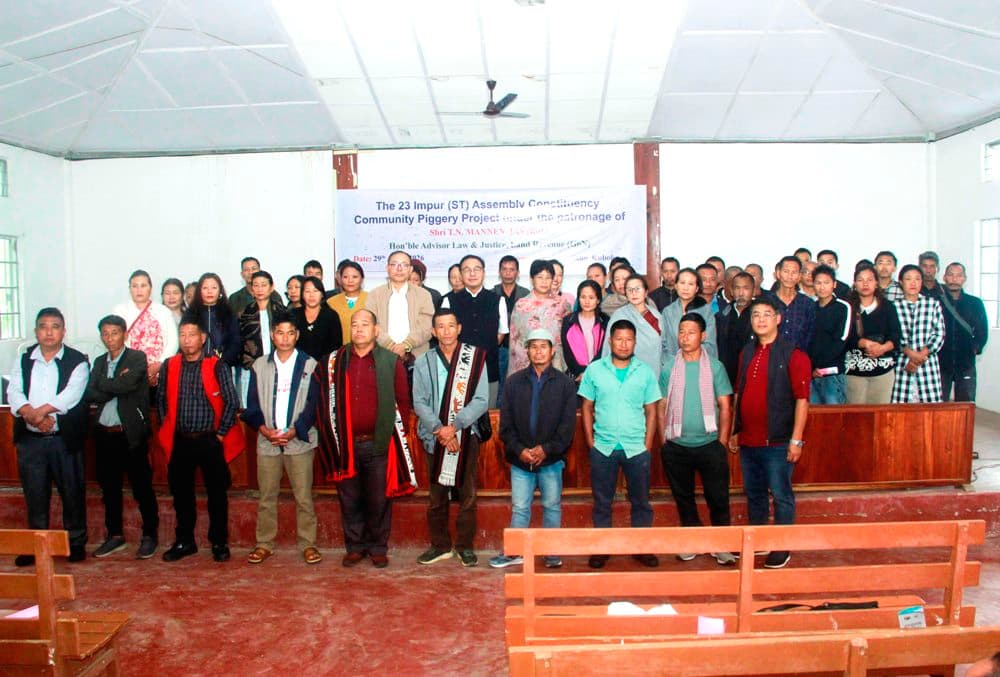
MOKOKCHUNG — A community-based piggery project aimed at boosting rural livelihoods was launched at Senden Salang in Kobulong under the Mokokchung district on Wednesday.
The project, covering the 23rd Impur Assembly Constituency, was initiated under the guidance of Advisor for Law and Justice and Land Revenue TN Mannen and is fully funded by the Local Area Development Fund.
It aims to harness the community's collective potential to enhance sustainable income generation through systematic pig breeding, marketing, and a cooperative society model. The initiative also includes plans to set up a feed compounding unit using locally produced raw materials to reduce production costs.
According to the project guidelines, every stakeholder, including beneficiaries, village councils, the project’s medical team, the Think Tank team, and the expert management unit, has clearly defined roles and responsibilities to ensure successful implementation.
Approximately INR 25 lakh has been invested in the project, under which 169 piglets were distributed to 105 selected beneficiaries across the constituency. Beneficiaries were chosen by their respective village councils based on strict criteria, with provisions for penalties in cases of mismanagement.
Aongsen Aier, Convenor of the Think Tank team, informed that additional initiatives are in the pipeline, including the Livestock Insurance Scheme under the National Livestock Mission, sponsored by Advisor TN Mannen, and the “Bharat Pashudhan” under the National Digital Livestock Mission.
He added that beneficiaries who receive a breeding sow unit will be required to pass on one offspring to a new beneficiary, ensuring the project benefits more households over time. Dr. Sarendi Walling confirmed that all distributed piglets have been verified as disease-free.
Addressing the launch programme, Mannen described the project as a pioneering, people-participatory initiative funded through the district plan. He expressed hope that it would transform the Asetkong range into a pig-surplus area and contribute significantly to the range’s economic growth.
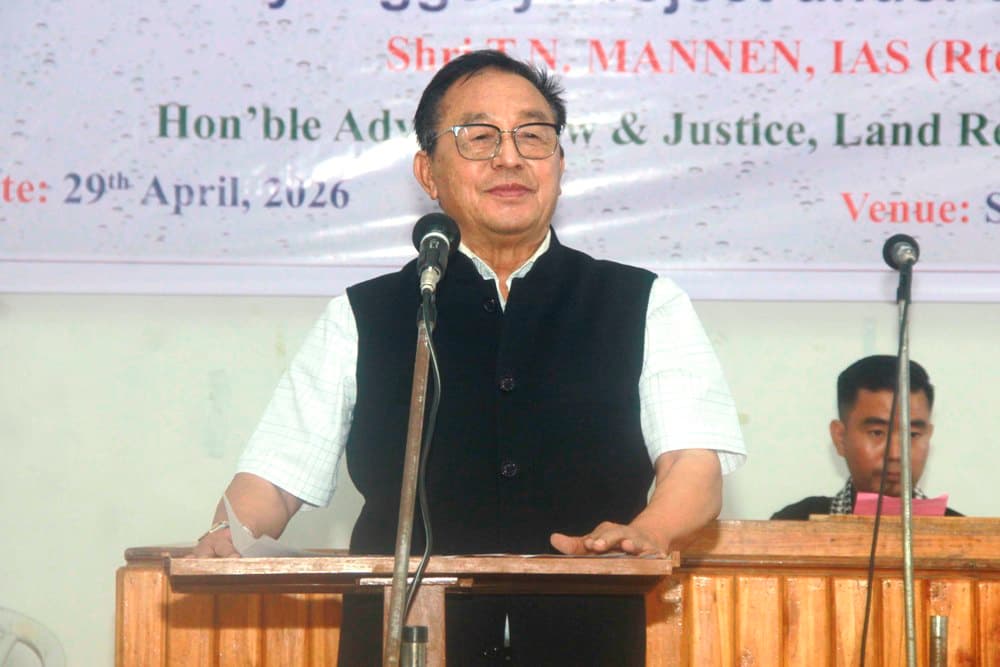
Mannen noted that Nagas are major consumers of pork, with local demand far exceeding current production. As a result, large numbers of pigs are imported into the state. He stated that there is a ready and profitable market for locally reared pigs, making piggery a viable income-generating activity for the constituency.
He pointed out that the local economy is still primarily agrarian, with most livelihoods dependent on agriculture and allied activities. The MLA stressed the need to improve community livelihoods by optimally utilising locally available resources, such as favourable agro-climatic conditions, fertile soil, and abundant water sources from rivers like Milak, Mening, and Tsuden.
To assess the socio-economic potential of the Asetkong range, a Think Tank group comprising knowledgeable individuals familiar with the area’s strengths and village-specific opportunities was formed. After detailed discussions, he said the group recommended implementing a community-participatory piggery project covering the entire range.
The advisor expressed confidence that the initiative could eventually evolve into a full-fledged business model through a systematic pig breeding and marketing cooperative society.
He further announced plans to establish a feed compounding unit using locally available raw materials such as maize, tapioca, cereals, and vegetables.
This unit would produce healthy, chemical-free, and cost-effective animal feed, addressing a major gap in the district.