


Meluri workshop promotes traditional Pochury pottery, cotton weaving and bamboo crafts among students
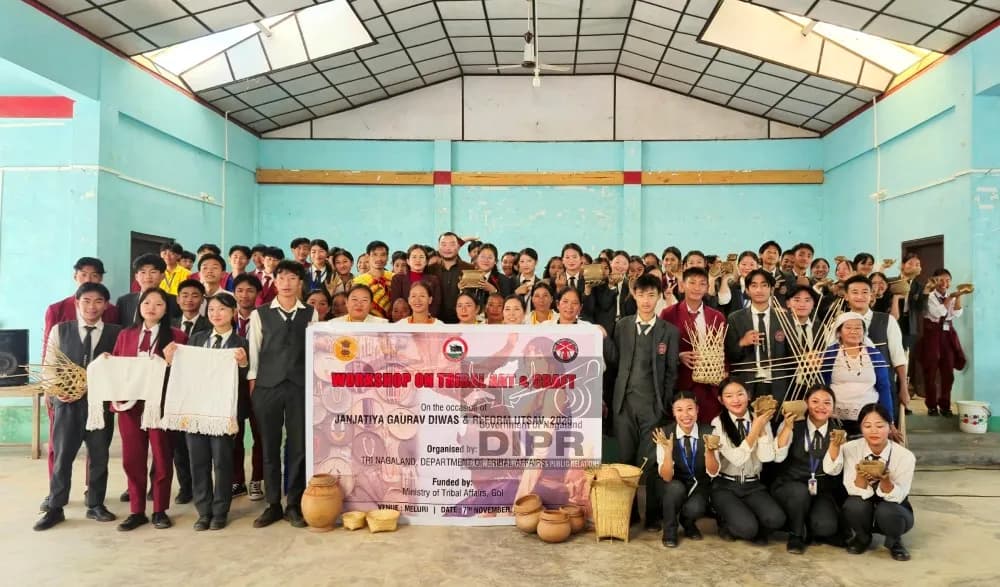
DIMAPUR — A workshop on traditional tribal art and craft was organised by the Tribal Research Institute (TRI), Nagaland, Department of Tribal Affairs, in collaboration with the Pochury Students’ Union, at the Village Council Hall, Meluri, on November 7 as part of the observance of Janjatiya Gaurav Diwas and Reform Utsav 2026.
According to a DIPR report, the workshop featured live demonstrations of three traditional art and craft practices of the Pochury community—pottery-making, cotton weaving and bamboo craft-making.
Students were also given hands-on opportunities to learn and practise the traditional skills under the guidance of local artisans.
The traditional pottery-making process was demonstrated by members of the Pochury Mothers’ Association, highlighting skills traditionally practised by women of Sütsü and Laruri villages.
Traditional cotton weaving was demonstrated by the Khumiasü Village Women’s Society, showcasing indigenous weaving techniques and craftsmanship.
A separate demonstration on bamboo craft-making highlighted the community’s skills in using locally available natural materials to create traditional handicrafts.
Also read: Nagaland moot court tests future lawyers
SAMETI organises training on nursery management in Medziphema
Addressing the gathering, EAC Meluri, Pipfusa Pojar, stated that the workshop was organised as part of Reform Utsav and emphasised that traditional craftsmanship could also serve as a potential source of income, particularly for students.
She encouraged students to actively participate in the workshop, make the best use of the opportunity and strive to preserve and carry forward the traditional knowledge and skills inherited from their forefathers.
She also expressed gratitude to the participating artisans for their time, dedication and willingness to share their skills with the younger generation.
Delivering the keynote address, Pochury Students’ Union president Rongley Leyri highlighted the importance of preserving and promoting the community’s rich cultural heritage, traditions and customary practices passed down through generations.
He stated that the history, identity and traditional knowledge of the community formed an important part of its legacy and must be cherished, learned and carried forward by the younger generation.
He further said that such workshops provided students with valuable opportunities to learn traditional arts and crafts, understand their cultural significance and develop a deeper appreciation of their roots and identity. He urged students to take an active interest in preserving their cultural heritage to ensure that the legacy of their forefathers continued to be passed on to future generations.