


Manipur Deputy CM Losii Dikho stresses water conservation and springshed management at a climate resilience conclave in Imphal.
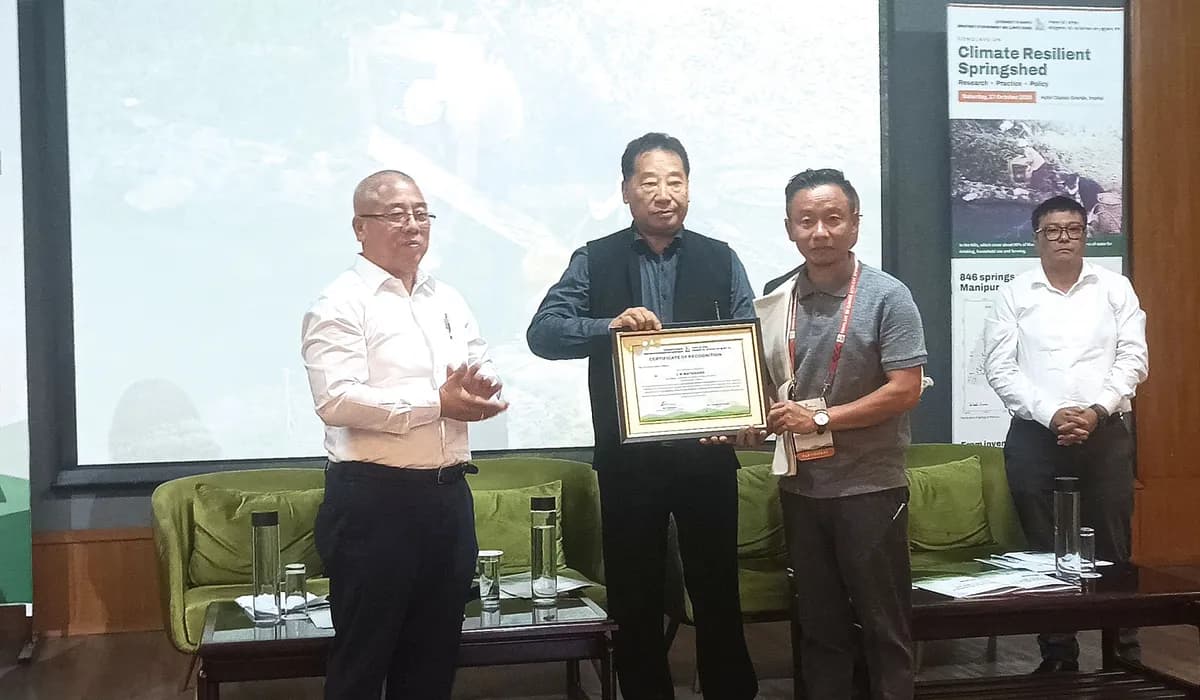
IMPHAL — Manipur Deputy Chief Minister Losii Dikho on Saturday underscored the importance of water conservation and springshed management, saying that protecting water resources was more important than fighting among people.
Speaking at the inaugural session of the conclave on ‘Climate Resilient Springshed: Research, Practice & Policy,’ organised by the Department of Environment and Climate Change in Imphal, Dikho, who also holds the Forest, Environment and Climate Change portfolio, stressed the need for collective efforts to conserve water and protect the environment.
“Today, water is more important than what we are fighting for. Men, people, society and communities who conserve the environment and save water will be the strongest people in society,” he said, congratulating villagers in the hill districts for participating in the government’s spring rejuvenation initiatives.
Emphasising that water is not merely a natural resource but the foundation of life, Dikho said springs were lifelines for both hill and valley communities, providing water for drinking, domestic consumption, agriculture, livestock and other livelihood activities.
However, he noted that spring sources across the region were becoming increasingly vulnerable due to environmental changes and human pressures.
“We must therefore recognise that water security in our villages begins with the health of the springshed,” he added.
Director of the Department of Environment and Climate Change, Dr. T Brajakumar Singh, said nearly 50 per cent of springs in Manipur had dried up, reflecting concerns highlighted in the 2018 NITI Aayog report on the drying of springs.
He also noted that river inflows had declined over the years, making river systems increasingly seasonal.
Urging people to recognise the importance of springs, Brajakumar called for collective responsibility and greater community participation in their protection, conservation and preservation.
Principal Secretary (Forest, Environment and Climate Change) Arun Kumar Sinha said springshed management must move beyond isolated conservation activities and become an integral part of the state’s water security strategy.
During the conclave, village authorities of Lunghar and Hoomi in Ukhrul district, along with community resource persons from various hill districts, including Tamenglong and Noney, were honoured with certificates of recognition and appreciation for their contributions.
A short video on “Climate Resilient Practices for Water Security and e-flow of Rivers” was also screened during the event.
Resource persons from ACWADAM, Pune; ICIMOD, Kathmandu; Aaranyak, Assam; and representatives from Meghalaya, Sikkim and Manipur shared experiences and case studies on springshed management, highlighting success stories and challenges during the technical sessions.
The conclave also featured panel discussions on the impact of climate change on springs, community-led springshed management practices and policy approaches to building a climate-resilient springshed ecosystem in Manipur.