


MSME joint secretary Mercy Epao highlights Nagaland’s poor uptake of PMEGP and Self Reliant India fund schemes.
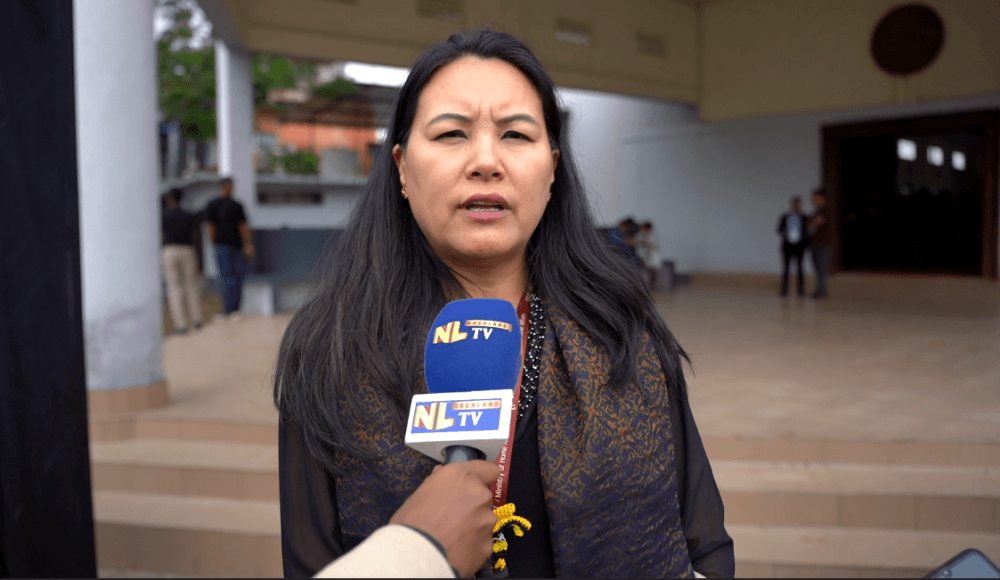
DIMAPUR — Ministry of Micro, Small and Medium Enterprises (MSME) joint secretary Mercy Epao said that while Nagaland may not have heavy industries, there are many ‘low-hanging fruit’ industries that must be tapped into, and the schemes under M/O MSME have dedicated budgets for these.
The joint secretary was addressing the ‘Entrepreneur Awareness Camp and Special Vendor Development Programme’ organised by the Ministry of MSME, in collaboration with the Business Association of Nagas (BAN) and the state government at Senden Riju, Purana Bazaar, in Dimapur on Monday.
“We have thousands of crores allocated for the PMEGP, alongside funds for cluster development and skilling programs. If you already have an existing enterprise and see growth potential but lack the necessary capital to expand, we have the Self Reliant India (SRI) fund which has a corpus of INR 50,000 crores.
“While other states are actively utilising this fund, Nagaland has yet to take advantage of it. This is a significant loss for the state,” Epao said.
Looking at all the programmes the ministry of MSME run, she pointed out that the uptake in Nagaland is currently very discouraging and not where it should be.
Also read: Centre, state discuss boosting MSME growth in Nagaland
This is a loss for the state, she addressed while saying this is why they have come to meet with the state government and officials to discuss how they can encourage entrepreneurs within their sectors and increase this uptake.
While affirming that the ministry will work diligently to resolve issues raised by major stakeholders through the Industry department, including representatives from the RBI, various banks and NABARD, she urged that existing as well as aspiring entrepreneurs to reach out regarding their specific concerns and what is relevant to them.
She urged entrepreneurs to first complete Udyam registration and then apply for schemes like the PM’s Employment Generation Programme. If banks reject proposals or collateral are an issue, she said to invoke the Credit Guarantee Fund Trust for Micro and Small Enterprises (CGTMSE) scheme, while informing that they are in sync with banks.
For members of the Scheduled Tribes , Epao communicated that there is an 85% guarantee coverage provided without the need for collateral. For women entrepreneurs, this coverage increases to 90%.
Read more: Centre rolls out MSME push in Nagaland with Dimapur awareness camp
Once registered—which is a completely free and digital process—they will gain access to all these MSME benefits, she added.
She also said that the “low-hanging fruits”, which are the strengths of Nagaland, have already been discussed with the state government and expressed hope that the government will come forward.
Ministry of MSME Secretary SC L Das, in his address, identified that the youth of Nagaland are a talented and aspirational pool with entrepreneurial spirit, and that the event aims to motivate and inform them about the ecosystem supporting entrepreneurs, including government organisations, banks and industry associations.
He said that with Nagaland's natural resources and India's demographic advantage of a young workforce, the potential is huge.
He stated that the camp focused on Udyam registration and scheme application.
Das urged participants to look at some areas of manufacturing because manufacturing creates a much greater value and informed that efforts are being made to set up facilities where they can work with high value products.
BAN vice president Benthungo Kithan said the Government of India has created many schemes specifically for SC/ST entrepreneurs, but Naga people or SC/ST individuals often do not understand or are not aware of these schemes.
Under the SC/ST Hub, he said there is a scheme called National Scheduled Caste and Scheduled Tribe Hub, and since the Government of India is the largest buyer in the nation with an average annual purchase order of around INR 500 billion, 4% of that is reserved for SC/ST entrepreneurs.
He stated that because Naga people are not aware of this, it results in a loss as they are unable to avail themselves of the opportunity.
Another important scheme, Kitha shared, is the L1 + 15% privilege. He explained that in the government tender process, SC/ST entrepreneurs are given a 15% price preference over the lowest bidder (L1).