


Lotha Eloe Hoho launches a loin weaving training programme in Wokha to preserve Lotha cultural heritage and promote self-reliance.
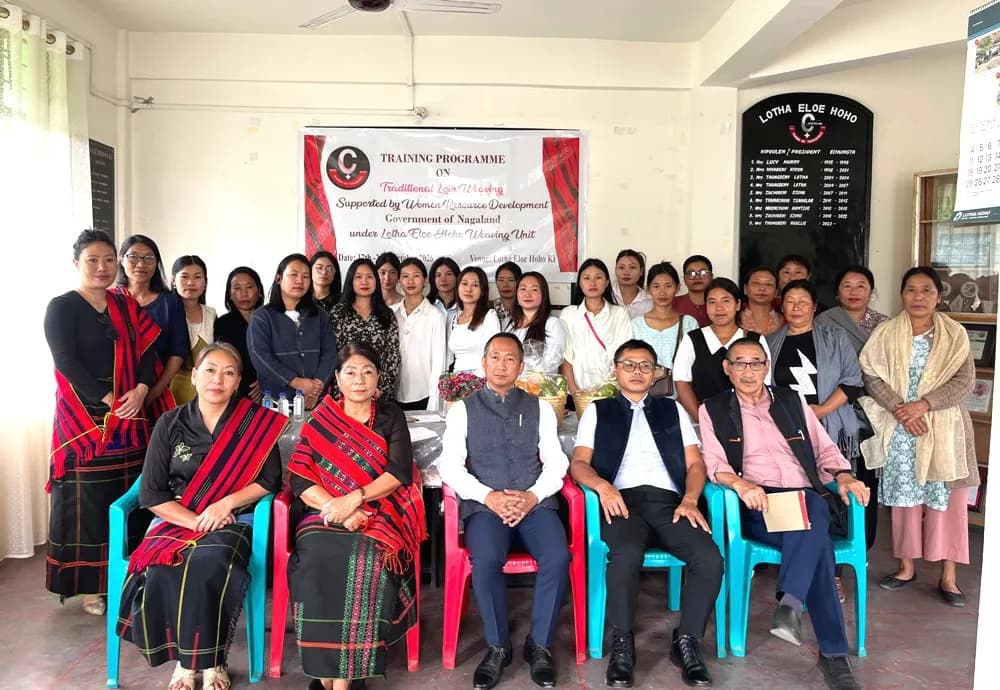
WOKHA — The Lotha Eloe Hoho (LEH) on Saturday launched its traditional loin weaving unit-cum-training programme at Lotha Eloe Hoho Ki, Wokha, with an aim to revive traditional weaving skills and preserve the cultural heritage of the Lotha community.
The programme, scheduled from October 17 to the 24th, is being supported by the Department of Women Resource Development, Government of Nagaland, under the District Resource and Development Programme 2026-27.
Renbomo Ezung, Additional Deputy Commissioner of Wokha, formally inaugurated the facility.
Addressing the participants, Ezung underscored the historical and cultural significance of traditional weaving, describing it as an integral part of community identity and heritage.
Acknowledging the role of women in preserving the craft through generations, he emphasised the need to carry forward the legacy through sustained learning and practice.
He urged participants to approach the training with sincerity, dedication and a willingness to learn, stressing that traditional craftsmanship requires patience, consistency and continuous improvement.
He expressed hope that the trainees would utilise the skills acquired not only to preserve traditional weaving but also to create opportunities for personal growth and self-reliance.
Also read: Nagaland rolls out subsidised rice scheme for uncovered households
Nzanthung K Yanthan, Assistant Director of Women Resource Development, appreciated LEH for taking the initiative to revive loin weaving, which was once widely practised but is gradually declining.
Stating that the department extends its support to the initiative, Yanthan emphasised the importance of collective efforts in safeguarding traditional skills.
He noted that the weaving unit would provide participants with an avenue to learn and practise the craft while also opening possibilities for livelihood generation.
He encouraged the trainees to remain committed throughout the programme, adding that traditional weaving could serve both as a means of cultural preservation and as a practical skill for self-reliance.
Also addressing the gathering, Mhondamo Ovung, chairman of Lotha Hoho, said traditional skills such as weaving remain valuable irrespective of one's educational qualifications or profession.
While education provides knowledge and opportunities, he remarked, traditional skills connect individuals to their roots, culture and heritage.
He encouraged participants to take pride in learning the craft and view the training as an opportunity to broaden their knowledge while contributing towards the preservation of the community's weaving traditions.
In her keynote address, Thungbeni Ngullie, president of Lotha Eloe Hoho, expressed satisfaction over the participation of individuals in the initiative aimed at promoting and preserving the traditional art of weaving.
Highlighting the importance of passing indigenous knowledge and skills to younger generations, she said traditional weaving forms an integral part of Lotha cultural heritage.
She also acknowledged the support of the Department of Women Resource Development in making the programme possible and expressed hope that the initiative would inspire more people to take up the craft.
Ngullie further noted that weaving skills can promote self-reliance and create income-generating opportunities, while helping sustain traditional attire that holds cultural and social significance within the community.
The programme was chaired by Chanchano Patton, general secretary of LEH.