


NEPED conducts workshop in Kohima on empowering communities through eco-tourism in Nagaland with focus on conservation and livelihood.
Share


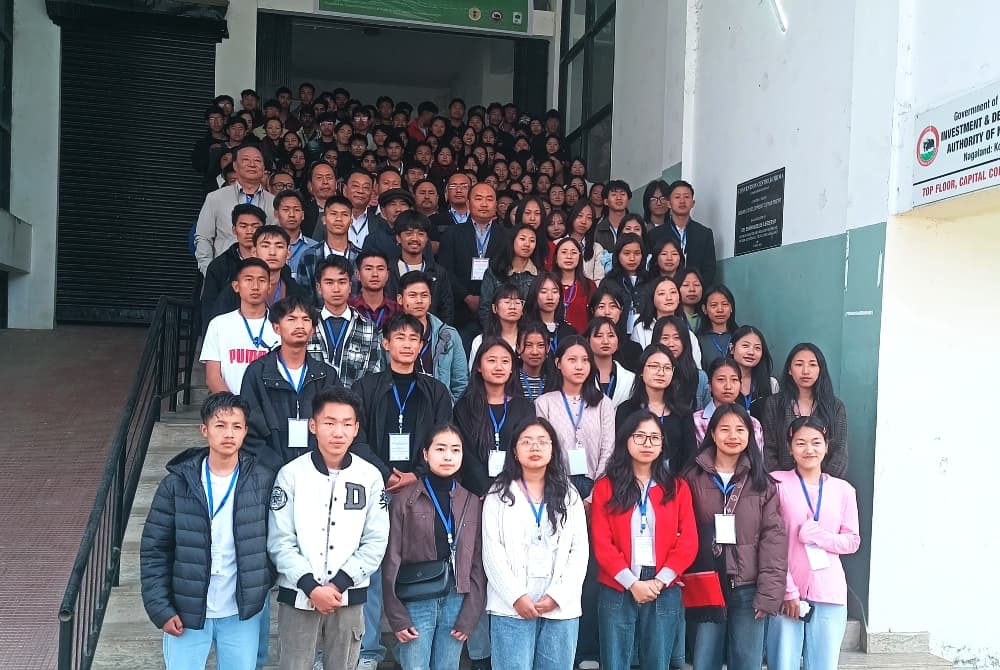
KOHIMA — Kovi Meyase, team leader of Nagaland Empowerment of People through Economic Development (NEPED) and Commissioner and Secretary to the Government of Nagaland, stated that collective commitment and shared intent are crucial to making eco-tourism a model of sustainability and community resilience in the state.
He was addressing the inaugural session of a two-day state-level workshop on “Empowering communities through eco-tourism: Conservation, livelihood and sustainable development”, organised by NEPED at the Capital Convention Centre, Kohima, on Wednesday.
Meyase said Nagaland is endowed with pristine landscapes, vibrant indigenous cultures, resilient communities and rich biodiversity, offering immense potential for eco-tourism rooted in conservation and community participation. However, he stressed that the true strength of eco-tourism lies not merely in attracting visitors but in empowering local communities.
Over the two-day workshop, participants will deliberate on how eco-tourism can serve as a vehicle for community empowerment, strategies to conserve natural resources while generating sustainable livelihoods, best practices and successful models from within and beyond the state, and the policy frameworks and institutional support required to strengthen grassroots initiatives.
Also read: Patronising ‘illegal immigrants’ greatest problem confronting Nagas, says Temjen Imna Along
He maintained that when thoughtfully designed and responsibly managed, eco-tourism can create a balance between conservation and economic growth. It can promote stewardship of forests and biodiversity, strengthen local governance systems, preserve cultural identity and open new avenues for youth and women entrepreneurs.
Highlighting NEPED’s contributions, Meyase noted that for over three decades, the organisation has pioneered people-centric development programmes, natural resource management and strengthening of community institutions across rural Nagaland. With strategic support from the North Eastern Council (NEC), he said, the workshop reflects a shared commitment to sustainable development in the region.
“Only our collective concerns and common intent will help chart out a roadmap that ensures eco-tourism becomes a model of sustainability and community resilience,” he said, expressing confidence that the workshop would generate meaningful discussions, actionable insights and strong partnerships.
During the programme, Neikedolie Hiekha, former chairman of the Eco-Tourism Management Committee (ETMC), Khonoma, spoke on “Understanding eco-tourism: Concepts and principles”. He observed that Nagaland is not receiving responsible tourists and stressed the need to attract eco-tourists who are conscious of their environmental and social responsibilities. He also urged stakeholders to promote human rights and social justice within the tourism industry.
Sessions on “Community Conserved Areas (CCAs): Concepts and principles and their role in biodiversity and eco-tourism-based livelihoods” were presented by Imlikumba, Senior Project Manager at the Foundation for Ecological Security (FES). Takum Chang, Deputy Project Director of Forest and Biodiversity Management in the Himalaya (FBMP) – Nagaland Project, also spoke on CCAs and community reserves (CRs).