


Kohima Science College and Pfutsero Government College sign an MoU to promote academic cooperation and research.
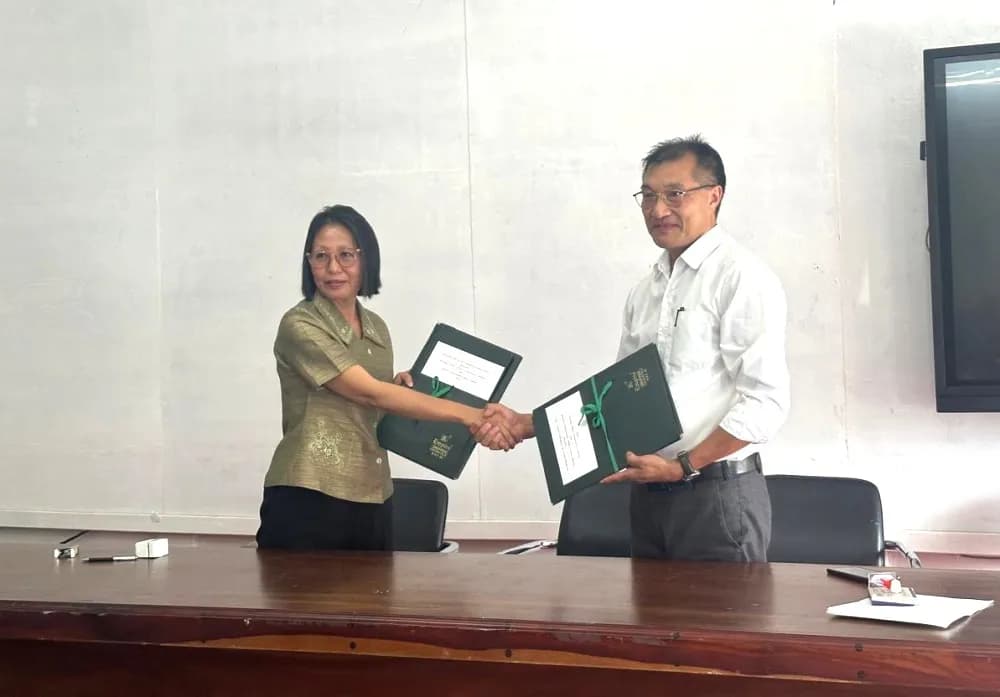
DIMAPUR — Kohima Science College (Autonomous), Jotsoma, and Pfutsero Government College, Pfutsero, entered into a memorandum of understanding (MoU) on Monday to promote academic cooperation, research, innovation, skill development, and community outreach.
The agreement was signed at the conference hall of Kohima Science College, Jotsoma, by Dr. Temjenwabang, Principal of Kohima Science College (Autonomous), and Dr. Anungla Pongener, Principal of Pfutsero Government College, in the presence of the IQAC coordinators and faculty members of both institutions.
According to an update, the collaboration covers a range of interdisciplinary areas, including apiculture, floriculture, computer applications, English and communication studies, and Traditional Knowledge Systems (TKS). It envisages joint seminars, workshops, conferences, research projects, publications, faculty exchanges, student internships, field visits, certificate courses, and community outreach programmes.
A significant potential area of collaboration is Traditional Knowledge Systems, particularly the documentation, preservation, and digitisation of indigenous ecological knowledge, traditional agricultural practices, medicinal plant knowledge, floral traditions, folklore, and oral history. The two institutions also envisage developing digital archives and local knowledge databases, as well as undertaking community-based participatory research.
Read more local news: Nagaland: NSRLM to launch SAY-SOBLOK for 4,000 vulnerable households
The MoU further seeks to connect scientific research with indigenous knowledge and local livelihoods. Potential initiatives include scientific validation of traditional agricultural and ecological practices, sustainable floriculture, pollinator-friendly farming, apiculture, biodiversity conservation, and entrepreneurship.
The institutions have also agreed to facilitate mutual access to academic and technical resources, including laboratories, libraries, nurseries, gardens, ICT facilities, apiary units, and other field resources, subject to feasibility and availability. The MoU will remain in force for a period of five years from the date of signing.
The collaboration is expected to strengthen interdisciplinary learning and research while creating opportunities for students and local communities in skill development, livelihood generation, and sustainable development.
The initiative also seeks to contribute towards the vision of the National Education Policy (NEP) 2020, under which collaboration and partnerships among educational institutions play an important role in fostering multidisciplinary education, research, innovation, and community engagement.