


Nagaland seeks 500 MW solar allocation from the Centre as projected electricity demand rises to 482 MW by 2034-35
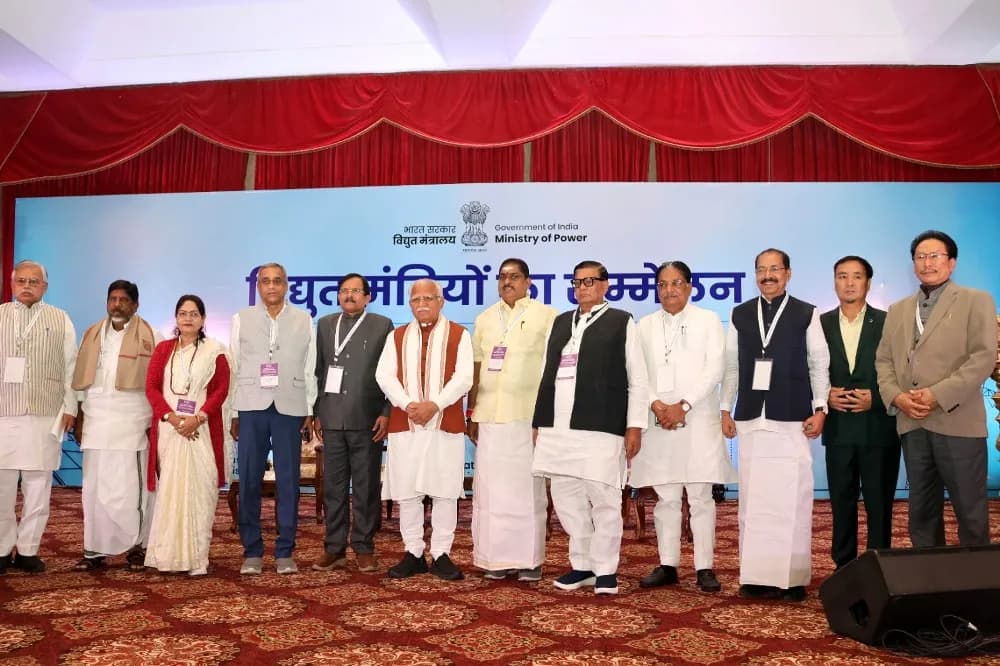
KOHIMA — Minister for Power and Parliamentary Affairs KG Kenye has urged the Centre to allocate at least 500 MW of solar power to Nagaland from its proposed 30,000 MW central reserve, citing a widening gap between electricity demand and available generation capacity.
Speaking at the Power Ministers' Conference of States and Union Territories in New Delhi on November 27 and 28, Kenye said Nagaland needed a major push in solar generation and Battery Energy Storage Systems (BESS) to address its persistent power deficit and meet future demand.
He said Nagaland's own installed generation capacity stood at 39.4 MW, while total installed capacity, including central sector allocation, was 241.4 MW. Against the current peak demand of 203 MW, the state's electricity requirement was projected to rise to 482 MW by 2034-35.
Referring to the Central Electricity Authority's Resource Adequacy Plan 2035, Kenye said Nagaland would require at least 715 MW of generation capacity from renewable and non-renewable sources to meet projected demand.
The state had tied up 668 MW through existing projects, projects in the pipeline, power purchase agreements and no-objection certificates issued to private developers. However, he expressed concern that none of the envisaged projects had taken off, with several facing delays for decades.
Also read: President Droupadi Murmu to attend Hornbill Festival opening on December 1
Kenye said the state was pursuing three major hydroelectric projects — the 42 MW Lower Tizu and 24 MW Zungki projects, which have been approved by the Department of Economic Affairs and are undergoing due diligence by the Asian Development Bank, and the 24 MW Tizu Valley project proposed under external aided funding.
Nagaland had also proposed two 25 MW/100 MWh Battery Energy Storage System facilities at Zhadima and Niuland, estimated to cost INR 127 crore each, to improve renewable energy utilisation, supply efficiency and grid reliability.
Kenye urged the Ministry of Power to allocate 500 MW of solar power to Nagaland from the central reserve, along with admissible support, including viability gap funding.
On transmission infrastructure, he said a plan prepared by the Central Electricity Authority and the state envisaged an additional capacity of about 770 MVA, 963 circuit kilometres of transmission lines and reconductoring of 277 circuit kilometres by 2034-35, at an estimated cost of INR 1,900 crore.
He also sought central assistance for transmission and distribution infrastructure, including proposals for strengthening the intra-state transmission network and modernising the distribution system to meet projected demand.
Kenye said the proposed generation, transmission and distribution projects were critical to addressing Nagaland's energy deficit and supporting sustainable economic development.