


Tension resurfaced at Mekirang village along the Assam-Nagaland border near Merapani on Saturday as the governments of Assam and Nagaland carried out a joint eviction drive
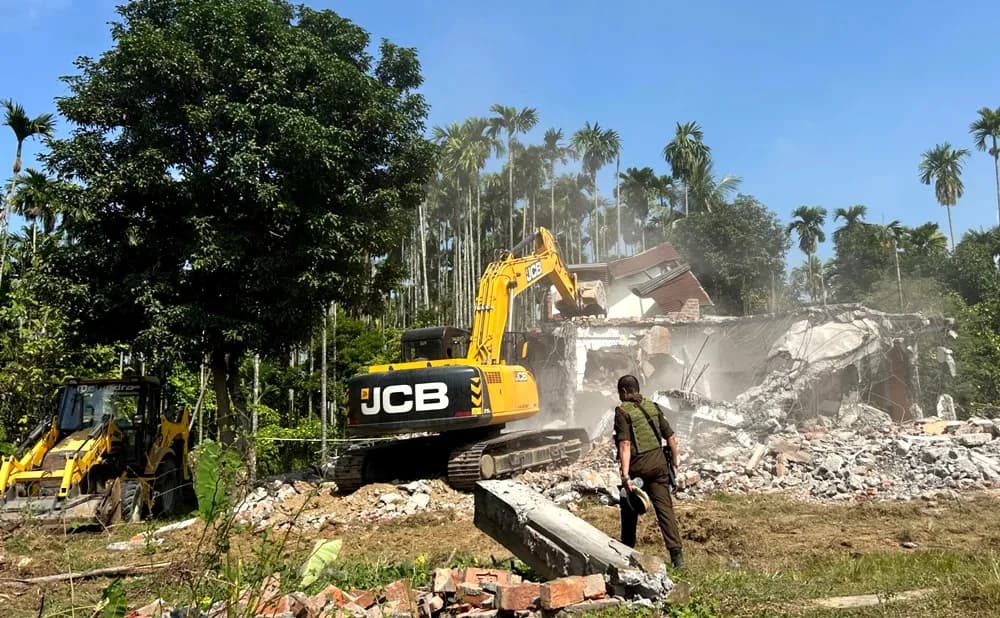
WOKHA — Tension resurfaced at Mekirang village along the Assam-Nagaland border near Merapani on Saturday as the governments of Assam and Nagaland carried out a joint eviction drive, leading to the eviction of 59 houses.
It comes amid continuing concerns over the unresolved Assam-Nagaland border dispute, which has affected communities residing along the inter-state boundary.
Wokha Deputy Commissioner K Mhathung Tsanglao, and Superintendent of Police T Relo Aye, along with Border Magistrate, and representatives of various civil society organisations were present during the exercise.
Speaking after the eviction, Mekirang Village Council chairman Sorenthung Lotha urged both the state governments to exercise wisdom and work towards an amicable resolution to the longstanding border dispute.
He also highlighted the lack of road connectivity to Mekirang, Lio Longchum and Longayim villages through the Marachu-Mekirang route, saying that the villages remain largely dependent on Assam for transportation and access to essential services.
Also read: Mokokchung spurious liquor death: Village councils asked to stay vigilant
Western Sumi Hoho urges CM to correct Naga village mapping errors
Stating that the proposed road is a vital lifeline for the three villages, he appealed well-wishers and residents of the area for support.
Meanwhile, LLRPO secretary Zanthungo Yanthan said that the eviction process should not automatically result in the transfer of land ownership or compromise Naga land rights, while urging the two state governments to pursue an amicable settlement to the issue.
Stressing the need for road connectivity, Yanthan said the three villages are in a vulnerable position, with residents facing recurring uncertainty and tension due to proximity to the Disputed Area Belt (DAB).
He added that continued dependence on routes through Assam was neither practical nor sustainable, particularly during periods of unrest.
Emphasising the urgency of a lasting solution, Yanthan described the proposed road as a "safety and survival road" that would safeguard the interests of the affected villages. He called for at least a chip-sealed road along the route, stating that it is essential for the survival, mobility and basic needs of the residents.