


Japfu Christian College hosted a district-level event under Nasha Mukt Bharat Abhiyaan to promote a drug-free society.
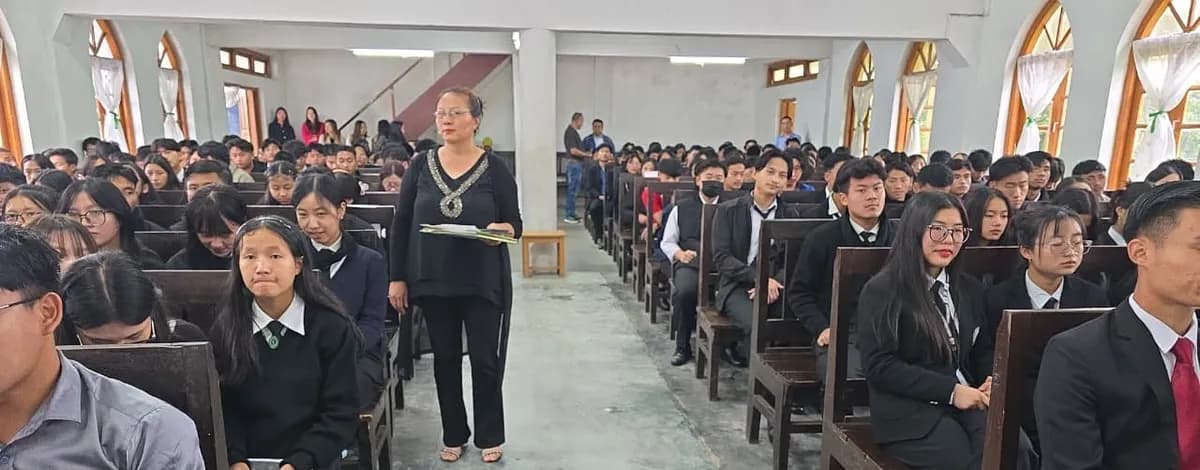
DIMAPUR — Japfu Christian College in Kigwema organised a district-level programme under the Nasha Mukt Bharat Abhiyaan 2026 on Wednesday.
According to an update, the programme was conducted under the aegis of MY Bharat Kohima, Ministry of Youth Affairs and Sports, with the objective of creating awareness among the youth about the dangers of substance abuse and inspiring their active participation in building a drug-free and developed India.
Delivering the principal’s address, Principal Visakhonü Hibo expressed her appreciation to the organisers for bringing the event to the college. She stated that the vision of Viksit Bharat 2047 can only be realised through holistic human development alongside other development priorities of the Government of India.
Addressing the gathering, State Programme Supervisor Ruokuovikho Chale expressed gratitude to the visionaries behind the Nasha Mukt Bharat initiative. Chale highlighted the significance of the campaign while encouraging the participants to become ambassadors of a drug-free society.
District Youth Officer Pradeep J gave a brief note on the overall programme concept and idea while appreciating the principal of Japfu Christian College for hosting the national programme at the college.
As part of the programme, all participants took a drug-free pledge, reaffirming their commitment to stay away from drugs and substance abuse. A signature campaign was also conducted.
Also read: Nagaland University students complete Hiroshima Orizuru Fellowship in Japan
A major highlight of the district-level programme was a series of competitions aimed at engaging students in promoting the message of a Nasha Mukt Bharat. Competitions were held in various categories, including elocution, slogan writing, painting, music and rap, and slam poetry.
The winners, who will represent the district at the state-level competition, were Lumseli S Sangtam (elocution), Ngipton (slogan writing), Lepshing (painting), Angke, Peche, and Konchai (music and rap), Lenzila and Retila (dance), and Nyanchumi (slam poetry).