NEW DELHI — Scientists
from Jawaharlal Nehru Centre for Advanced Scientific Research (JNCASR),
Bengaluru, an autonomous institute of Department of Science and Technology have
developed a novel wearable device that can detect stress.
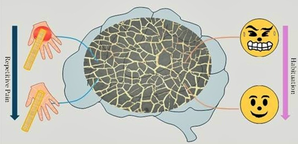
The team developed the Neuromorphic device -- electronic
systems that mimic the functions of neurons and synapse -- using silver wire
network on a stretchable material.
The device can sense strain, mimics pain perception and
adapts its electrical response accordingly.
"These pain-like responses in the device paves the way
for future smart wearable systems that can help doctors detect stress,"
said the researchers.
The team noted that small gaps appear within the silver
network, when the material gets stretched.
This temporarily breaks the electrical pathway.
To reconnect, an electric pulse is given, which fills the
gaps, and essentially "remembers" the event.
"Each time it is stretched and reconnected, the device
gradually adjusts its response, much like how our bodies adapt to repeated pain
over time. This dynamic process enables the device to mimic memory and
adaptation, bringing humans closer to materials that respond intelligently to
their environment," the team said in the paper, published in the journal Materials
Horizons, Royal Society of Chemistry (RSC).
The device also combines sensing and adaptive response in a
single, flexible unit. It offers a streamlined, efficient way for technology to
adapt to its environment naturally, without complex setups or external sensors.
The research can "lead to more advanced health
monitoring systems that "feel" stress like the human body and adapt
in real-time, giving feedback to doctors or users," said the researchers.
Too much stress is known to cause physical and mental health
problems.
Stress is known to be a precursor to many health problems,
such as high blood pressure, heart disease, stroke, obesity and diabetes.
Learning how to cope with stress can help feel less
overwhelmed and also boost mental and physical well-being.
The team noted that technology used can also improve robotic
systems. These may not only help machines become safer, but also more intuitive
to work with humans.