


India's supremacy in Asian Games Kabaddi competition remained intact as both the men's and women's teams out-witted familiar foes Iran in their respective summit clashes to successfully defend their gold medals
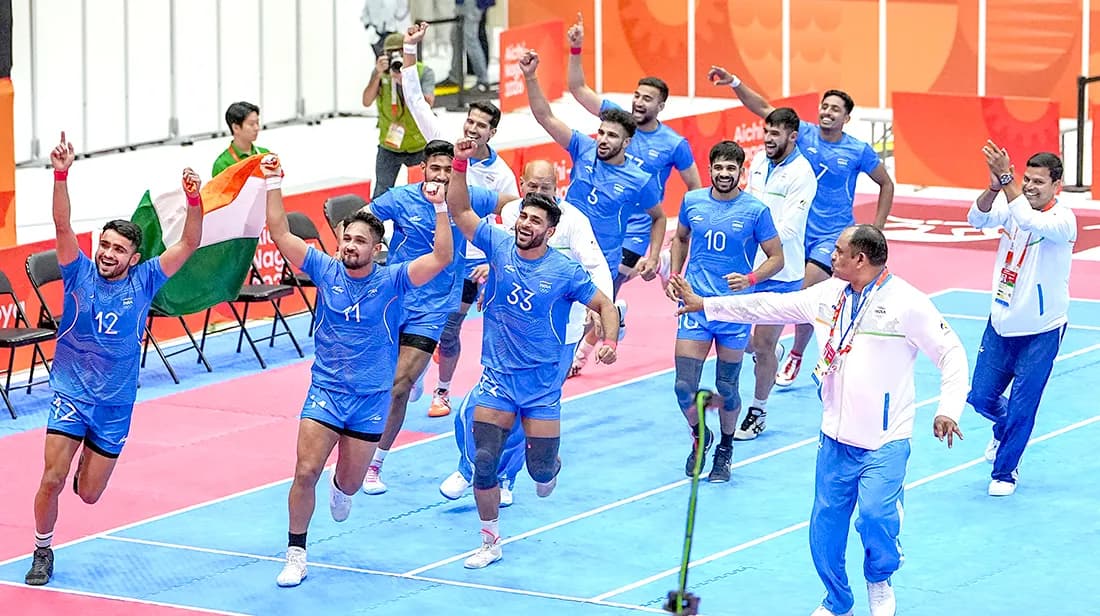
NAGOYA — India's supremacy in Asian Games Kabaddi competition remained intact as both the men's and women's teams out-witted familiar foes Iran in their respective summit clashes to successfully defend their gold medals here on Saturday.
The men's team prevailed 40-34, while the women clinched a 37-34 triumph to ensure that their dominance over the event continued. This was the ninth gold for the men and fourth for the women.
The men's win came without their most experienced player Pawan Sehrawat even having to step on the mat.
With the defending champions struggling for control midway through the contest, it was the composure of raiders Arjun Deswal and Devank in the decisive phase that tilted a gripping final in India's favour.
Iran fought for every point as if it were the last, matching -- and even exceeding -- India's physicality, refusing to allow the defending champions to settle into a rhythm.
At half-time, Iran held a slender 18-17 lead and India had every reason to be concerned. The Iranian side's relentless approach had put the Indians under pressure.
But India did not panic. Instead, they changed the tempo of the game, trusted their raiders and allowed experience to take over.
Arjun and Devank repeatedly ventured deep into the Iranian half, picked their moments and returned with crucial points, gradually forcing Iran onto the back foot.
"After Iran were leading 17-18 at half-time, we strategised that only those raiders who were pulling out the opponents would be sent, and here Arjun Deswal and Devank were spot on. Their raids completely turned the match on its head," Sehrawat said after the final.
The tactical adjustment was not restricted to the raiders. Aslam Mustafa, who had struggled early after venturing too deep and being pinned, was moved into defence, where he found a more effective role.
India also tightened its defensive lines, making it increasingly difficult for the Iranian raiders to find easy points.
The turning point came when India inflicted an all-out to stretch the advantage to 29-24. With the gold beginning to come into sight, the Indians showed another side of their experience. Rather than chase points recklessly, they slowed the contest down.
The raiders hovered around the midline, waited for openings and repeatedly returned to safety without overcommitting. It was calculated kabaddi -- forcing Iran to take the risks instead.
And Iran had little choice. Needing points, the Iranian raiders began probing deeper into India's half, only to run into a defence that had grown increasingly assured. Each failed raid added to the pressure, while India's lead gave its players the freedom to wait for mistakes rather than manufacture opportunities.
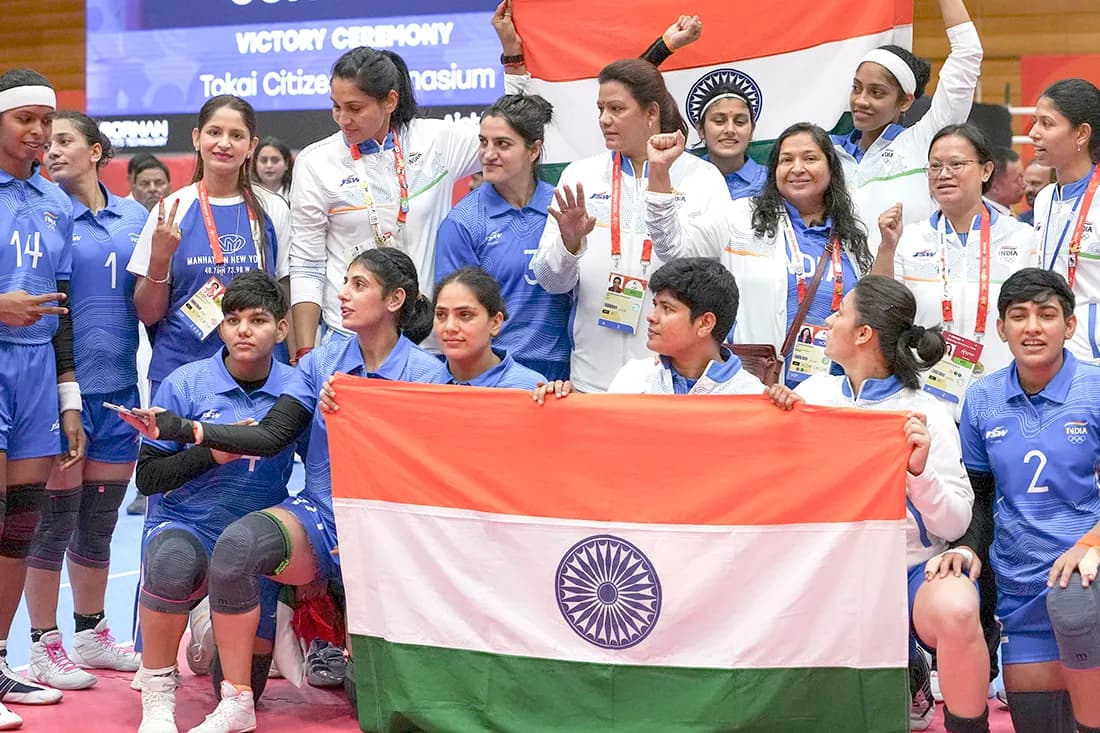
Women clinch it in tense finish
The women also held their nerve in a slightly more tense finish to clinch a record-extending fourth gold.
India had already beaten Iran in the group stage and, in that encounter, also identified a weakness they would return to when the stakes were much higher -- the left flank.
Raiders Nikita, captain Pooja and Sanju Devi repeatedly attacked from that side, and the strategy paid dividends.
The tall, athletic Iranians had the technique and the physical presence to trouble India, but their lack of experience at this level showed when India consistently found openings on the left.
India began briskly, moving 3-1 ahead and reducing Iran to three players. But the Iranians refused to be overwhelmed.
Their youthful energy kept them in the contest and they fought back to level the scores at 7-7, with a succession of TV reviews underlining just how fiercely contested the opening exchanges were.
India's raiding was not at its most fluent in the first half, but its defence compensated.
Skipper Pooja led from the front with her aggression and composure, while Nikita and Pooja provided the crucial points in attack.
India eventually secured their only all-out of the first half with six minutes remaining and went into the break with a 22-16 advantage.
Iran came out with renewed purpose after the interval. Atena Madadi and Aynaz Faramarzi repeatedly tested the Indian defence with quick hand and foot movements, sharp body feints and raids that produced crucial takedowns.
India, meanwhile, suffered an anxious moment when Nikita, their most effective raider on the day, was pinned after a raid went futile and had to receive treatment on court.
She recovered quickly and returned, but Iran had sensed an opening.
The Iranians mounted a swift comeback and an all-out brought them within one point at 28-27, suddenly transforming what had looked like an Indian-controlled contest into a tense finish.
That was when India's experience became decisive. Most of the Indian players had also featured at the Hangzhou Asian Games in 2023 and knew how to handle the pressure of a final.
Rather than panic, they tightened their defence, became more conservative in their approach and forced Iran to take greater risks.
The strategy worked.
India steadily rebuilt its advantage, moving to 37-31 with just a minute remaining.
Iran threw everything into their final raids and managed to cut the deficit to 37-34, but India had already done enough.
The final hooter brought relief and celebration as India completed another successful defence of their Asian Games crown and the team took a victory lap before chants of "Vande Mataram" rent the arena.