[caption id="attachment_144733" align="alignleft" width="384"]
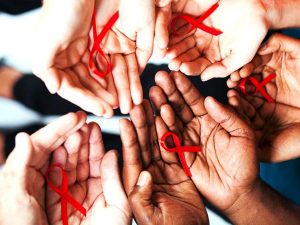 Representational image
[/caption]
Atono Tsükrü
Kohima, Oct. 16 (EMN): Due to misconceptions associated with HIV and AIDS, people living with HIV (PLHIV) are condemned to live lives many have referred to as ‘death sentence’. Existing ‘stereotyped societal norms’ become an obstacle for the PLHIV to live a fulfilling life like any other person.
While many thinks being HIV+ means ‘the end of life’, here is a story of a woman breaking free from the fear of stigma and discrimination and deciding to “narrate her journey” from the day she was diagnosed HIV+, and the impact it would have in her life since.
Twenty-nine year old *Mary (not real name) from Tuensang district voluntarily came forward to share her story as she chooses to speak rather than wallow in self-pity to be a voice for other women living with HIV.
Her eyes glistened as she shared her story with Eastern Mirror but did not break down even once as she narrated how her husband of two-and-half years and relatives abandoned her when she was tested positive in 2016.
Mary, who relocated to Kohima after her marriage in 2014, came to know of her status – when they were trying to conceive – through a routine test done in the hospital. At first, she said, she was ‘shocked, scared, sad and angry’ with everything but later came to accept her fate.
However, she recalled, her husband’s attitude towards her changed soon after and starting leaving her alone at home for weeks together. Later when she left home to visit her parents in the village, her brother-in-law was sent to arrange a ‘secret divorce’ with her parents.
When she tried to reason with her husband and his family, she was bluntly told not to come back saying ‘they cannot accept her as she is HIV+ and (was) free to live her own life.’
The next chapter of her nightmares began – struggling to overcome all the obstacles associated with HIV. After she returned to Kohima, as luck would have it, Mary came to know through a friend about Vihaan, an NGO based in Kohima who fight for the rights and survival of PLHIVs.
With the help of Vihaan, she began a legal battle with her husband’s family in the “Family High Court”. At first she was threatened with ‘dire consequences’, and later offered a bribe of Rs. 5 lakh by the husband’s family to withdraw the case. They even tried to force her to sign a blank affidavit, she said.
Though her husband’s family failed to turn up in the first and second trial, however, with the support of Vihaan members and the lawyers involved, her case was successfully closed in August this year with the court ruling the husband to pay her alimony of Rs 5000 per month.
She shared how at one point of time she was left without even a single rupee in her pocket and how she has lived at one home to another doing household chores, and on borrowed money.
Even her own family deserted her, she recalled, leaving her to fight alone. A cousin who came from the village also ‘ditched her halfway’, she said.
When asked why she had decided to come out to tell her story, Mary said she doesn’t want to remain silent anymore but voice out and set an example to other women who might be going through the same ordeal.
One day, she hoped to be on a stage and openly share both her ‘ordeal and success story’ to the ‘whole world’. Currently, she is involved with Vihaan Care and Support contributing in whatever ways she can.
Vihaan Programme Officer, Shan Ezung while appreciating the courage of this woman lamented that though there are many such cases, the ‘clients’ do not come forward to speak out their rights for fear of stigma and discrimination.
Ezung informed that Vihaan Care and Support was at hand to help and support PLHIVs for 24 hours to deliver justice through Discrimination Response Team (DRT) implemented by KNP+ (district level network) comprising of seven committee members. The services, he informed, are free.
It was informed that out of the total registered 6187 People Living with HIV (PLHIV) as on August 2017, Dimapur district topped the list with 2583 PLHIVs followed by Kohima with 1175 PLHIVs.
For many women living with HIV, the impact are enormous where there are instances, as told by Ezung, they face stigma and discrimination in her household by being denied entry into the kitchen, making her use separate dishes and utensils etc.
Mary’ story is indeed not a story of self-pity and misery but of courage, survival and – most importantly – hope, despite the circumstances.


