KISAMA — The silver edition of Hornbill
Festival is being seen not only as a showcase for Naga culture but also as a
step into the digital world. This year’s festival is powered by apps, digital payments,
and tech-driven convenience.
Eastern Mirror explored some of the technology-driven initiativess
seen at the revamped Naga Heritage Village, Kisama, the main festival site that
is drawing scores of visitors from abroad, the country, and within the state.
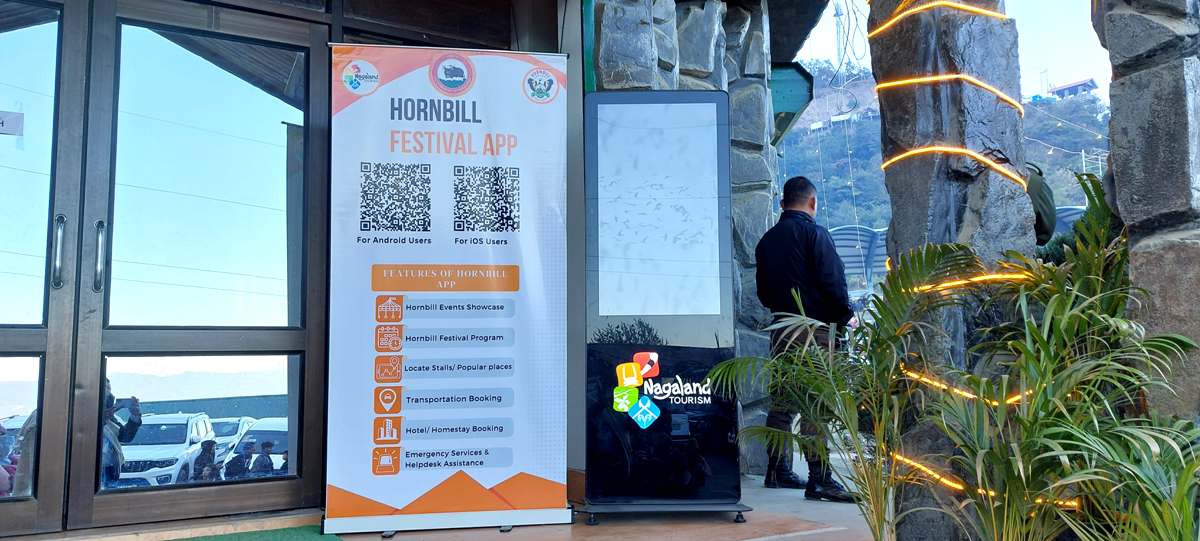
The Hornbill Festival App
One new aspect of this year's event is the Hornbill Festival
App, launched as a tap-away tool for visitors or digital enthusiasts to access
daily happenings within Kisama and other venues across the state.
The app, available on both Android and iOS, is the official
app launched by the Directorate of Tourism.
Users can find homestays and hotels and book comfortable
accommodations suited to their style and budget.
Ahead of the festival, under the initiative of the
Investment Development Authority of India (IDAN), Ura Cab was launched,
allowing individuals or groups to hire cabs to navigate the festival venues.
Through the app, users can find places to eat or visit,
stalls, tour guides, or emergency contact information, such as for medical
needs, police, or tourist police.
Daily events and updates are accessible, and the Nagaland
e-tourism Magazine, which contains information on various tribes, places to
visit, and other crucial details for visitors, can also be downloaded.
Minister for Tourism and Higher Education, Temjen Imna
Along, informed this newspaper that there were more than 10,000 registered
active users of the Hornbill Festival App as of December 8.
He said that the department has upgraded not only the
physical infrastructure but the digital too, adding that it will continue to
enhance its digital presence to adapt to the age of technology.
Along revealed that the department has reduced paper usage
by about 40% and aims for further reduction next year.
The Hornbill Festival App currently holds a 4.8 out of
5-star rating.
An architect from Jaipur said that the app was useful for
first-time visitors like him, allowing them to navigate and plan their stay.
The UPI-enabled payment systems allowed visitors to shop,
dine, and enjoy the festival without worrying about carrying cash. Many stall
owners and vendors shared that approximately 60% of their sales were paid
through online transactions. Almost all the stalls have provided QR codes for
payment.
Vepfusayi, a vendor at the Handloom and Handicrafts
Pavilion, shared that the UPI-enabled payment system has made transactions more
convenient and hassle-free.
A barista at a coffee shop also shared that digital payments
are more convenient for both customers and business owners.
Although banks have set up ATMs at the festival venue, the
UPI-enabled system has transformed the payment experience, making it more
convenient for visitors.
Digital kiosks
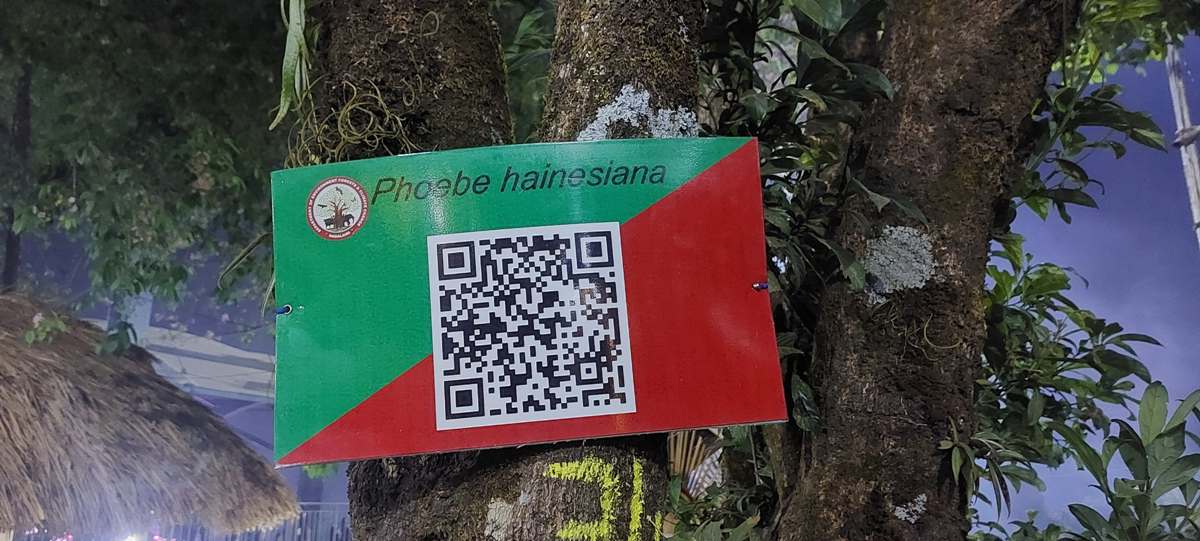
One interesting aspect in the information sector is the
Department of Environment, Forest, and Climate Change attaching information
boards with names of trees and QR codes to various trees at Kisama. Scanning
the codes provides access to vital information about the trees online.
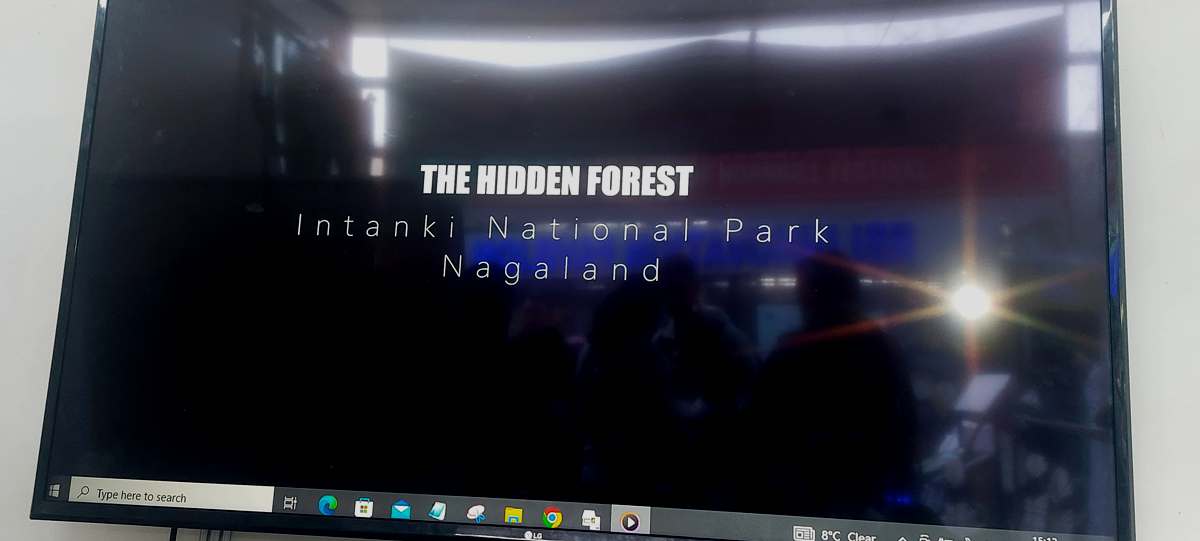
Visitors are shown a nearly 20-minute video about "The
Hidden Forest," Intangki National Park, the only national park in
Nagaland, which preserves lowland riverine forests in an otherwise mountainous
state. The national park spans 202.02 sq km.
Simultaneously, many departments and agencies have set up
stalls and information kiosks at the venue for IEC activities and greater
outreach to thousands of visitors.
Although not all information kiosks have gone paperless, one
can notice that besides distributing pamphlets and publications, big TV screens
showcase information, and visitors can access digital content.
At the data hub of the Department of Economics and
Statistics, Tumbenthung, Economics and Statistics Officer, informed that the
department has more than 20 publications in print, which are also accessible
online through the department's website.
He said that the department is transitioning from
Paper-Assisted Personal Interviews (PAPI) to Computer-Assisted Personal
Interviews (CAPI) to reduce paper usage and enhance data accuracy.
At the ICAR-National Research Centre of Mithun stall,
visitors can scan a barcode to access "M-Anitra," a blockchain-based
Mithun registration, traceability, and online marketing system. This initiative
promotes scientific Mithun production and marketing.
Visitors looking for skill courses can also visit the
National Skill Development Corporation (NSDC) stall to explore the Skill India
website and its digital course offerings, including courses for people with
disabilities (PWDs).
Various skill categories under the Pradhan Mantri Kaushal
Yojana (PMKVY 4.0) were displayed, along with prospects to access contact
information for institutions and skill trainers.
While waste segregation at Kisama has made headlines, even
drawing the attention of Prime Minister Narendra Modi, there is also a centre
for collecting e-waste. Visitors can go to the Sustainable Development Goals
Coordination Centre (SDGCC) stall to scan and recycle e-waste. This can reduce
the festival’s carbon footprint by cutting down paper usage.
What’s next for Hornbill Tech?
Online viewership of the inaugural ceremony of the 25th
Hornbill Festival, broadcast live on the DIPR YouTube Channel, exceeded 1.2
lakh views. The Doordarshan National channel’s YouTube broadcast of the
inaugural ceremony garnered over 1.6 lakh views. This massive online engagement
provided an opportunity for those unable to attend the festival in person.
In the future, Hornbill Festival tech could explore
possibilities such as AR/VR experiences, more robust digital engagement, or
AI-driven features for personalising the visitors’ journey.
However, one critical area for improvement is network
connectivity. Considering the lakhs of visitors the festival attracts,
addressing network connectivity issues will be essential to ensure a seamless
digital experience and further embrace technology in future editions.