


Noklak women transform rare nettle bark into handmade yarn and heritage crafts, preserving tradition while sustaining local livelihoods.
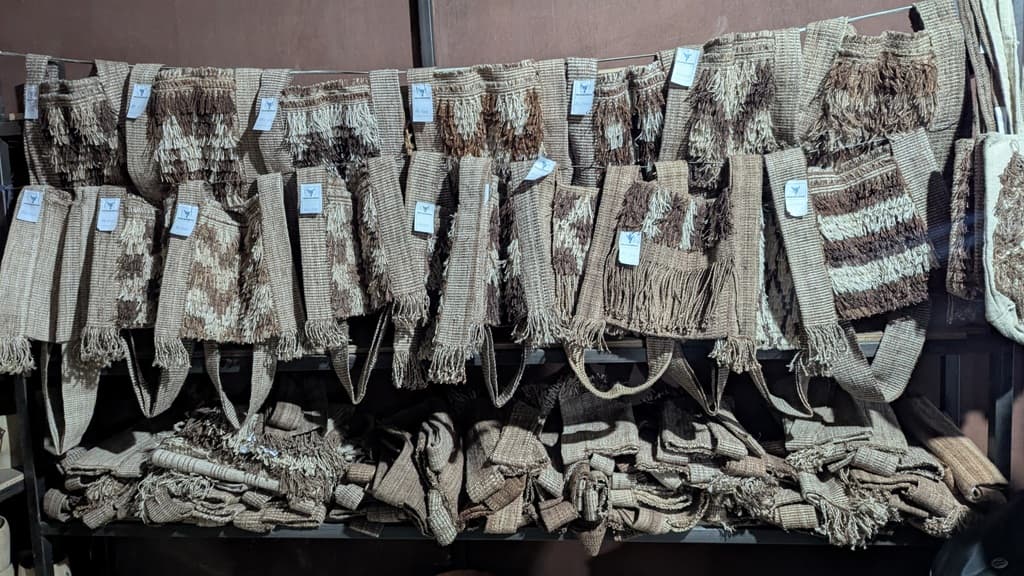
KOHIMA — For the women of Noklak, the art of making yarn out of nettle is not just a craft; it is days of rigorous labour and care to produce a single product.
From walking deep into the forest in search of specific stinging nettles to completing at least half a dozen more processes to transform them into yarn before finally weaving bags and stoles, each item represents about seven days of work from morning to sunset.
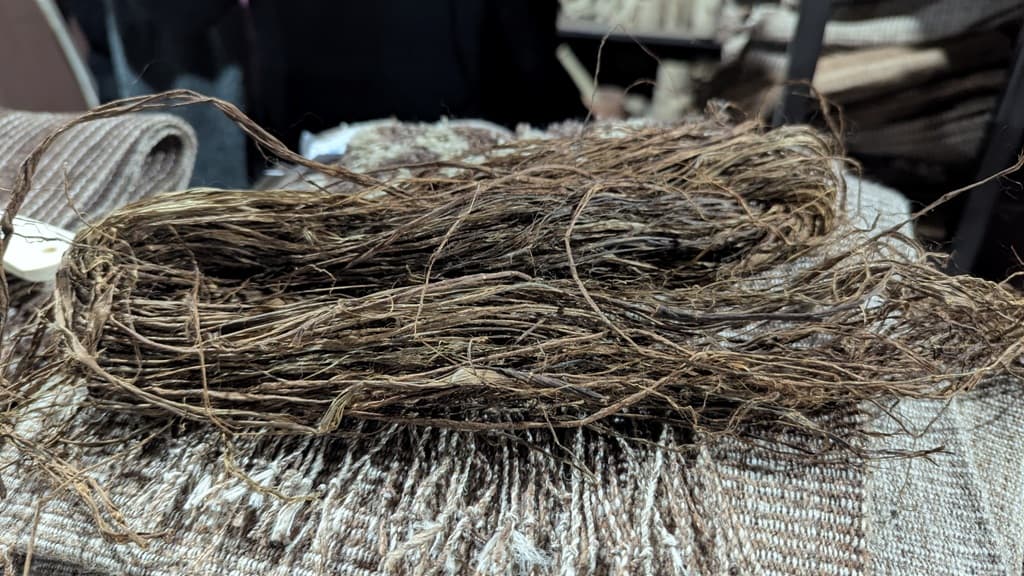
Forty-five-year-old Tokpon from Choklangan village in Noklak district said that to make a single bag, they must first go to the forest to collect the bark of the stinging nettle and bring it home. The bark is then dried and sliced into thin pieces. After several more steps, the bark is cooked to be turned into thread.
She said that it takes at least seven steps for the raw material to become yarn-ready, although weaving the bag itself does not take much time.
Also read: NSF observes Black Day in Kohima against imposition of Citizenship Amendment Act
Two raw materials—‘Hiam’ (stinging nettle) and ‘Ehthso’ (orange wild rhea), both from the nettle family—are used to make yarn and fibre products.
“The raw materials are hard to find. We don’t find them everywhere in the forest, and we don’t collect them just because they are nettles. For making yarn, it requires a particular type of bark which is softer,” she said.
They select the right plants carefully and remove the bark using bamboo scrapers.
Tokpon has been doing this for 20 years. They use no machines—everything is done by hand. In a month, they can make only two to three bags. She said that going to the forest to collect raw materials and cooking the bark are the most challenging steps.
As a young woman, she used to observe her mother-in-law working with the nettle yarn. She would collect leftover pieces, tie them together, make thread, and begin weaving.
While not every woman knows how to weave, a good number of people across the district still practice the craft. Around 30–40 weavers from several villages in Noklak know how to make the nettle yarn.
Tokpon is one of eight members of Noklak District Handloom and Handicraft Council, which promotes local artisans, weavers and craftsmanship to support sustainable livelihoods. The council markets products under the brand M/S Noklak Masterpieces and set up a stall at the recently concluded Hornbill Festival in Kisama.
Tokpon, Shongmao, and another member were managing the stall when Eastern Mirror visited.
The council also trains younger weavers. Around 30 young people have received training and are now making the products, she said.
Raw materials are collected mainly in July-August and October-November, carefully selecting the softer and younger plants.
Forty-year-old Shongmao, a mother of four from Tswao village, learned the craft from her parents. She has been weaving nettle for 13–14 years.
“If we make it on a regular basis, then we can earn around INR 50,000 to 60,000 in a year, but it’s difficult to make it,” she said. She supports her family through her earnings.
At Kisama, their products were priced according to size: INR 1,200 for medium bags, INR 1,000 for smaller ones, and INR 1,500 for large bags. Their products are sold both within and outside Nagaland.