DIMAPUR — 33-year-old
Susmita Debnath Bhowmick discovered her passion for teaching soon after
completing her Master of Arts in History from Nagaland University and went on
to earn additional necessary qualifications to establish herself in the
profession.
With nearly
a decade of experience already under her belt, she currently serves as an
assistant teacher at Pranab Vidyapith Hr. Sec. School in Dimapur, where she
teaches History and Social Science to students in classes 10, 11, and 12.
In this
interview with Eastern Mirror, Susmita discusses her approach to making
History relevant, the career opportunities the subject can unlock, and more.
How
would you introduce History as a subject to young readers?
History,
though it may appear as a list of dates, is indeed a web of human experiences.
For young people, understanding the past can guide them toward a future career
in teaching, research, museum curation, or cultural preservation. Here in
Nagaland, many of the elders share stories of how people once lived, traded, and
fought. These accounts connect people to their roots and teach them lessons
that shape their choices today.
I often
encourage students to treat History like a grand adventure. You can begin by
studying local landmarks such as the Kohima War Cemetery. This site
commemorates one of the fiercest battles fought during the Second World War.
Its headstones and stories offer a moving glimpse into bravery and sacrifice.
Visiting places like this transforms history from a dull subject into a
tangible memory.
What career
opportunities can students pursue with a degree in History, and which
specialisations are in demand?
A degree in
History offers a wide range of career paths. Many students choose to become
teachers or professors. Others work in research and publishing, writing books
or articles about historical events and cultures.
Museums and
galleries also need skilled historians. A museum curator, for example, designs
exhibits and protects artifacts. Archival and heritage management is another
important field. India has a vast collection of historical documents, including
rare manuscripts and colonial-era records. Archivists organise, conserve, and
catalogue these materials. They often work with libraries, universities, or
government bodies like the National Archives of India.
Archaeology
is especially fascinating for those who love to explore ancient ruins and
artifacts. Cultural resource management is in growing demand too. It focuses on
protecting historic sites and promoting sustainable tourism. If you enjoy fieldwork
and storytelling, documentary filmmaking or historical
journalism could be a
good fit.
As for
specialisations in demand, many employers look for historians who understand
digital archiving and data management. The ability to handle technology for preserving
and presenting history is increasingly essential. Expertise in regional
history, including the Northeast of India, is also valued.
Which
industries or organisations actively seek History graduates, and what roles do
they typically offer?
Many industries
and organisations value History graduates for their analytical skills, research
expertise, and ability to communicate effectively. In India—and particularly
here in the Northeast—there is a growing interest in preserving and promoting
cultural heritage.
Educational
institutions remain one of the most traditional yet rewarding paths. Schools
and colleges often hire History graduates to serve as teachers and lecturers.
Specialised research institutes such as the Indian Council of Historical
Research (ICHR) also recruit them for ongoing projects. Museums and cultural
centres also regularly seek History graduates for curation and public outreach.
Museums in Kohima, for instance, need curators who can design exhibits on local
tribal arts, attire, and festivals.
Government
departments offer another avenue. The Archaeological Survey of India (ASI)
relies on historians to document and preserve heritage sites, monuments, and
antiquities all over the country. Roles in state archives or the National
Archives often involve cataloguing valuable records, manuscripts, and other
historical documents. In the tourism sector, knowledge of regional history can
prove invaluable.
Are
there additional courses or certifications that can help History students stand
out in the job market?
Additional
courses and certifications can enhance the strong foundation that a History
degree provides. Here in Nagaland, many of the stories are rooted in oral
traditions. Yet, modern tools help preserve these traditions in new and
exciting ways. One such area is Digital Humanities. By learning data analysis
methods, Geographic Information Systems (GIS), or programming languages like
Python, students can map historic trade routes, track migration patterns, or
create digital archives. These skills prepare them for roles in digital
history, libraries, and research institutes, where technology is reshaping the
study of the past.
Public
History and Museum Studies certifications offer another pathway. Learning a
foreign language strengthens a student’s prospects in global business, heritage
tourism, and even diplomacy. High-demand languages such as French, German, or
Mandarin can open doors to international research collaborations and cultural
exchange programmes. For those who love writing, certifications in editing or
professional communication can refine their craft.
Could
you highlight any entrepreneurial avenues for History graduates, such as
heritage tourism or archival research?
There are
several entrepreneurial paths that History graduates in Nagaland and elsewhere
in India can explore. One promising avenue is heritage tourism. Nagaland’s
colourful festivals, like the Hornbill Festival in December, draw visitors from
across the globe. A History graduate could curate specialised tours, guiding travellers
through ancient village sites, local museums, and ceremonial events. They might
also collaborate with community elders, artisans, etc.
Archival
research is another field that offers room for innovation. Public history
projects are increasingly popular, too. Graduates can create online platforms
or mobile apps that feature interactive timelines, oral histories, or maps of
historical sites in Nagaland. Such resources could be useful for students,
researchers, and curious travellers.
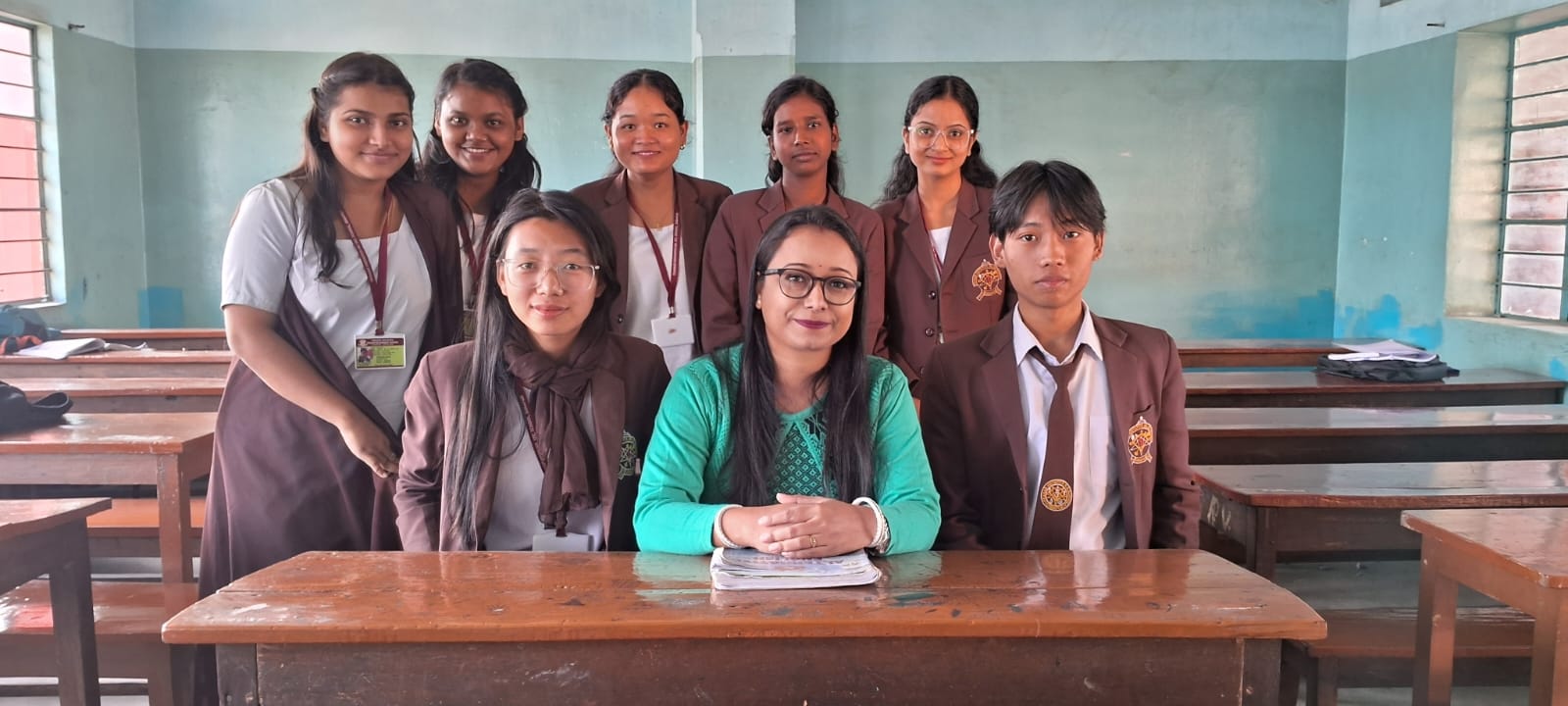
With the students of Class 12.
Which
soft skills should aspiring historians cultivate to thrive in both academic and
professional settings?
Aspiring
historians must develop effective communication, both written and oral. They
should learn to express ideas clearly, whether in academic papers, public lectures,
or community meetings. Strong communication also involves careful listening. By
paying attention to elders’ stories or fellow researchers’ arguments,
historians build stronger arguments and deeper insights.
Collaboration
is equally important. Many historical projects in Nagaland, for instance,
depend on working closely with elders, artisans, or other experts. Historians
who respect cultural practices and show genuine empathy for local communities
are more likely to earn their trust. This leads to richer interviews, firsthand
observations, and accurate data.
Critical
thinking sets excellent historians apart. Students should question every
source, looking for bias or inconsistencies. Cross-referencing facts—whether
from British colonial records, community elders’ oral accounts, or
photographs—reveals a broader truth. This method of confirming information
helps prevent errors in historical interpretation.
Adaptability
is another key skill. Historians in India often deal with limited resources or
incomplete documentation. In Nagaland, some sources may be oral, while others
are scattered across libraries in Kolkata or New Delhi. Adapting to different
research conditions, learning new software for data analysis, or even adjusting
one’s schedule to match local festivals helps historians collect the best
material.
What are
some common misconceptions about studying History, and how would you address
them?
As I
mentioned, one common misconception is that History is just a list of dates and
events. Many believe it involves little more than memorising who did what and
when. This is not entirely true. While dates and events matter, History is also
about understanding change over time, how societies adapt, and why particular
events unfolded as they did.
Another
misconception is that History only covers distant periods with no relevance to
modern life. On the contrary, historical processes shape our current society
and politics. For instance, in Nagaland, the unique cultural practices of the
various Naga communities—along with British colonial influences—have direct
consequences for the present systems of governance and social structures.
Studying these developments helps us make sense of today’s educational,
political, and economic realities.
Some people
feel that History is an “easy” subject, simpler than science or mathematics. In
reality, studying History involves critical thinking, research, and the ability
to interpret multiple points of view. For example, when we examine the British
annexation of Northeast India in the 19th century, we must analyse not only
British archival records but also local oral histories and cultural narratives.
This process requires careful reading, attention to bias, and respect for
indigenous knowledge.
To address
these misconceptions, I encourage students to look beyond the textbooks. Talk
to elders in your community; learn about their experiences. Compare written
records with local stories.
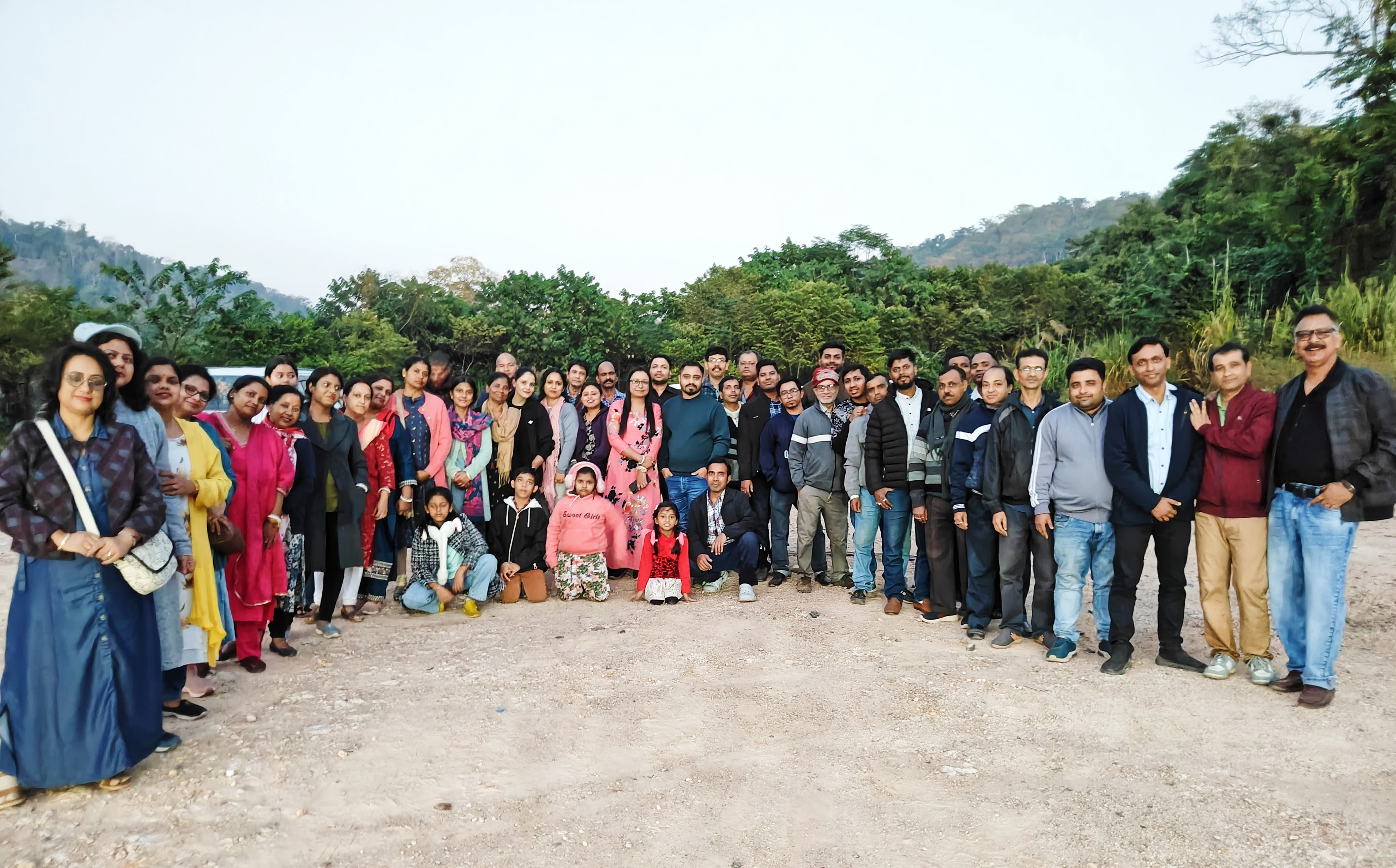
With colleagues during a picnic
at Langvoku Waterfall in 2024.
RAPID
INSIGHTS
Which
historical figure do you find most inspiring?
Subhash
Chandra Bose has always fascinated me.
One
essential habit students should develop early?
Always ask
questions. It’s not enough to memorise dates or names.
If you
had to describe your teaching philosophy in one word, what would it be?