Exploring careers in Statistics for the digital age
Exploring careers in Statistics for the digital age
With 33 years of teaching career, Dr. Ranjit Paul, Academic Dean of Public College discusses the significance of Statistics in everyday life, career opportunities in the field, and the skills needed to excel as a statistician
DIMAPUR — With an extensive teaching career spanning 33 years, Dr. Ranjit Paul,
Academic Dean of Public College, has dedicated himself to academia,
specialising in Statistics and research methodology. Holding a B.Sc. in
Statistics from Arya Vidyapeeth College, an M.Sc. in Statistics from Gauhati
University, an MBA. in HRM from Global University, a Ph.D. from ICFAI
University, and a post-doctoral degree in quantitative technique in research
methodology from Research India Foundation, he has continuously expanded his
expertise in the field.
He hails from Rangapara, a town in Assam, where
he completed his HSLC at RBH School and his PU (Science) at GC College,
Silchar.
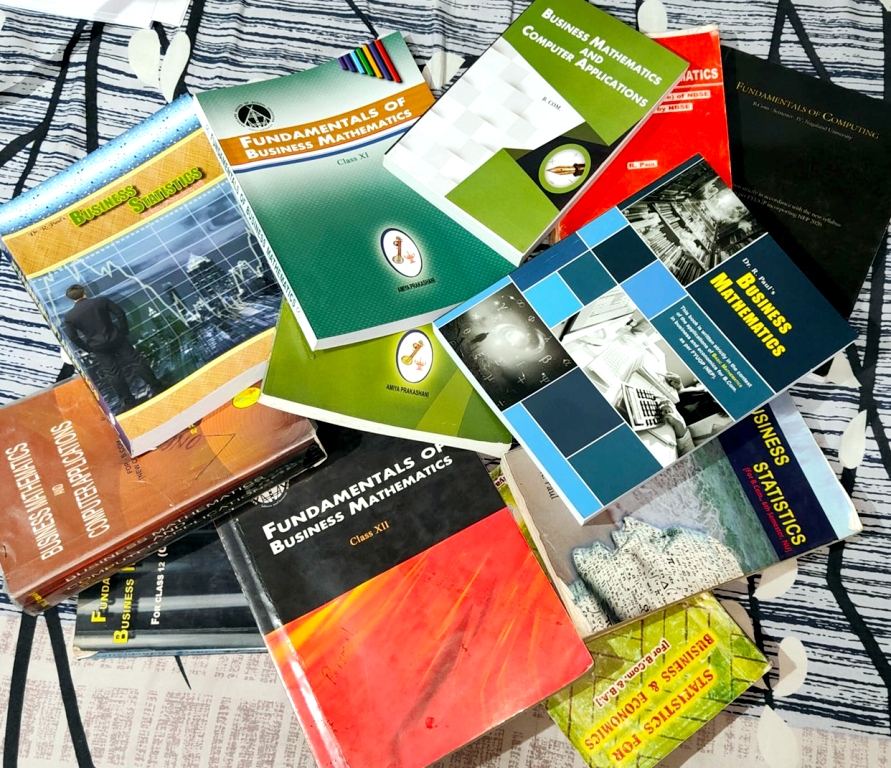
He has authored 19 books with ISBNs, published
25 research papers in UGC-recognised journals, including nine international
journals, and presented papers at six national and state-level seminars. He has
participated in 69 seminars, workshops, and orientation programmes and
organised national webinars and quizzes. Dr. Paul has also served as a guest
faculty at ICFAI University and is the executive editor of the PCC Journal of
Economics and Commerce. Additionally, he is a member of the Board of Studies
(Mathematics) at ICFAI University.
In this interview with ,
Dr. Paul discusses the significance of Statistics in everyday life, career
opportunities in the field, and the skills needed to excel as a statistician.
For young readers in Nagaland, how would you
define Statistics and its importance?
For young readers, we simply define Statistics
as the study of collecting, organising, presenting, and analysing statistical
data to draw conclusions from it. It helps us make sense of information by
finding patterns, making predictions, and making good decisions.
Statistics is important because it helps in
many areas of day-to-day life. In sports, it reveals how well a team or player
is performing. In weather, it aids in predicting whether it will be sunny or
rainy. In health, doctors use Statistics to study diseases and identify the
best treatments. In business, companies use Statistics to understand customer
preferences and make informed decisions, such as identifying the most popular
video game. It helps us recognise trends, like how weather changes over time,
and it assists businesses, doctors, and scientists in solving real-world
problems, such as finding the best medicine or improving a product. Think of
Statistics as a detective tool—it uncovers clues hidden in numbers. By using
statistics, we can make smart decisions based on facts, not just guesses.
A selection of his textbook
publications.
Organising a yoga event on
International Yoga Day at Public College (June 21, 2018).
What foundational concepts in Mathematics
should students focus on before pursuing Statistics?
Yes, it’s a good question. Before diving into
Statistics, students should build a strong foundation in key math concepts such
as algebra, which includes equations and functions; probability, covering
random events and Bayes' theorem; calculus, which involves differentiation and
integration; linear algebra, focusing on matrices and vectors; discrete math,
including sets and combinations; and number sense, which covers ratios and
percentages. Furthermore, understanding graphs and data interpretation, such as
bar charts, histograms, and scatter plots, is important for visualising data.
How can a strong background in Statistics
benefit students, regardless of their ultimate career path?
Students with a strong background in Statistics
can opt for careers that require critical thinking, problem-solving, and
decision-making. In education and research, it helps to analyse study trends,
improve learning methods, conduct research, and interpret survey results. In
business and finance, it assists in making smart financial decisions, such as
investing and budgeting, and helps businesses understand customer trends and
improve products.
In healthcare and medicine, it supports medical
research, aids doctors in making informed decisions, and helps assess the risks
and effectiveness of treatments. In sports and entertainment, it helps athletes
improve performance through data analysis and is used to predict game outcomes
and player statistics.
In science and engineering, it is essential for
experiments, measuring results, and making discoveries, and it is also used in
designing technology, machines, and even space missions.
In social media and marketing, it helps
understand audience preferences, improve content, and track trends, likes, and
shares. In government and law, it helps policymakers make data-driven decisions
and is used in crime analysis, voter trends, and public policies. Moreover, in
everyday life, it aids in making better personal choices, such as budgeting and
fitness tracking, and it improves logical reasoning and problem-solving skills.
No matter what career students choose, Statistics empowers them to make sense
of the world through data.
Could you highlight some common misconceptions
about Statistics that students often have?
One misconception is that Statistics is just
math. In reality, it's more about analysing data and making decisions. Another
belief is that memorising formulas is essential. However, understanding the
concepts behind the formulas matters far more than mere memorisation. Many
people also assume that a higher sample size always leads to better results,
but in truth, the quality of the data is just as important as the size.
A common error is thinking that correlation
means causation. Just because two things are related doesn’t necessarily mean
that one causes the other. Also, some believe that Statistics always gives
exact answers, when in fact, it deals with probabilities and uncertainties.
We often hear a few interesting comments on the
science of Statistics like “Statistics can prove anything in this universe”,
“An ounce of truth will produce tons of Statistics”, “There are 3 types of lies
– lies, damned lies and Statistics”, “If figures say so, it cannot be
otherwise”, etc. In fact, figures are innocent and move convincingly; they can
be easily manipulated, and conclusions that suit one’s selfish ends can be
drawn. So, figures do not lie but liars’ figure. As a result, many persons seem
to have lost faith in Statistics.
What courses should students consider if they
want to specialise in Statistics?
Students opting for a specialisation in
Statistics should consider a mix of foundational, advanced, and applied
courses. Key areas of focus include data science, which combines Statistics
with computing and real-world applications; operations research, which covers
optimisation and decision-making techniques; artificial intelligence (AI) and
deep learning, which involves neural networks and advanced predictive
modelling; and finance and risk analysis, which applies Statistics to stock
markets and risk management.
Core courses should include Probability,
Statistical Inference, Regression Analysis, and Experimental Design, while
programming and data science skills can be developed through R, Python, SQL,
machine learning, and big data analytics. Mathematics courses such as Linear
Algebra, Calculus, and Discrete Math are essential, along with Applied
Statistics courses like Biostatistics, Financial Statistics, Econometrics, and
Actuarial Science. Proficiency in software tools such as SAS, SPSS, MATLAB, and
Tableau is also important.
What kinds of roles or job titles can students
expect if they pursue a career in Statistics?
A degree in Statistics opens the door to a wide
range of career opportunities across multiple industries. Students pursuing
Statistics can expect to take on roles such as statistician, where they analyse
data for insights, or data scientist, applying machine learning and big data
analytics. They may also become business or data analysts, driving decisions with
data in companies or actuaries, assessing financial risks in insurance and
finance. Other roles include biostatistician, analysing medical and clinical
trial data; econometrician, studying economic trends and policies; and quality
control analyst, ensuring product and process efficiency.
Are there any professional certifications or
short courses that enhance a statistician’s profile?
Professional certifications and short courses
can significantly enhance a statistician's profile, making them more competitive
in the job market. Valuable options include the Certified Analytics
Professional (CAP), which validates expertise in analytics; the SAS Certified
Specialist, demonstrating proficiency in SAS for data analysis; the Google Data
Analytics Certificate, which covers data visualisation and SQL; and the IBM
Data Science Professional Certificate, focusing on AI and machine learning.
Actuarial certifications from the SOA and CAS are essential for those pursuing
actuarial careers. Additionally, Coursera and edX offer courses covering R,
Python, and advanced statistics, all of which can boost a statistician's skills
and job prospects.
What specific skills do employers look for when
hiring statisticians?
Employers look for a combination of technical,
analytical, and soft skills when hiring statisticians. The most in-demand
skills include statistical knowledge in areas such as probability, regression,
and inference; programming skills in R, Python, SQL, and SAS; expertise in data
visualisation tools like Tableau, Power BI, and ggplot2; proficiency in machine
learning, including predictive modelling and AI; a strong foundation in
mathematics, particularly linear algebra and calculus; the ability to
communicate insights clearly; and strong problem-solving skills, particularly
critical thinking with data.
What advice would you give to someone who finds
Statistics challenging or intimidating at first?
It's normal to find Statistics challenging at
first, but with the right approach, confidence can be built. Focus on
understanding why formulas work, not just how to use them. Apply statistics to
topics of interest, such as sports or finance, and use tools like Excel, R, or
Python to analyse real datasets. Master descriptive statistics before
progressing to more complex topics, and use graphs and charts to clarify
concepts. Studying with others, teaching, and joining study groups can also
help. Leverage software to simplify calculations, and continue practising to
improve your skills.
RAPID
INSIGHTS
If you had a day off to explore a new hobby,
what would you do?
If I had a day off, I’d love to try
astrophotography—capturing galaxies, stars, and the beauty of the night
sky!
Night owl or early riser?
As for being a night owl or early
riser—definitely a night owl! Late nights are perfect for deep thinking,
creativity, and, of course, stargazing.
When stumped by a problem, how do you clear
your mind or refocus?
When I’m stuck on a problem, I like to step
away for a bit and do something completely different. A short walk, listening
to music, or even just stretching helps reset my mind. Sometimes, explaining
the problem out loud (even to myself) makes things click. If I still can’t find
a solution, I break it down into smaller parts and tackle them one by one. A
fresh perspective after a short break often makes all the difference!