


CIHSR holds a state-level seminar on stroke care, highlighting early recognition, timely treatment and rehabilitation.
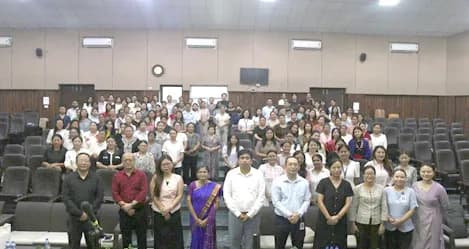
DIMAPUR — The Christian Institute of Health Sciences and Research (CIHSR), Chümoukedima, organised a state-level seminar on stroke care on October 29, emphasising the importance of early recognition, timely medical intervention and rehabilitation in preventing long-term disability.
The one-day seminar, titled “Stroke Continuum: From Acute Management to Early Rehabilitation – ACT FAST,” was held at LG Hall, CIHSR, to mark World Stroke Day, an update stated.
The combined Continuing Medical Education (CME) and Continuing Nursing Education (CNE) programme was organised by the institute’s neuro-rehabilitation multidisciplinary team in collaboration with the College of Nursing, CIHSR.
The seminar brought together doctors, nurses and allied health professionals to discuss stroke care from emergency treatment to early rehabilitation and secondary prevention.
It highlighted the need for timely intervention, prevention of complications and coordinated care among multidisciplinary teams.
A key highlight was a panel discussion moderated by Dr. Toshimenla on “The Hidden Delay: Quacks, Faith Healers and the Missed Opportunities in Stroke Care.”
The discussion examined how delays in reaching hospitals, including reliance on unqualified practitioners, can affect treatment outcomes and increase the risk of preventable complications, long-term disability and permanent neurological damage.
The panellists emphasised the importance of a culturally sensitive approach that recognises the role of faith, religion and traditional practices in people's lives.
They discussed ways to engage faith healers and accommodate harmless religious practices as complementary sources of emotional and spiritual support, while stressing that these must never replace or delay evidence-based medical treatment.
The discussion also underscored the importance of public awareness of stroke warning signs, including sudden facial drooping, weakness or numbness in the arm, and difficulty speaking.
Participants highlighted the need to educate communities about stroke risk factors, the importance of seeking emergency medical care and available treatment options.
Nurses, as frontline healthcare professionals, were identified as playing a crucial role in bridging the gap between healthcare services and communities through health education, early identification of symptoms and timely referral.
During the technical sessions, Dr. Pideno S Ngullie, DM Neurology, Nikos Hospital, spoke on evidence-based medical management during the golden hour, while Dr. C Simeon, MCh Neurosurgery, Nikos Hospital, discussed the neurosurgical approach to acute stroke.
Dr. Abhishek Kumar Sanyal, Consultant in Physical Medicine and Rehabilitation at Pipili Health Institute, THEE Trust, Puri, spoke on early rehabilitation and functional outcomes.
Other sessions covered reproductive, sexual and hormonal health in women following acquired brain injury, presented by Dr. Ashima Sarkhel, Consultant in Obstetrics and Gynaecology at Pipili Health Institute.
Imliyangla, Associate Professor and LDU Lead at CIHSR, discussed the role of nurses in stroke recovery and transitions, while Nchumbeni Y Jungio, Clinical Psychologist in the Department of Psychiatry at CIHSR, spoke on cognitive and emotional behaviour in post-stroke rehabilitation.
The seminar aimed to strengthen participants' understanding of stroke presentation and early assessment, evidence-based acute management, prevention of complications, the role of early rehabilitation in functional recovery, and the contribution of nursing and multidisciplinary teams to continuity of care and secondary prevention.
The programme concluded with a call for early stroke recognition, prompt hospital admission and access to evidence-based treatment, alongside community education and collaboration among healthcare professionals, community leaders and religious practitioners, to save lives and reduce long-term disability.